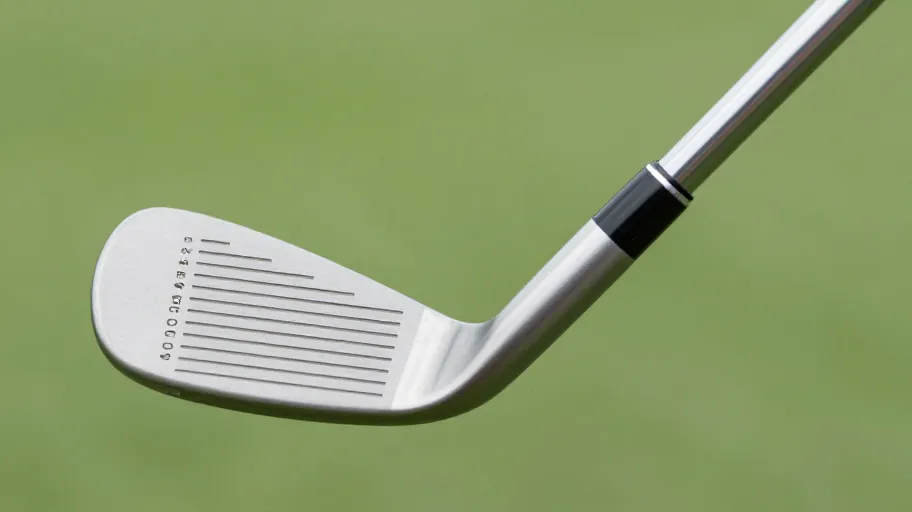
A golf swing weight guide tells you how head weight, shaft weight, grip weight and assembly length interact to place a finished club on a letter–number swing weight scale. Use it to match components to your target club model, measure the expected change before assembly, and confirm supplier specs, sample terms and approval criteria in writing before you commit.
What swing weight actually measures
Swing weight describes how a club's mass is distributed relative to a fixed fulcrum, expressed on an alphanumeric scale (for example, something in the D-range for many iron builds). It is not total weight. Two clubs can weigh the same on a kitchen scale yet feel meaningfully different in motion because their balance points differ.
This is why component sourcing for swing weight is a multi-variable problem:
- Head: the heaviest single influence; small gram changes move the swing weight scale by measurable fractions of a point.
- Shaft: raw weight, balance point and cut length all matter; the same shaft model in a different trim can shift the result.
- Grip: weight differences at the butt end move swing weight in the opposite direction from head weight.
- Assembly length: adding or removing length changes the lever arm and therefore the reading.
Because every one of these variables belongs to a specific SKU, a generic guide can frame the decision — but the numbers must come from the supplier's current spec sheet and, where possible, from a physical sample you measure yourself.
The MATCH–MEASURE–CONFIRM framework
Use this three-stage framework to keep a swing weight project on track.
Stage 1 — MATCH the target model. Start with the exact club brand, family, model, loft and generation you are rebuilding or tuning. Record its published or measured swing weight as your target, and note your current build's actual reading if you have access to a swing weight scale. Compatibility of any replacement head, shaft tip, hosel interface or grip collar must be verified against that specific model — do not assume cross-family fitment.
Stage 2 — MEASURE before assembly. Collect the supplier's spec data for each candidate component: head weight (with any weighting system disclosed), shaft raw weight and balance point, grip weight, and intended finished length. If you have a swing weight scale, weigh the sample components yourself and record the readings. Where data is missing, ask for it — a missing balance-point figure is a sourcing risk, not a detail.
Stage 3 — CONFIRM in writing. Before ordering a production quantity, confirm sample availability, current pricing, shipping arrangements, lead expectations and acceptance criteria in writing. Do not rely on verbal summaries. The approval questions below give you the wording.
Spec fields decision table
| Component | Spec field to request | Why it matters for swing weight | What to do if not supplied |
|---|---|---|---|
| Club head | Head weight in grams; weighting/adjustment system details | Primary driver of the swing weight reading | Request measured weight for the exact loft; do not infer from family averages |
| Shaft | Raw weight, balance point, cut length guidance | Determines mass distribution along the lever | Ask for balance-point data; compare samples on your own scale |
| Grip | Grip weight; core size; any tape-build assumptions | Butt-end weight offsets head-weight changes | Confirm whether quoted weight includes any installation build-up |
| Assembly | Finished length; swing weight target | Length changes the lever arm | Fix the target length in the purchase brief before ordering |
| Sample | Sample availability and current terms | Verification step before volume commitment | Ask for the current sample policy directly; do not assume prior terms still apply |
Concrete approval questions for the supplier
Ask these in writing and keep the answers with your build records:
- Can you confirm this component fits the exact club family, model and generation I named — and on what evidence (drawing, measurement, prior documented fitment for that model)?
- What is the current head/shaft/grip weight spec for the exact SKU and loft I am ordering, and how is it measured?
- What is your current sample policy, and what does the reader need to confirm directly about cost, shipping and terms before requesting one?
- What is your process if a delivered component does not match the documented spec?
- Can swing weight–relevant data (grams, balance point) be confirmed per batch, and how will it be communicated?
- What are the current production and delivery expectations for this order, confirmed in writing?
Note on boundaries: no supplier-specific sample, cost, shipping or production policy was supplied for this article. Every item above must be confirmed directly for your exact component and model. Do not treat any prior arrangement, fee structure or turnaround as continuing unless it is reconfirmed in writing.
Pre-order verification checklist
Run this before issuing any purchase order:
- Target club brand, family, model and generation documented
- Target swing weight and finished length recorded
- Head, shaft and grip weights requested from current spec sheets
- Shaft balance point data requested or measured on a sample
- Grip weight and installation assumptions confirmed
- Sample terms, current pricing and shipping confirmed in writing
- Acceptance criteria (what reading range you will approve) written down
- Discrepancy process for out-of-spec delivery confirmed
FAQ
Do I need a swing weight scale to source components correctly? It strengthens the process considerably, because it lets you verify samples against supplier data. If you do not have one, ask the supplier for measured component weights and balance-point data, and build in a written acceptance range before approving a production run.
Which component moves swing weight the most? Head weight changes move the reading most directly per gram, but shaft cut length changes the lever arm and can produce large shifts as well. Grip weight acts in the opposite direction. Treat all four variables together rather than optimising one in isolation.
Can a swing weight guide tell me the final number before I buy? A guide can structure the calculation; it cannot guarantee a final number, because outcomes depend on the specific SKUs, your build length and your measurement setup. Use the guide to frame questions, then verify with supplier data and a physical sample.
How should I approve a sample? Approve against written acceptance criteria: measured weight matching the documented spec, fitment verified against your exact club model, and the reading falling inside your target range once assembled. Record the result before releasing a production order.
Is a heavier build better? Not inherently. Heavier total mass and higher swing weight suit some swing profiles and not others; the right target depends on the player and the club's role in the set. Compare documented builds for the same model rather than chasing a number without context.
Take the next step
If you are ready to turn this framework into a documented sourcing brief, 获取采购 Brief — capture your target club model, swing weight window, spec requirements and acceptance criteria in one place before you contact suppliers.
Not ready yet? Run the pre-order verification checklist above against your next component enquiry — it costs nothing and surfaces the questions that prevent rework.
Master Your Swing, DIY Your Fit. DIY Golf is the premier destination for the technical golfer. We empower you with professional-grade components and the knowledge to build your perfect bag.


