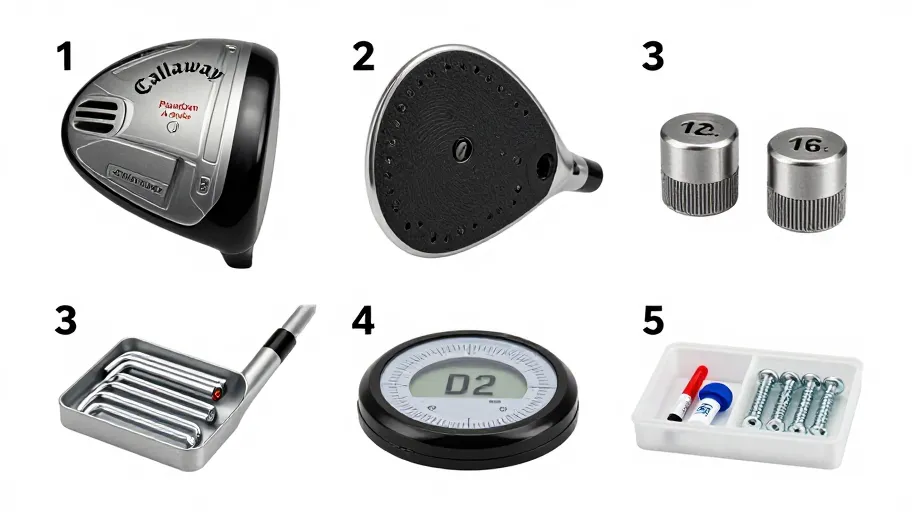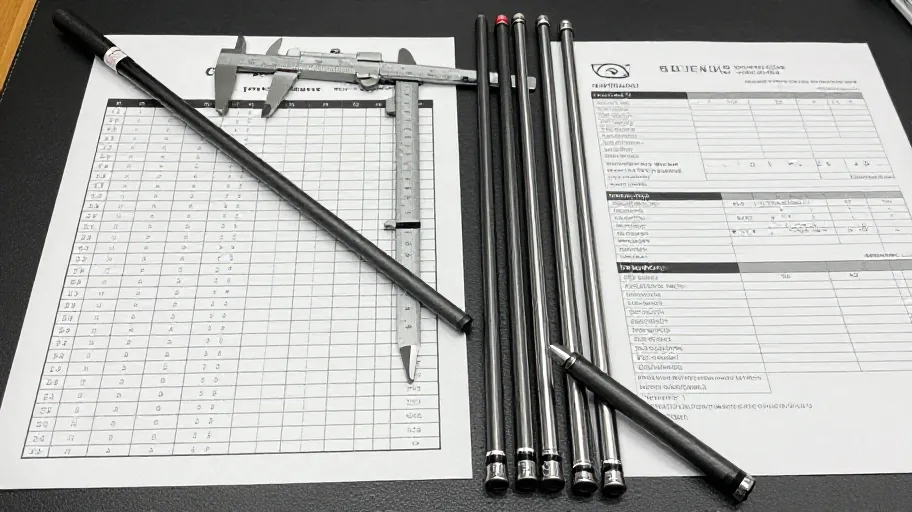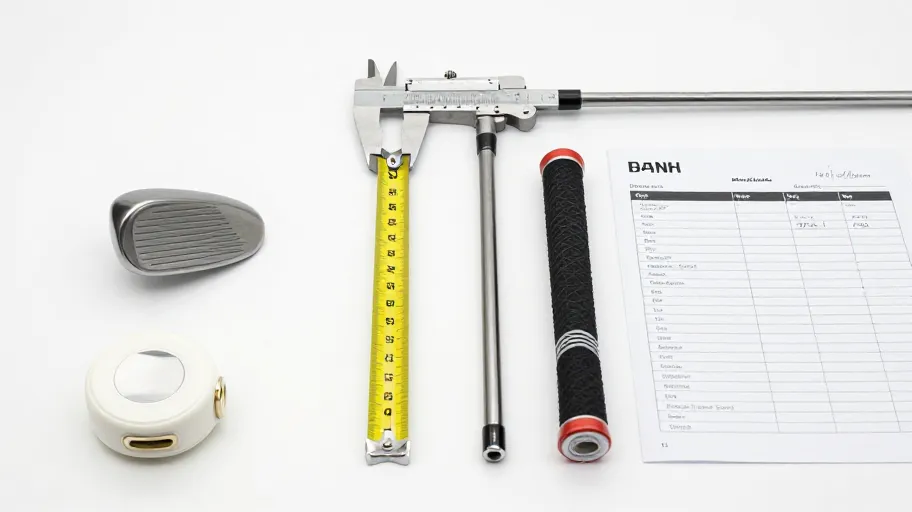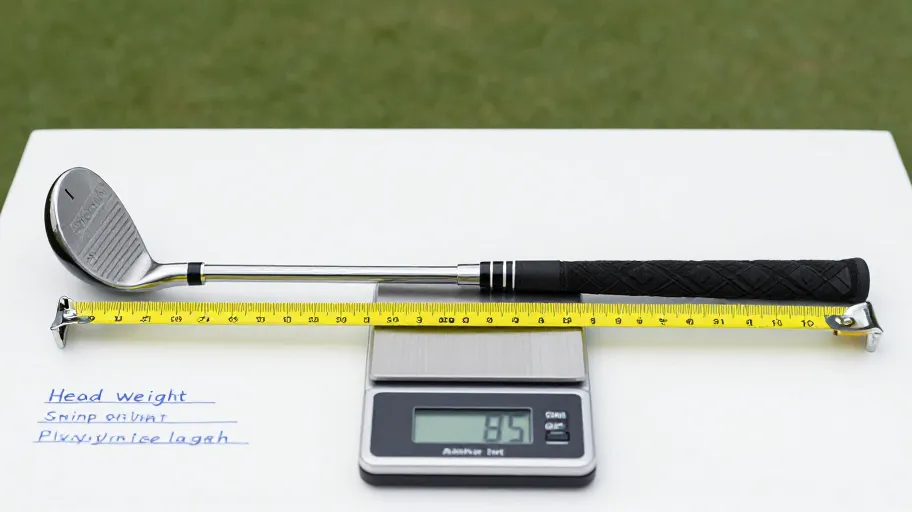
You know your target swing weight by starting from your current club's measured value, defining the feel you want relative to it, then documenting a component spec — head weight, shaft weight, grip weight and playing length — that moves toward that target, and verifying the finished build on a swing weight scale before approval.
That is the short version. Below is the working method, structured so you can send the output straight to a component supplier or apply it on the bench.
The Target–Build–Verify framework
Swing weight questions go wrong when they stay conversational. "It feels heavy" is not a spec. The Target–Build–Verify (TBV) framework forces three separate decisions, each with its own evidence:
- Target. Decide, in writing, the swing weight range you want each club to land in, and why, relative to something you have already measured or hit.
- Build. Translate that target into component-level specifications so head, shaft, grip and length decisions can be compared and sourced.
- Verify. Define, before ordering or assembling, how you will measure the result and what result you will accept.
The framework matters for sourcing because a supplier cannot quote against a feel. They can quote against a documented spec block — and you can only approve a build you have measured.
Step 1 — Target: set a reference-anchored number
Do not pick a swing weight from memory. Anchor it:
- Measure your current club on a swing weight scale, or have it measured. Record the value per club, not per set — long clubs and short clubs carry different targets.
- Define the direction of change. Heavier feel, lighter feel, or match-to-reference. Write the descriptor next to the number.
- Separate irons from woods from wedges. A target that works for a 7-iron is not automatically the target for a driver or a wedge; document a range per club family and per model.
- Note the model in play. Head weights and hosel configurations differ across club families and models, so your target and the build path to reach it are model-specific. Confirm current fitment data for the exact head model with DIY-Golf before ordering.
Approval question for this step: Can I state my target as a range per club, with a reason attached to each range? If not, you are not ready to source.
Step 2 — Build: map each component decision
Swing weight is the product of interacting variables. Changing any one of them changes the result, so source components as a set of decisions, not one at a time.
| Variable | Effect on swing weight | Sourcing question to answer before ordering | Evidence to request |
|---|---|---|---|
| Head weight (or added tip weight) | Most direct lever; heavier head raises swing weight | What head-weight options or weighting hardware exist for this exact model? | Current model-specific fitment confirmation |
| Shaft weight | Heavier shaft interacts with balance point; effect differs by balance point, not weight alone | What shaft weight and balance-point data is available for the shafts I am comparing? | Published shaft spec sheet for the exact SKU |
| Grip weight | Heavier grip lowers measured swing weight | What does each grip option weigh, and does it change my target math? | Grip weight listing for the exact model |
| Playing length | Longer build raises swing weight; shorter lowers it | What final playing length am I committing to, and is it fixed before component selection? | Written length decision per club |
| Balance point of shaft | Shifts effective head feel without changing total weight | Is balance-point data supplied so I can compare shafts on more than total weight? | Manufacturer shaft data |
Rules of thumb are not a substitute for the spec sheets. Treat every cell above as a question to answer with current first-party data for the exact product and model, confirmed with DIY-Golf at enquiry time. Stock, price, compatibility and shipping terms for any specific part must be confirmed directly — none are implied by this article.
Step 3 — Verify: define acceptance before you build
Verification is what turns a component purchase into an approved build. Before committing, write down:
- Measurement method. Which scale or measurement process will you use, and is it calibrated against a known reference club?
- Acceptance range. What deviation from target will you accept per club? Decide this number now, not after assembly.
- Re-verification triggers. If grip, shaft or length changes mid-project, which clubs need re-measuring?
- Documentation. Record measured value, target value and component list per club, so a rebuild or reorder is repeatable.
Concrete approval questions to put to DIY-Golf or any component supplier, all of which require current, project-specific answers:
- Can you confirm fitment of this shaft, grip and weighting option for my exact head brand, family and model?
- What spec data can you supply for the exact SKUs I am comparing — weight, balance point, and model compatibility?
- What is your current sample policy, and what does the reader need to confirm directly about it? (Sample scope, costs and shipping terms are policy items to confirm, not assumptions.)
- What are your current shipping, return and measurement-documentation terms for this order?
- If a measured build misses my documented acceptance range, what is the agreed resolution path under your current terms?
Do not accept answers that reference what is "standard" — ask for the current written policy for your exact order.
The spec block: what to send when you enquire
A sourcing-ready enquiry contains, per club:
- Club brand, family, model and loft
- Current measured swing weight (if known) and playing length
- Target swing weight range and feel descriptor
- Candidate shaft (model, weight class, balance point if known)
- Candidate grip (model and weight)
- Weighting options under consideration
- Acceptance range for the finished build
This block is what the Sourcing Brief is designed to produce — a document a supplier can act on and you can measure against.
FAQ
Can I estimate my swing weight without a scale? You can estimate the direction of change from component swaps — a heavier head or longer build raises it; a heavier grip lowers it — but approval requires measurement. Estimate for planning; measure for sign-off.
Does changing a grip change swing weight? Yes, grip weight is one of the interacting variables. Check the grip's listed weight and recalculate your target before ordering — and confirm the listed weight for the exact grip model with the supplier.
Should every club in my set have the same target? Document targets per club family and model, not one number for everything. Compare against your measured reference clubs and record the rationale for each range.
How do I compare shafts that weigh the same? Ask for balance-point data. Two shafts at the same weight can distribute that weight differently, which changes the build. Request the spec sheet for the exact SKU before comparing.
What if my measured build misses my target? Go back to the documented spec block: identify which variable deviated, adjust one variable at a time, re-measure, and re-check against your written acceptance range.
Ready to turn feel into a documented spec? Get the Sourcing Brief and build an enquiry-ready swing weight spec for your exact club model.
Not ready to enquire yet? Work through the checklist above, record your measured reference values, and confirm component data with DIY-Golf when you are prepared to compare options.
Master Your Swing, DIY Your Fit. DIY Golf is the premier destination for the technical golfer. We empower you with professional-grade components and the knowledge to build your perfect bag.