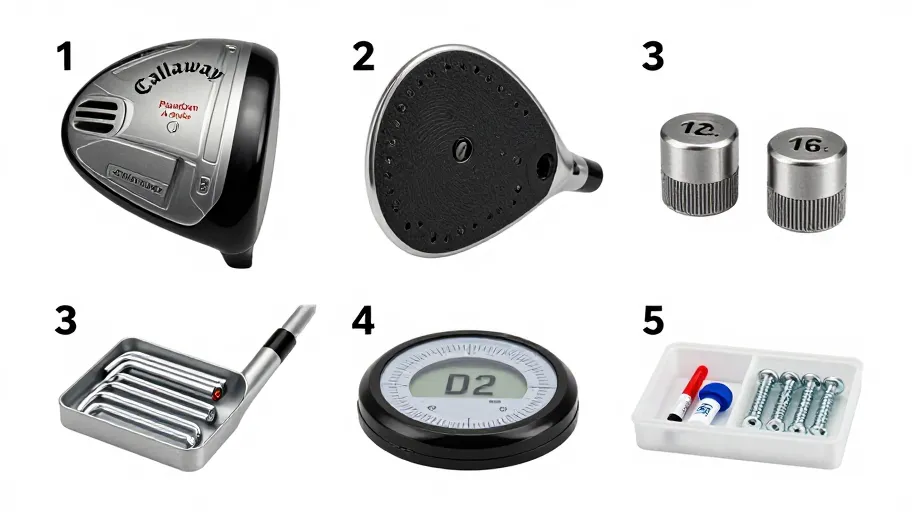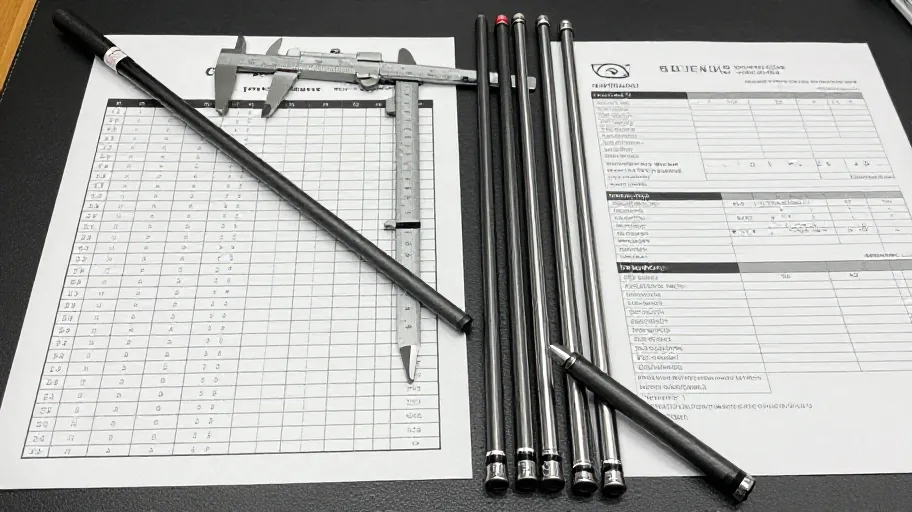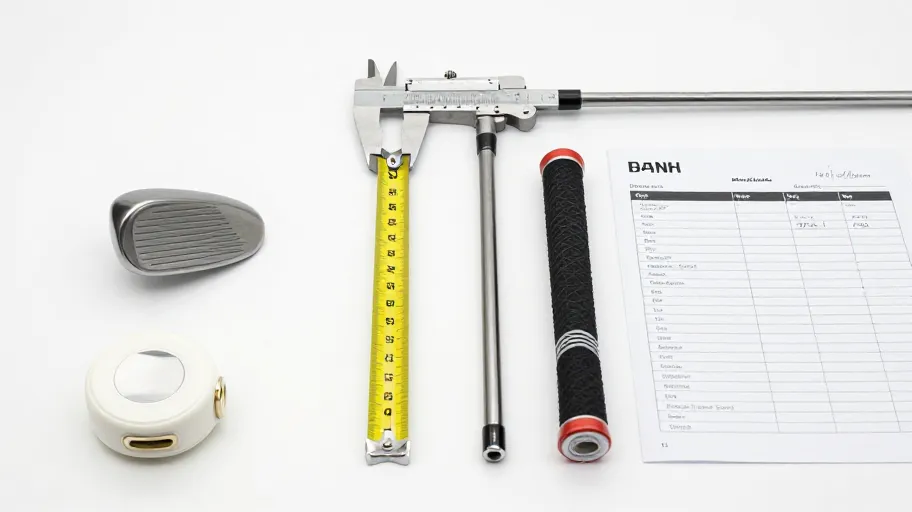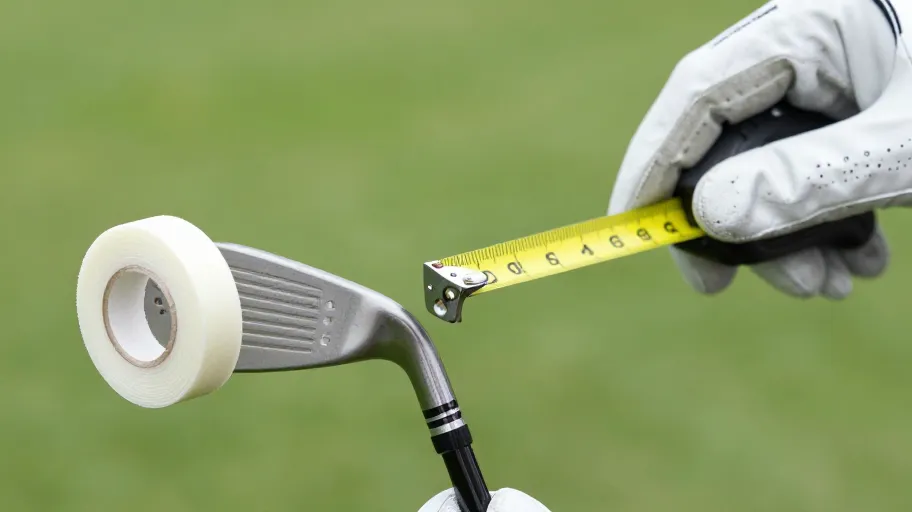
To know what size golf grip to get, measure your glove hand, confirm the butt diameter of the exact shaft model you are regripping, then decide core size and build-up tape together. Grip size is not a single number: it is the finished outside diameter after installation, and it must be documented per club before you approve an order.
The Grip Fit Triangle: a repeatable sizing framework
When a club builder asks "how do I know what size golf grip to get?", the honest answer is that no single chart can decide for you, because the finished grip size depends on three inputs that must be resolved together:
- Hand measurement. Measure the length from the wrist crease to the tip of the longest finger, and the circumference around the largest point of the dominant hand's knuckles. Record both in millimetres on the build sheet for the specific player or target feel.
- Butt diameter of the exact shaft. The grip must match the shaft's butt diameter and the grip's core size. Confirm the butt diameter from the shaft manufacturer's published specification for the exact model — do not assume it from the club brand alone, because the same club family can be built on different shafts.
- Build-up and tape strategy. Layering tape under the grip increases the finished diameter. How many layers, if any, is a per-build decision you should test and document rather than inherit from a generic rule.
Resolving these three corners — hand, shaft, build-up — is what turns grip sizing from guesswork into an approved, repeatable specification.
Decision table: matching inputs to grip size
| Input you control | Fact you must confirm | Sizing decision it drives | Documentation to keep |
|---|---|---|---|
| Hand length and circumference measurement | Measured values for the target player or target feel | Starting grip size band under evaluation | Build sheet with dates and measurements |
| Shaft make, family and model | Butt diameter from the manufacturer's spec for that exact model | Grip core size and whether shimming or build-up applies | Spec sheet reference and revision |
| Grip model under consideration | Core size and wall behaviour as stated by the grip supplier | Whether the grip can reach the target finished size | Supplier confirmation in writing |
| Build-up plan | Number of tape layers and tape thickness used | Final installed feel | Test result note per prototype build |
| Club usage context (putter vs irons vs woods) | Any model-specific grip requirements stated by the club or component maker | Whether standard, midsize, jumbo or putter-specific patterns apply | Fitment note per club set |
Use this table as the spine of your sourcing file. Every cell that says "confirm" is a question to put to the supplier before purchase approval — not an assumption to carry into an order.
Documenting specs for the exact brand, family and model
Because this audience sources components for specific clubs, the most valuable habit is model-level documentation. For each club you are regripping or tuning, record:
- Club brand, family, model and year or revision, exactly as marked.
- Shaft brand, family, model and flex, plus the butt diameter from the manufacturer's specification.
- Grip candidate: model, core size, and the supplier's stated finished diameter for that core.
- Planned tape and build-up strategy, with any test results from a prototype install.
- Any approval or rejection note from the player or your own inspection.
This record does two jobs. It prevents repeat ordering mistakes across a mixed bag of clubs, and it gives you a clean evidence trail when a component does not fit as expected.
Sample and approval questions to put to the supplier
The following questions convert unknowns into a documented approval gate. Ask them before approving any quantity:
- What is the core size and stated finished diameter for the exact grip model I am considering, and is that specification current for the production batch I would receive?
- Can you confirm, in writing, the butt diameter compatibility for the shaft model I have documented?
- What is your current sample policy for this grip model — how do I obtain an evaluation unit, and what are the current terms I should confirm directly?
- What tolerance applies to the grip's as-supplied dimensions, and can you state it in writing for this model?
- What is your current returns or exchange process if the supplied grips do not match the documented specification?
- Do you have any fitment documentation or reference material specific to the club family I am servicing that I can verify against my own measurements?
Treat any answer that cannot be confirmed in writing as unresolved. Approval means the documented answers match your measurements — nothing less.
A short pre-order checklist
- Hand measurements recorded for the target player or feel profile.
- Butt diameter confirmed from the shaft manufacturer's spec for the exact model.
- Grip core size matched to shaft butt diameter on paper before ordering.
- Build-up/tape strategy decided and, where possible, prototyped.
- Supplier has confirmed current spec, tolerance and sample policy in writing.
- Build sheet updated with the approved configuration.
FAQ
How do I measure my hand for grip size? Measure from the wrist crease to the tip of the longest finger, and the circumference around the knuckles of the dominant hand. Record both figures and use them as the starting inputs for your sizing decision — then test the installed result rather than relying on the measurement alone.
Does grip core size have to match the shaft butt diameter? The grip core and shaft butt diameter work together to set the installed size. Confirm the butt diameter for the exact shaft model from the manufacturer's specification and the core size of the grip candidate from the supplier before ordering, rather than assuming a match.
Can build-up tape change the final grip size? Yes — layering tape under the grip increases the finished diameter, and the effect depends on tape thickness and the number of layers. Treat the layer count as a per-build decision to test and document, not a fixed rule.
How do I confirm a grip fits a specific club model? Document the club brand, family and model, the shaft model and its butt diameter, and the grip's stated core and finished size. Ask the supplier to confirm compatibility in writing, and verify against your own measurement of a sample if the current policy allows one.
What should I ask a supplier before approving a grip order? Ask for the current core size, stated finished diameter, dimensional tolerance, batch currency, sample policy and returns process for the exact model — all in writing. Approve only when the answers match your documented build sheet.
Next step
获取采购 Brief — request the sourcing brief to structure your grip specification, supplier questions and approval record before your next component order.
Or start lighter: download the pre-order checklist above, complete it for one club model, and use it as your template for every grip purchase that follows.
Master Your Swing, DIY Your Fit. DIY Golf is the premier destination for the technical golfer. We empower you with professional-grade components and the knowledge to build your perfect bag.