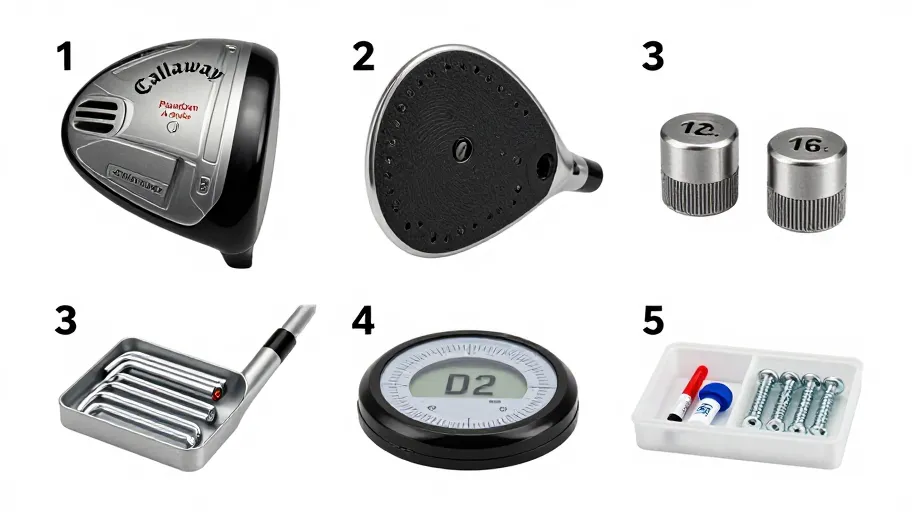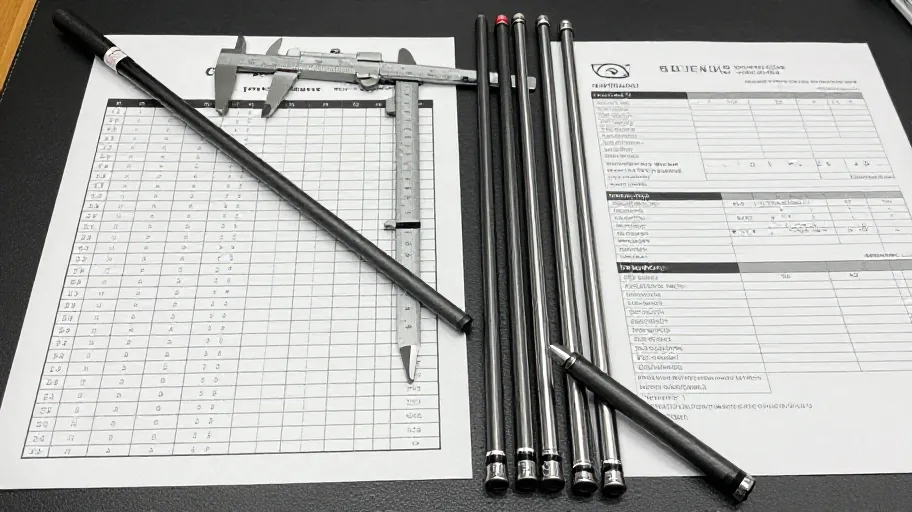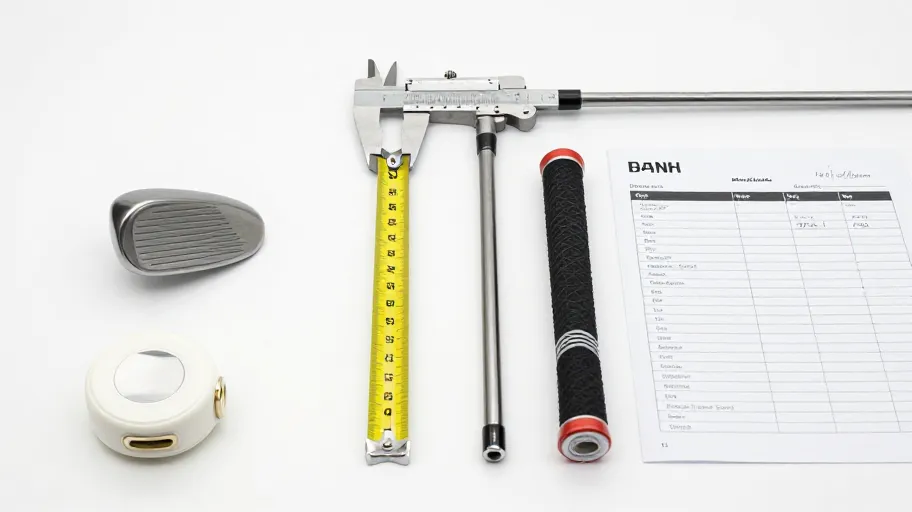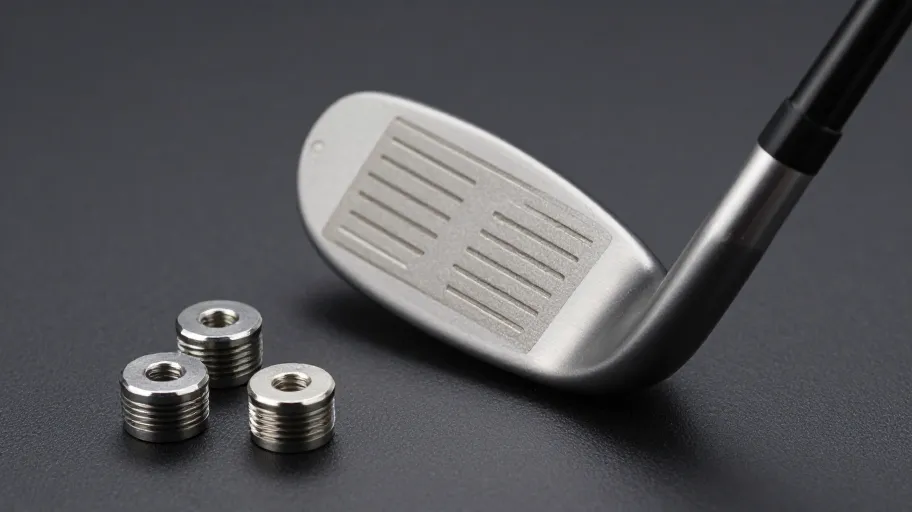
How do weights on golf clubs work? Club weights shift mass distribution to influence the club's balance point, feel and how the face is delivered at impact. Moveable sole and hosel weights fine-tune draw or fade bias, while replacement weights restore or change total mass and swingweight. Fitment depends on the exact club family, port type and thread spec, so verify model-level compatibility before ordering.
Why weight matters in component selection
Every golf club is a mass system. Total weight is what you feel when you pick the club up; swingweight is a balance measurement that describes how heavy the head feels during the swing; and mass placement inside or on the head influences where the effective hitting point of the club's inertia sits. A weight change of even a few grams at the head can move swingweight enough to alter feel and timing for a sensitive player.
For club builders and fitters, this means a replacement or tuning weight is never a generic fastener. It is a spec-driven component that must match the club's port geometry, thread or locking system, intended mass class and finish, and it must be verifiable against measured data before you approve it for a build.
The four mechanisms you are actually tuning
When someone asks how weights on golf clubs work, four mechanisms cover most of the answer:
- Total mass. Adding or removing weight changes overall club mass, which can affect tempo, timing and the player's perception of the club through the transition.
- Swingweight. Head-end mass changes shift the balance scale reading. Builders use swingweight as a repeatable reference point to keep a set consistent or to dial a single club toward a target feel.
- Mass distribution. A weight positioned toward the toe, heel, front or back of the head changes how the head resists twisting and where effective mass sits at impact. Front/back placement is used to influence spin behaviour; heel/toe placement is used to influence face delivery.
- Interchangeable adjustability. Many modern drivers, fairways and putters use moveable weight systems with port-specific geometries. Changing the heaviest weight between ports changes the bias of the mass distribution without adding or removing material.
None of these mechanisms guarantees a performance outcome on its own. The result depends on the player's swing, the club's full build spec and how the change is measured. Treat every weight change as a testable hypothesis, not a promised fix.
Selecting with the W-S-A-P framework
Before sourcing any weight, run the club through four checks. This keeps selection anchored to the specific brand, family and model rather than to catalogue categories.
W — Weight role. Is this a like-for-like replacement (lost or damaged original), a tuning change (different mass in an existing port), or a build component for a custom assembly? Each role carries a different verification burden.
S — System fit. Identify the exact club family and model year, then confirm the port type, thread or locking mechanism, seat geometry, tool interface and finish. Do not assume interchangeability between adjacent generations of the same family; confirm with the component specification and, where possible, a physical trial fit.
A — Adjustability intent. If the goal is bias tuning, document which port the heavier mass will occupy and what the intended change is, so you can evaluate the result against a defined baseline rather than an impression.
P — Proof of approval. Define in advance what evidence you need before accepting the component: measured mass on a calibrated scale, thread/geometry confirmation, and a documented test-fit or launch-monitor comparison on your exact club.
Decision table: matching your task to the right component path
| Your task | Key spec to confirm first | Verification before approval | Risk if skipped |
|---|---|---|---|
| Replace a lost driver sole weight | Exact club model, port type, thread spec | Measured mass and physical trial fit on the club | Stripped port, loose weight during play |
| Change mass class for swingweight tuning | Target swingweight delta vs current build | Before/after swingweight measurement on the same scale | Inconsistent set feel, misleading build records |
| Shift draw/fade bias on an adjustable head | Port layout and available mass options | Documented face-delivery comparison at a defined setting | Unpredictable directional change |
| Build a component club from scratch | Head weight, hosel/port system, build plan | Full spec sheet and assembled-club measurement | Build cannot be finished or balanced as planned |
| Match weights across a putter or wedge set | Family spec and finish consistency | Per-item mass measurement before installation | Set feels mismatched after assembly |
Spec verification and sample approval questions
Weight components invite two kinds of error: ordering something that does not fit, and accepting something that fits but does not match the stated spec. Build your sourcing conversation around questions that surface both risks. Ask your supplier to confirm, in writing and for your exact project:
- What is the measured mass of each weight in this batch, and on what type of scale?
- What port, thread and tool interface does this component match, and which club families and models does that apply to?
- Is a sample or trial-fit unit available for this component, and what are the current terms for samples, fees and shipping? Confirm the current policy directly, as no sample, cost or shipping terms can be assumed here.
- What finish and material specification applies, and how is that documented per item?
- What is the current lead time and order minimum for this component? These are project-specific and must be confirmed, not assumed.
- What is the process if a delivered component does not match the agreed spec?
Do not rely on a listing title alone. A weight described for a club family may not match a specific model year within that family. Verify at the model level, document what the supplier confirms, and hold that documentation against the delivered goods.
Approval checklist for a weight component
Before you approve a weight for a build or a customer's club, work through this checklist:
- Club brand, family, model and model year documented
- Port type, thread or locking system confirmed against component spec
- Measured mass recorded per unit, not just the catalogue value
- Target swingweight and build plan written down before installation
- Trial fit completed without forcing; seating verified
- Before/after measurement (swingweight and, if applicable, launch data) recorded
- Supplier confirmations on sample, fee, shipping, lead time and minimum order captured in writing for this project
- Result compared against the intended change and approved or rejected on evidence
Frequently asked questions
Does adding weight to a club head always increase swingweight? Adding mass at or near the head shifts the balance measurement in the head-heavy direction, but the size of the change depends on where the mass sits and the club's overall length and component masses. Measure the built club rather than predicting the final number.
Can I use weights from one club family on another model from the same brand? Not without verification. Port geometry, thread spec and locking systems vary between families and between model generations within a family. Confirm the exact model-level fitment with the component specification and a physical trial fit before use.
How do adjustable weights change ball flight? Interchangeable weights shift mass distribution. Heel-biased mass tends to help the face close through impact; toe-biased mass resists closing; forward placement is used to influence spin behaviour. The actual result depends on the player and the full build, so test against a documented baseline.
What is the difference between swingweight and total weight? Total weight is the assembled club's mass on a scale. Swingweight is a balance measurement that reflects how that mass is distributed along the club. Two clubs can have identical total weight and different swingweights, and vice versa.
Should I approve a component based on the listed mass value? Treat the listed value as a claim to verify. Record measured mass for the units you receive, and make approval conditional on the measurement matching the agreed spec for your project.
Get the sourcing brief
If you are sourcing weights or tuning components for a specific club family and model, get the sourcing brief (获取采购 Brief). It consolidates the fitment checks, spec questions and approval gates above into a single document you can send to any supplier and file against delivered goods.
Low-friction next step
Not ready to source yet? Download or copy the eight-point approval checklist above and run it against the next weight component you evaluate. It costs nothing and turns a fitment guess into a documented decision.
Master Your Swing, DIY Your Fit. DIY Golf is the premier destination for the technical golfer. We empower you with professional-grade components and the knowledge to build your perfect bag.