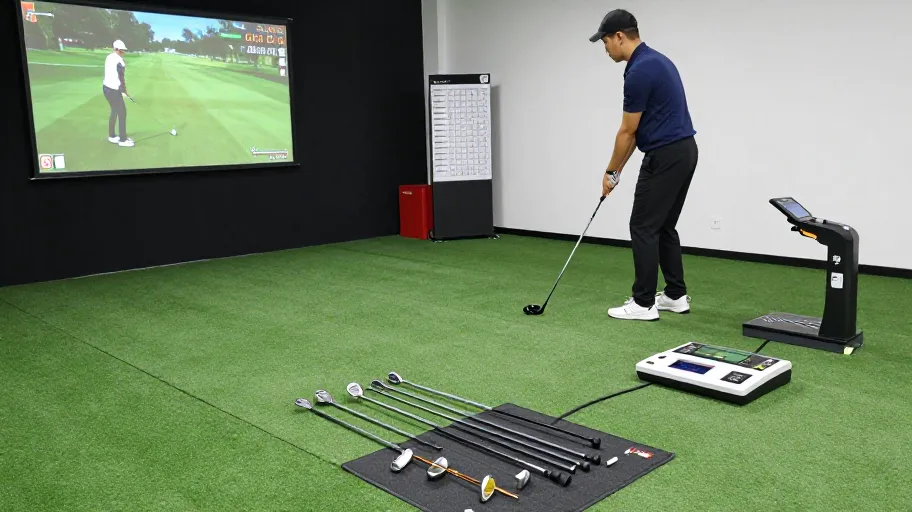
Is golf club fitting worth it? For component buyers, yes — when the fitting produces documented, repeatable measurements you can compare against your current setup and translate into a written component spec. If the fitting output cannot survive that comparison and documentation step, treat it as an opinion, not a purchase input.
This guide is written for golfers and club builders who source replacement or tuning components for a specific club brand, family and model. It does not promise performance outcomes, compatibility or savings. It gives you a framework to decide whether fitting data earns a place in your purchase decision.
The FIT-Verify framework
Before any fitted recommendation influences a component order, run it through three gates:
- F — Fit data quality. Was the measurement session documented? Do the numbers include the specs that matter for your component class (for example, lie, loft, length, swing weight, flex profile for shafts; undersize/standard/oversize and core diameter for grips)? Ask for the raw output, not just a summary.
- I — Installation constraints. Does your club family accept the proposed component? Adjustable hosels, proprietary tip diameters, bore depths and adapter systems vary between brands and generations. Verify the exact model's interface against the component's stated specifications from first-party sources on both sides.
- T — Total decision cost. Fitting is worth it when the information it adds reduces the risk of ordering the wrong component — a risk that includes re-ordering, re-shafting and downtime. Compare that against the cost of the fitting itself. No specific pricing, fee structure or sample arrangement can be stated here; confirm the current policy directly with the fitting provider and the component supplier.
The framework's value is discipline: it converts "the fitter said" into "the documented data shows, and the component spec matches."
Decision table: when fitting data should change your component purchase
| Situation | Does fitting data justify a component change? | What to verify before ordering |
|---|---|---|
| Current shot pattern is consistent and repeatable | Yes — measurable bias is worth correcting with a spec change | Documented measurements across multiple sessions, not a single bucket of balls |
| Numbers differ between two fitters or two sessions | Hold the order | Repeatability: re-test and reconcile before treating any spec as final |
| Proposed component differs from current spec in only one dimension | Only if that dimension is documented and matches a measured need | That the single change addresses a measured dispersion or delivery issue |
| Club family uses proprietary adapters or tip systems | Data alone is not enough | Exact interface compatibility for your model, from the component specification and the club's stated requirements |
| Fitting output is a verbal recommendation only | No | Written spec sheet before any purchase decision |
| You cannot obtain baseline data on your current setup | Fitting value is unproven | Establish a measured baseline first, then compare |
Spec relevance by component
| Component | Fitting-dependent specs | Verify before approval |
|---|---|---|
| Shaft | Flex profile, weight, torque class, tip trim guidance, length | Tip diameter and adapter fitment for your exact model; written spec sheet |
| Grip | Size class, core diameter, weight | Undersize/oversize suitability for measured hand size and current build |
| Head / adjustable components | Loft and lie settings, offset | Compatibility of the adjustable interface with your club family and generation |
| Adapter / hosel parts | Interface geometry, setting range | First-party compatibility confirmation for the exact model — never assume cross-generation fit |
| Weighting / tuning screws | Weight class, thread and seat match | That the tuning goal comes from documented measurements, not preference alone |
Approval questions for any supplier or fitter
Use this list verbatim in your communications. A supplier or fitter who cannot or will not answer in writing has told you something important.
- Can you confirm in writing that this component fits the exact brand, family, model and generation I listed?
- What is the full published specification for this component, and where is the first-party source?
- Which of the fitting measurements you recorded drove the recommendation, and can I have the raw output?
- If the component does not match its published spec when I receive and measure it, what is the process for resolving that? Confirm the current policy directly.
- Are there documentation, packaging or identification marks that let me verify the component on arrival against the spec I ordered?
- What install requirements (tip prep, bonding, torque values) apply, and are they documented for this component?
Treat written answers as part of your purchase record. If an answer arrives as a verbal assurance or an unstated "policy", that is not approval evidence.
Frequently asked questions
Is golf club fitting really worth it for a component buyer? It is worth it when the session produces documented measurements you can compare against your current build and translate into a written component specification. It is not worth treating as a purchase input when the output is a recommendation without data, or when the numbers cannot be reproduced across sessions.
Which fitting specs matter most when ordering a shaft? Flex profile, weight, torque class, length and trim guidance matter — but only in combination with tip/interface compatibility for your exact club model. A perfect flex match with the wrong tip geometry is still the wrong component.
Can I trust launch-monitor numbers from a fitting session? Evaluate them as evidence: ask what device was used, what settings applied, how many shots were captured, and whether the session can be repeated. Numbers you cannot reproduce are weak grounds for a component purchase. No specific result or accuracy claim can be made here.
Do I need a fitting if I'm only replacing a like-for-like component? Not for geometry that is already documented. You do need verification: confirm the replacement's published spec matches your recorded current spec for the exact model, and confirm the interface. Where the replacement deviates from like-for-like in any dimension, treat it as a change decision, not a replacement.
How do I approve a component order before it ships? Send the approval questions above, receive written answers, and compare the answers against your spec sheet and the club model's interface requirements. Approve only what is documented. Confirm the current policy directly for any question the answers leave open.
Next step: 获取采购 Brief
Turn this framework into a working document. 获取采购 Brief gives you a structured sheet to record fitting data, component specifications, interface checks and supplier answers in one place — so your next order is approved on evidence, not on a recommendation.
Quick start: the five-line pre-purchase checklist
If you are not ready for the full brief, run this first:
- Model identified: exact brand, family, model and generation written down
- Interface confirmed: component spec matched to the club's first-party fitment requirements
- Data documented: fitting measurements recorded in writing
- Supplier answers received: approval questions answered in writing
- Open items listed: every unanswered question flagged — Confirm the current policy directly
Five lines, one decision, documented.
Master Your Swing, DIY Your Fit. DIY Golf is the premier destination for the technical golfer. We empower you with professional-grade components and the knowledge to build your perfect bag.


