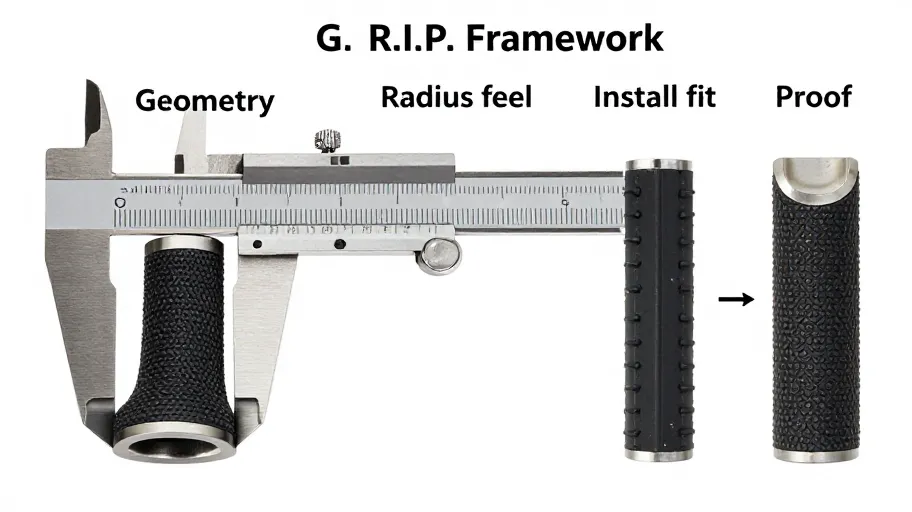
If you are sourcing a grip to replicate or adapt the Rory McIlroy putter setup on a specific putter model, treat the purchase as a verification exercise: document the geometry, radius feel, install fit and proof you need, confirm each attribute with the seller in writing, then approve a sample before committing to volume. The G.R.I.P. Framework below turns that process into four manageable steps.
Why this is a verification exercise, not a catalog browse
Searches around a tour-style grip setup surface a mix of product pages, forum threads and secondhand observations. None of that replaces confirmation against the exact grip, in the exact model and spec, from the seller you intend to buy from. A grip that suits one putter head, shaft trim and player's hands may not transfer cleanly to your build. DIY-Golf's role as a components store is to supply the component and the fitment guidance; your role as buyer or builder is to supply the exact context — putter brand, family, model, shaft and the feel target — so the match can be checked rather than guessed.
Internal planning evidence for this article (SERP-related questions and provisional GSC data still being processed) suggests readers arrive with three questions: what defines the setup, how to match it to a specific model, and how to sample and approve before ordering. This guide addresses all three without inventing terms that only the seller can confirm.
The G.R.I.P. Framework
Geometry. Define the cross-section and taper profile you want: how the grip widens toward the top, where the taper begins, and whether you want a uniform or reduced-taper feel. Note the target grip length for your putter and whether you will trim to length.
Radius feel. Geometry on paper is not feel in hand. Decide what surface texture and firmness profile you want, and accept that feel can only be approved by handling the component. This is where a sample matters: you confirm the hand-feel on your own putter, with your own grip pressure, before volume commitment.
Install fit. A grip is only usable if it fits your shaft. Document the putter shaft's butt diameter and the grip's core size, and confirm with DIY-Golf that the two align for the install method you plan to use. Also confirm any installation notes specific to the grip's construction.
Proof. Ask for written confirmation of each claimed attribute — dimensions, material description, model applicability — before you pay. Proof is the difference between a marketing claim and a spec you can build against.
Decision table: matching grip attributes to your build intent
| Your situation | Attribute to prioritise | Question to resolve before ordering |
|---|---|---|
| Replicating a tour-style setup on your own putter model | Taper profile and grip length | Does the seller confirm the taper and length in writing for this exact grip SKU? |
| Replacing a worn grip with a similar feel | Surface texture and firmness profile | Can you inspect or handle a sample before committing? |
| Building for multiple players | Consistency across units | What documentation supports unit-to-unit consistency? |
| Trimming to a custom length | Core size and how trimming affects the profile | How does trimming interact with the taper at your target length? |
| Installing on a non-standard shaft | Butt diameter vs. core size fitment | Does the seller confirm fitment for your measured shaft? |
| Uncertain about any of the above | Everything above | Has each open item been written into the 采购 Brief? |
Specs to document before you order
Bring this list to your supplier conversation. Every blank is a reason the wrong component ships.
- Putter brand, family and model, plus head style and loft as ordered.
- Shaft butt diameter as measured on your actual shaft.
- Target grip length and whether you will trim.
- Taper profile and cross-section preference.
- Surface texture and firmness profile preference.
- Install method and any tape/solvent constraints on your bench.
- Quantity, split by model if you are building for several players.
- Which attributes you require in writing versus which you will approve by sample.
Samples and approval: the questions to ask
DIY-Golf has not published sample, cost, shipping or production policy details in the inputs for this article, so every item below is a question for the seller — not an assumption about their terms. Ask directly and record the answers:
- Is a sample available for this exact grip SKU, and what is the current sample policy?
- If any fee applies to a sample, what is it and what does it cover? Confirm directly — do not rely on prior purchases or third-party accounts.
- Who arranges and pays for sample shipping, and under what current terms?
- What documentation can accompany the sample — spec sheet, material description, model applicability note?
- After I approve the sample, what is the process and current timeline for the ordered quantity? Ask for the schedule in writing.
- What happens if delivered units do not match the approved sample? Get the corrective process stated before payment.
Do not treat any answer about sample fees, shipping or timelines as portable to a future order. Policies change; confirm per order and keep the written record with your build file.
FAQ
Can I just order the grip I saw in a tour bag photo and install it? You can order any component the seller stocks, but a photo is not a spec. Confirm the exact SKU, taper profile, length and core size in writing, and match them to your measured shaft before install. If you cannot confirm an attribute, request a sample first.
How do I know the grip fits my putter shaft? Measure your shaft's butt diameter and compare it against the grip's core size, then ask DIY-Golf to confirm the pairing for your install method. Do not assume a fitment from the putter model alone; shafts are re-shafted and trimmed more than most golfers realise.
Is a sample necessary for a single-grip order? That is your risk call. For a single unit, the downside of a mismatch is small; for a club-building run, an unverified feel or taper can cost you the whole batch. If you are building for customers or replicating a precise setup, sample first and approve in writing.
What should I do if the specs I find online conflict? Treat every non-first-party source — forums, retail listings, video breakdowns — as unverified. Write down the conflict, submit it in the 采购 Brief, and ask DIY-Golf to confirm the correct attribute for the exact SKU in question. Build only against confirmed answers.
What information does DIY-Golf need from me to quote accurately? At minimum: putter brand, family and model; measured shaft butt diameter; target grip length and taper preference; quantity; and any sample or documentation requirements. The 采购 Brief form is structured to capture exactly this.
获取采购 Brief
Ready to move from research to a verified order? 获取采购 Brief: submit your putter brand, family, model, measured shaft details and sample requirements, and DIY-Golf will respond with confirmed specifications and current terms for the exact grip SKU — so your approval is based on the seller's written answers, not assumptions.
Low-friction checklist before you submit:
- Putter brand, family and model recorded
- Shaft butt diameter measured
- Target grip length and trim plan noted
- Taper and texture preference written down
- Open spec questions listed
- Sample and documentation requests included
Master Your Swing, DIY Your Fit. DIY Golf is the premier destination for the technical golfer. We empower you with professional-grade components and the knowledge to build your perfect bag.


