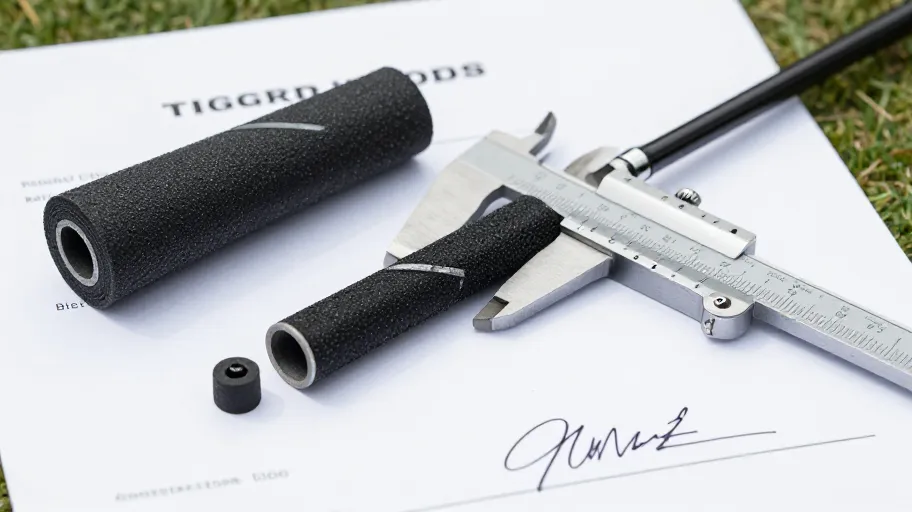
A Buyer's Guide to Tiger Woods Grip Specs: Specs, Samples and Approval
Tiger Woods grip specs circulate as informal observations about grip size and build-up on his clubs, not as a supplier datasheet. For a sourcing decision, treat them as a starting reference: define the target grip model, core size, butt diameter interaction and build-up plan for the exact club you are building, then validate with a physical sample and approve in writing. This guide shows how to do that with the SPEC–Sample–Approve framework.
What the spec question is really about
When a builder searches "tiger woods grip specs", the search job is not biography. It is component selection: the reader wants a defensible target for a replacement or tuning grip on a specific club brand, family and model.
The obstacle is that publicly repeated player specifications are informal and unverified. They are not tied to a production lot, a measured core size or a documented build-up method, and they say nothing about whether the grip you are considering fits the butt diameter of the shaft you are actually building. Copying a number without a verification path produces a purchase decision you cannot defend.
The productive move is to convert the informal spec into a documented requirement. That means writing down what you intend to buy, in the terms a supplier can confirm: grip model, core size, intended shaft butt diameter, build-up tape plan, texture family, and the approval evidence you will require before committing to volume.
The SPEC–Sample–Approve framework
S — SPEC. State the requirement before you browse. For grips, the SPEC pass covers five inputs:
- Size target: core size and the final installed feel you are aiming for on this build.
- Physical interface: shaft butt diameter at the grip section, and how build-up tape changes the effective dimension.
- Evidence required: what the supplier must document — the datasheet, the measured core, the lot reference.
- Compatibility: the exact club family and model the grip is destined for, stated by name so any fitment question is answerable.
- Conditions of purchase: sample availability, order process, and the approval step before any larger commitment.
Sample. Once a candidate grip matches the documented spec, request a sample. Do not assume any sample policy details: whether samples are offered, what they include, who covers transport, and any fees involved must be confirmed directly with the supplier at the time of enquiry. Record the answer in writing with a date and the name of the person who confirmed it.
Approve. Approval is a documented decision, not a feeling. The sample must match the stated spec on the inputs you wrote in the SPEC pass, and any deviation is either accepted in writing or rejected. Only after approval does a volume conversation make sense.
Decision table: verifying a candidate grip spec
| Spec dimension | What to verify | Where risk appears | Documentation to request |
|---|---|---|---|
| Grip model and version | Exact model name and version as listed | Same model name across versions with different cores or textures | Product listing reference and supplier confirmation in writing |
| Core size | Stated core size of the grip | Mismatch between core and shaft butt diameter producing undersized or oversized final feel | Datasheet or written spec confirmation |
| Shaft butt diameter compatibility | Compatibility with the specific club family and model you are building | Generic "fits most" claims with no model-level confirmation | Written fitment confirmation for your named club |
| Build-up plan | Number of tape layers and resulting effective size | Build-up changing feel in ways not captured by core size alone | Your own recorded build-up plan, kept with the order |
| Texture and surface | Texture family matches the intended play context | Texture perceived differently on install and in hand than in photos | Physical sample evaluation against your written criteria |
| Sample policy | Current sample availability, process and any fees | Policies differ by supplier and change over time; nothing in this article states a policy | Direct written confirmation from the supplier |
| Lot consistency | Whether repeat orders match the approved sample | Uncontrolled variation between sample and volume orders | Supplier's written position on consistency; your own receiving check |
This table is a comparison instrument, not a claim that any specific grip meets any row. Each cell becomes an approval input you either verify or explicitly waive.
Approval questions to put to any supplier
Before approving a sample or discussing volume, send these questions and keep the answers on file:
- Can you confirm in writing the core size and spec sheet for the exact grip model and version I have named?
- Can you confirm compatibility with the shaft and club model in my build, by name?
- What is your current sample process for this grip — availability, procedure, and any fees or transport arrangements I should confirm?
- If I approve a sample, what assurance can you give that subsequent orders match the approved sample?
- What documentation accompanies the shipment — spec sheet, lot reference, and a point of contact for queries?
- What is your process if a delivered grip does not match the approved sample?
If a supplier cannot or will not answer these, that is a decision input in itself. A sourced component you cannot document is a component you cannot support.
Sample verification checklist
Run this before approving any sample:
- Written spec sheet received for the exact model and version
- Core size confirmed against your shaft butt diameter
- Fitment confirmed in writing for the named club family and model
- Build-up plan recorded and consistent with the size target
- Sample policy (availability, process, fees, transport) confirmed directly and dated
- Physical sample evaluated against your written texture and feel criteria
- Deviations from spec identified and either accepted in writing or rejected
- Approval decision recorded with date, evaluator and sample reference
FAQ
Are Tiger Woods's grip specifications an official datasheet? No. Publicly circulated figures are informal observations about his equipment. For sourcing, use them only as a directional reference and build your own documented requirement for the club you are actually constructing.
Which spec dimensions matter most when matching a grip to a club? Core size, the shaft's butt diameter, the build-up plan, and the texture family. All four interact; verifying one while assuming the others is how fitment errors enter a build.
Should I order a sample before committing to volume? Under the SPEC–Sample–Approve framework, yes — but the sample process, its conditions and any costs are supplier-specific and must be confirmed directly at the time of enquiry. Nothing in this article states a sample policy.
How do I know a grip is compatible with my specific club model? State the club brand, family and model in your enquiry and require written confirmation. Compatibility claims that are not model-specific are not verification.
What if the delivered grip differs from the approved sample? That is why question 6 above exists. Agree the deviation-handling process in writing before approval, and record every receiving check against the approved sample reference.
Next step
Get the Sourcing Brief — a supplier-ready requirement sheet covering the SPEC inputs, the approval question set and the documentation slots, formatted to send to DIY-Golf or any component supplier you are comparing.
Prefer to start smaller? Copy the sample verification checklist above and run it on your next candidate grip. It costs nothing but discipline, and it converts an informal spec search into a documented decision.
Master Your Swing, DIY Your Fit. DIY Golf is the premier destination for the technical golfer. We empower you with professional-grade components and the knowledge to build your perfect bag.


