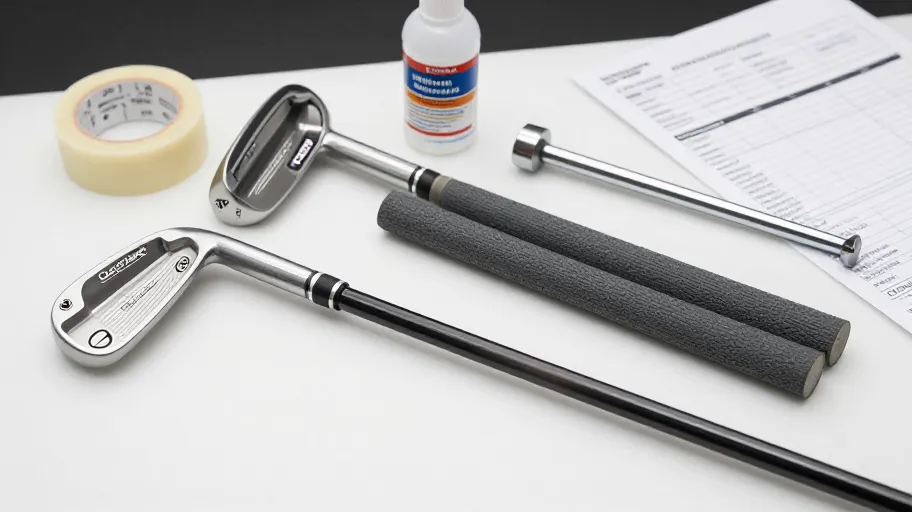
If you are asking what golf grip does Phil Mickelson use, what you actually need is a repeatable way to turn a tour reference into an orderable spec: define the grip model, size, tape wrap and installation method from verifiable public evidence, then request a sample and approve it against written criteria before you commit. This guide walks through that Spec → Sample → Approval loop for club builders and serious golfers sourcing replacement grips for a specific club brand, family and model.
Why the question is a spec, not a model number
Tour setups change. Players re-sign equipment deals, grip makers refresh product lines, and a photograph from one season may not describe the current bag. Treat any single answer — including answers found on forums or in equipment coverage — as a starting hypothesis to verify against current public evidence, not as a settled fact.
More importantly, "the model" is only a fraction of the decision. A grip reference that actually reproduces a feel includes:
- Model and family — the grip line itself.
- Size class — standard, midsize, oversize, or a named maker-specific size.
- Tape wraps — how many buildup layers under the lower hand, if any.
- Core diameter — must match the shaft butt diameter for the club in question.
- Installation — solvent-and-tape, air install, full-cord versus rubber compound, and grip alignment.
Two builders can install the same named grip and produce noticeably different feel. That is why the useful question is not only "which grip?" but "which grip, at which size, with which buildup, on which shaft?"
A note on truth boundaries: this article does not assert a specific grip model, size, endorsement contract or equipment agreement for Phil Mickelson or any tour player. Confirm current setup details from current sources, and confirm component availability directly with the maker or this store.
Decision table: turning a tour reference into an orderable spec
| Decision point | What to establish | How to verify | What to write down |
|---|---|---|---|
| Target model | The grip line you are trying to match | Current-season photos, broadcast close-ups, player interviews — dated and cross-checked | Model name and generation |
| Size | Standard, midsize, oversize or maker-specific class | Measure the player's current grip if replicating a known feel; otherwise trial via sample | Size class and any build-up |
| Tape wraps | Whether buildup layers are used and where | Ask the player or measure existing grip diameter at two points | Number of wraps and coverage zone |
| Core fitment | Grip core diameter vs shaft butt diameter | Check both part specifications against the exact club model | Confirmed pairing: grip + shaft + club |
| Install method | Solvent-tape, air, or shop-standard | Your own workshop standard; confirm grip material tolerates it | Method recorded on the build sheet |
| Sample outcome | Does the sample match the written spec? | Hands-on evaluation against the checklist below | Approve, revise, or reject |
Work this table left to right before you order anything. Every cell filled in becomes a line in your sourcing brief, which shortens the conversation with any supplier and removes ambiguity from the build.
The sample step: questions to ask before you order
Samples are where most grip sourcing goes wrong — not because a supplier is unwilling, but because nobody defined what the sample is for. Before requesting one, put these questions to the supplier in writing:
- Is a sample available for this exact model and size? Confirm the sample matches the production part you would order, not a different generation or a display version.
- What does the current sample policy cover? Whether a sample carries a fee, who arranges and pays for shipping, and any conditions attached — confirm all of this directly with the supplier; do not assume it from this article or from past orders.
- Which batch or production run does the sample represent? If the sample is from older stock, texture and tack can differ from a fresh run. Ask what the sample is drawn from.
- Can the sample be installed on the intended shaft? A grip evaluated off the shaft tells you about texture only. Fitment on the actual club — the exact brand, family and model in your shop — is the real test.
- What documentation comes with the sample? Request the part specification sheet: size class, weight, core diameter and material description, so your build sheet matches the order.
After the sample arrives, the questions shift to evaluation:
- Does the stated size class match what you measure?
- Does the butt diameter, with your intended tape wraps, produce the feel target?
- Does the grip install cleanly with your shop's method, without tearing, slipping or alignment drift?
- Does it hold up on the practice range over a session — texture, tack, and how the hands read it in damp and dry conditions?
The approval step: sign off in writing
Approval is the step most builders skip, and it is the cheapest insurance in the process. Before ordering any quantity, write down the acceptance criteria:
Pre-order approval checklist
- Grip model, generation and size class recorded on the build sheet.
- Core diameter confirmed against the shaft butt diameter for the exact club model.
- Tape wrap plan specified (count and coverage).
- Install method confirmed as compatible with the grip material.
- Sample received, installed and evaluated against the above.
- Sample policy, any fee, and shipping arrangements confirmed directly with the supplier and noted on the file.
- Quantities and reorder contact recorded before the first full order.
An approved spec is portable. If you rebuild the same club for a second customer, or the player's reference setup changes mid-season, the written spec tells you what changed — the model, the wraps, the install — instead of leaving you to reverse-engineer feel from memory.
Where DIY-Golf fits
DIY-Golf is an English-language direct-to-consumer golf components store focused on component selection and golf club fitment guidance. For a grip sourcing question of this kind, the practical next step is not a shopping cart — it is a short document that states the target spec, the club it must fit, and the sample questions above. That is what the sourcing brief is for.
FAQ
How do I find out what grip a tour player currently uses? Cross-check dated public evidence: broadcast close-ups, tournament photography and the player's own interviews in the current season. Treat older sources with caution, and never treat an unverified forum post as a spec. This article deliberately does not assert a current setup for any player — verify before you order.
Does grip size really change feel that much? It changes what your hands perceive and how much the grip encourages a particular hand action, which is why size and buildup belong on the spec sheet alongside the model name. Whether a given size is right for a given player is an individual evaluation — test it with a sample on the intended club.
Can I just order the same grip in a different size?
What should I put in a sample request? The model and size you are targeting, the club and shaft it must fit, your install method, and a request for the part specification sheet. Also ask the supplier to describe the current sample policy — fees, shipping and any conditions — in their own words.
Do I need a sample if I have used this grip before? If the grip is the same generation, same size and same install plan, your prior experience may be enough. If the model has been refreshed, the size differs, or the buildup changes, a sample protects the approval you already wrote down.
Ready to spec it? 获取采购 Brief — send us the target grip, the club brand, family and model it must fit, and your sample questions, and we will come back with a component match and the details to confirm before you order.
Or start smaller: copy the pre-order approval checklist above, fill in what you already know, and use it as your first message to any supplier — including us.
Master Your Swing, DIY Your Fit. DIY Golf is the premier destination for the technical golfer. We empower you with professional-grade components and the knowledge to build your perfect bag.


