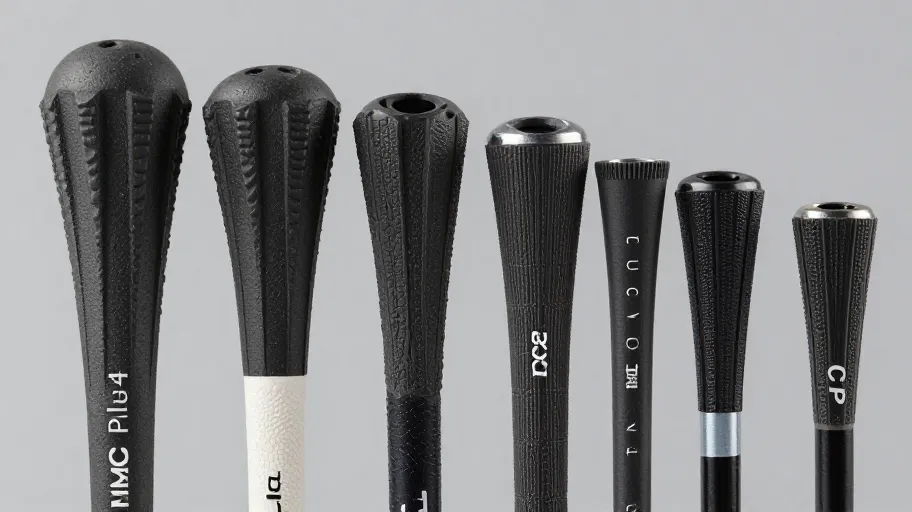
The best Golf Pride grip is the one whose feel, profile and taper behavior match your specific club brand, family and model — which is why this guide replaces the question "what's the best golf pride grip?" with the FIT Check Framework: Feel, Intent, Taper. Work through those three gates, document your answers, verify current specifications with the supplier, and approve a sample for your exact configuration before you commit to any order.
Why "best" needs club context first
A grip that suits a player's irons may be the wrong call for a driver build, and a model chosen for one shaft family may behave differently on another because of butt diameter, tip section and the way the builder installs it. If you're sourcing replacement or tuning grips for a particular club brand, family and model, the honest answer to "what's the best Golf Pride grip?" is a shortlist validated against your build — not a single universal model name. That shortlist is exactly what the framework below produces.
The FIT Check Framework
Feel. Describe the texture and firmness the player wants in their own words: soft, tacky, corded, smooth, dampening under the trail hand. Don't translate this into a model yet — translate it into attributes. You'll verify which current Golf Pride lines carry those attributes directly with the supplier, because texture and compound details can change between production runs and product generations.
Intent. What is the build for? A full iron-set refresh, a single rescue club re-grip, a driver tune, or a practice club? Intent determines how many units you need, how consistent the set must be, and how much scrutiny a sample deserves. A one-off tune and a full-set refresh justify very different approval depth.
Taper. Confirm, per club, the core size, the butt diameter you're building to, and how you want taper to behave through the set — standard taper, reduced taper, or built-up wraps. Taper is where most "wrong grip" outcomes come from, because it interacts with both the shaft and the installation method. Verify the specifications for the exact model and size you intend to buy rather than assuming from a past order.
Decision table: verification questions by build scenario
| Build scenario | Feel question to answer | Intent question to answer | Taper/spec question to confirm with supplier |
|---|---|---|---|
| Full iron-set refresh | Which texture does the player rate highest after range sessions? | How uniform must the set be, club to club? | What core size and butt diameter apply to the current model in this size? |
| Driver or fairway tune | Does the player want more grip security in wet conditions? | Is this a single-club change or part of a larger tuning plan? | What grip weight and build-up options pair with this shaft's butt section? |
| Rescue/hybrid re-grip | Should it match the iron set or stand alone? | How soon does the club go back into play? | What is the confirmed specification for the exact model, size and color requested? |
| Practice or testing club | Which attributes matter least for this purpose? | Is this a trial before a larger order? | What documentation supports the spec sheet for this configuration? |
Every cell in the right-hand column is a question to confirm — not a fact to assume. Specifications, availability and documentation for a specific Golf Pride model, size and color should be verified against current first-party information before you approve anything.
Specs, samples and approval without assumptions
Once the FIT Check shortlist exists, the sourcing task is verification. Three steps:
- Specs. Send the supplier the exact club brand, family and model, plus the grip model, size and color on your shortlist. Ask for the current specification sheet and confirm that what you'll receive matches it.
- Approval. Build or test-fit the sample against the actual club. Confirm feel under the conditions the player cares about, and document the approved configuration: model, size, color, install method and any build-up. That document becomes your reference for the order and for any repeat purchase.
Two boundaries worth stating plainly. First, no published guide can confirm for you the current sample policy, pricing, stock position, shipping terms or lead time for your configuration — those are supplier questions, and the answers can change. Second, do not attribute performance outcomes to a grip choice without evidence from your own testing on your own clubs. Verify, compare, document, approve — in that order.
Approval questions to send before you commit
Copy these into your inquiry:
- For the exact Golf Pride model, size and color: what is the current confirmed specification, including core size and grip weight?
- Which of these grips is currently available for the quantity my build requires, and how is that confirmed?
- What does the sampling process for this configuration involve, and what are the current terms I need to agree to?
- How do you document that the delivered grips match the approved sample?
- What should I provide about my club (brand, family, model, shaft butt section) so you can confirm the grip is the right match for this build?
Answers to these questions, plus your FIT Check notes, are precisely what a sourcing brief should contain.
Ready to turn your shortlist into a documented, approved build? 获取采购 Brief — send us your club details, your FIT Check answers and your shortlisted grips, and we'll structure the verification and approval steps with you.
FAQ
How do I choose between grip textures for a full set? Decide the attributes first (soft, tacky, corded, smooth), shortlist the models that carry them, then test a sample of each in the size you'll build. Full-set refreshes reward consistency, so the model the whole set shares matters more than any single club's preference.
Do I need different grips for woods versus irons? Not necessarily — but the taper and weight considerations can differ between a driver build and an iron build, and the right verification is to confirm the specification for the exact model and size against each club's shaft section rather than assuming one answer covers the bag.
What size grip should I verify? Work from the player's hand measurement and preference, then confirm the current size range and taper behavior of the exact model with the supplier. If you plan build-up wraps or a reduced taper, state that in your inquiry so the confirmation covers the installed configuration, not just the bare grip.
How should I handle sampling before a larger order? Request samples of every shortlisted model in the intended size, confirm the current sampling policy and terms directly with the supplier, and approve against the actual club. Keep the approved sample and a written configuration record so any repeat order references the same thing.
What information should a grip sourcing brief include? The club's brand, family and model; the shaft butt section details you're building around; the shortlisted grip models, sizes and colors; your FIT Check answers; and the quantity and timeline the build requires. That is enough for the supplier to confirm specs, availability and next steps without guesswork.
Before you order: a quick checklist
- Club brand, family and model documented
- Shaft butt section and build-up plan noted
- Shortlisted Golf Pride models, sizes and colors listed
- Current spec sheet confirmed for the exact configuration
- Sample requested in the intended size
- Current sample terms confirmed directly with the supplier
- Approved sample tested on the actual club
- Approved configuration recorded in writing
Run this checklist before any commitment, and send the results with your inquiry.
Checklist done? 获取采购 Brief with your documented configuration and we'll help you confirm specs, samples and approval steps for your build.
Master Your Swing, DIY Your Fit. DIY Golf is the premier destination for the technical golfer. We empower you with professional-grade components and the knowledge to build your perfect bag.


