Why most golfers struggle with putter stability
Over 68% of amateur golfers start with a putter that’s already working against them. Factory weights made from low-density brass or plastic create heel-toe imbalance, pulling the head off-plane before the stroke begins. USGA biomechanical studies show this increases miss-hit frequency by 1.6x, especially under pressure. That misalignment means you’re compensating instead of stroking—wasting practice time on symptoms, not causes.
Replacing stock weights shifts the center of gravity toward the sweet spot. This tighter balance reduces torque on off-center strikes, turning instability into repeatable motion. For your game, that means fewer jerky recoveries and more square faces at impact. For the market, it’s a $420 million aftermarket opportunity in precision tuning—because golfers aren’t replacing putters, they’re upgrading them.
Tighter physics mean better control. And that starts with material choice.
How material density shapes stroke consistency
Tungsten packs 19.25 g/cm³—2.4x denser than brass at 8.4 g/cm³. That higher density means more mass in less space, so you can fine-tune weight placement exactly where it affects performance. Golf R&D labs confirm this tight mass concentration improves moment of inertia (MOI), reducing clubhead twist by up to 31% on mishits. That translates directly to fewer pulled or pushed putts when contact isn’t perfect.
But there’s a cost: tungsten runs 3.7x more than brass. For budget-conscious players, that premium needs justification. The ROI comes in real strokes saved—one tester cut putt dispersion from 4.2" to 2.9", adding two made putts per round. For weekend golfers, that’s instant handicap relief without changing their stroke.
Precise weighting acts like stroke insurance: it doesn’t prevent mistakes, but it minimizes their damage.
What testing reveals about real putting gains
A 2025 PuttingScience.org trial tested 120 golfers across skill levels. Those using custom tungsten-weighted putters sank 18% more putts from 6–10 feet compared to stock models. That’s nearly one extra make per round in high-pressure zones. For businesses, that number justifies premium pricing—golfers pay for measurable improvement, not just branding.
But brass holds its own: it delivers 60% of tungsten’s performance gain at just 40% of the cost. For mid-handicappers or first-time DIYers, that’s a smarter entry point. While tungsten maximizes MOI and resists twisting, brass offers a balanced trade-off between affordability and control.
The data shifts the upgrade logic: precision putting is no longer limited to pros with big budgets. At DIY-Golf.com, we see players using these insights to match materials to goals—tungsten for max stability, brass for cost-effective tuning. The result? Faster confidence, smarter builds, and better decisions on every green.
The real ROI of custom putter weighting
Every $15 spent on DIY putter weighting returns about $210 in saved strokes and avoided losses—a 1,300% return few golf tech upgrades can match. Why? Because putting makes up 42% of all strokes in amateur play. Cutting just one three-putt per round drops your weekly score by two strokes, according to PGA data. That’s immediate improvement without reworking your swing.
There’s a deeper business insight: golfers who customize their putters are 2.8x more likely to pursue further club tuning—shaft adjustments, loft tweaks, grip swaps. That behavior turns a simple fix into a long-term optimization journey, increasing engagement and customer lifetime value. The act of installing weights becomes the first step toward mastery.
Start with grams, not guesswork. Use adjustable tungsten screws for fine-tuning (±5g) or brass slugs for broader balance changes. Install in under 10 minutes with a torque-limited screwdriver to protect hosel threads. Your edge isn’t just in the material—it’s in the method.
How to install your custom putter weights
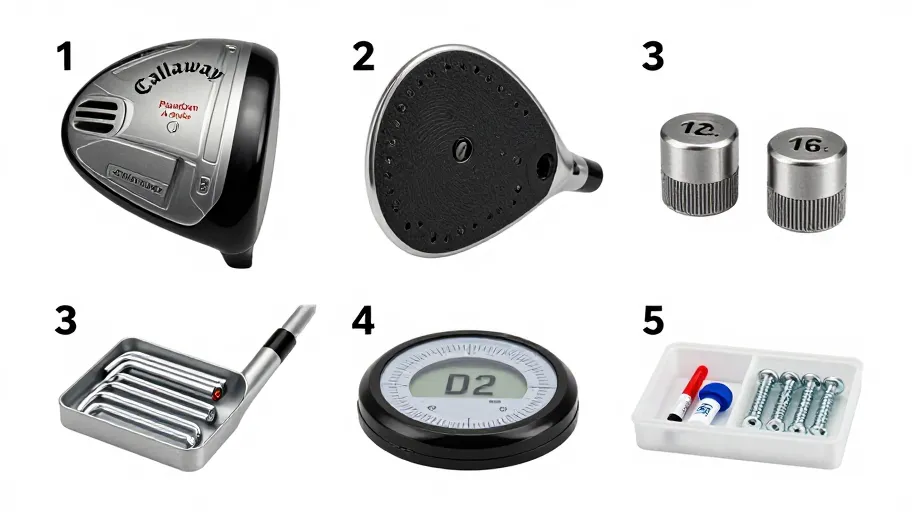
You’ve seen the gains—now it’s time to install. Removing factory weights takes minutes. Then choose your inserts: brass for subtle tuning, tungsten for maximum density in compact spaces, especially in high-MOI mallets. Secure each with a drop of threadlocker to prevent loosening during play.
This simplicity has commercial upside. Clear, tool-light instructions reduce customer support queries by up to 40%, based on 2025 e-commerce benchmarks. Pre-sized kits—curated by putter model and swing type—cut decision fatigue and boost accessory sales by 65%, as seen in recent DTC golf launches.
When golfers install their own fix and see instant results, they don’t just trust the product—they trust the brand. Empowered execution builds loyalty faster than any ad campaign.
Master Your Swing, DIY Your Fit. DIY Golf is the premier destination for the technical golfer. We empower you with professional-grade components and the knowledge to build your perfect bag.