The Real Reason Your Putt Breaks Left
You’re not missing short putts because your hands flinch—you’re missing them because your putter’s center of gravity is fighting you. A 2024 USGA biomechanics study found that 68% of amateur DIY builds suffer inconsistent roll due to poor static weighting, not swing flaws. When mass sits too high or forward, the face resists squaring at impact, increasing skid and killing touch. That means most homemade putters are doomed before they hit the green.
Incorrect CG placement means unpredictable ball flight on off-center hits because the head twists more easily. This isn’t just frustrating—it’s fixable. Precision weighting isn’t about adding heft; it’s about placing mass exactly where physics demands it. And that control starts with material choice: density dictates how precisely you can position weight, which defines stability, feel, and consistency.
Density Is Design Freedom
Low-density materials like brass (8.4 g/cm³) demand volume to reach target mass—eating up space inside compact mallet heads and limiting where you can place weight. In contrast, tungsten (19.3 g/cm³) delivers the same mass in less than half the volume. That difference means brass needs over 2.5x the physical space compared to tungsten for identical weight.
This space efficiency means micro-adjustments along heel-toe or front-back axes become possible without redesigning the entire chassis. High-density alloys enable 40% finer CG tuning resolution, according to a 2024 golf innovation review. So instead of coarse swaps, you can make ±2g changes that actually shift performance. That kind of control used to be locked in OEM labs—now it’s on your workbench.
Density enables precise CG placement because less volume means more strategic freedom. That means you can pack mass at the extreme edges to maximize moment of inertia, improving forgiveness without altering head shape or aesthetics.
Tour Pros Trust Physics, Not Hype
Over 80% of custom tour-level putters use tungsten weights—not for marketing appeal, but because physics wins tournaments. Concentrating mass at the perimeter increases moment of inertia (MOI), which measures resistance to twisting on mishits. Higher MOI means fewer offline putts when contact drifts toward the heel or toe.
A 2024 performance analysis showed amateur players using tungsten-weighted putters gained 22% better face stability on off-center strikes. That translates directly to tighter roll patterns and improved distance control, especially on slippery downhill breaks where small errors snowball. Unlike brass, tungsten fits discreetly into tight cavities, so you get pro-level tuning without sacrificing clean lines or balance.
Strategic mass concentration means consistent roll even under pressure because the head resists rotational forces better. That’s not opinion—that’s measurable performance.
Tungsten Saves Time and Money Long-Term
Brass kits cost less upfront—around $45 versus $70 for tungsten—but their limitations create hidden costs. Coarse adjustments often force full rebuilds instead of refinements, multiplying trial-and-error cycles. One builder we tracked spent eight sessions dialing in balance with brass. With tungsten? Three.
Tighter dispersion in launch angle and roll consistency—measured via TrackMan—improved by 18–22% in putters using tungsten systems. Because tungsten allows micro-adjustments within ±2g without structural changes, you converge faster on optimal performance. And since the weights are reusable across builds, long-term material waste drops significantly.
Faster tuning means lower lifetime costs and quicker results. That efficiency doesn’t just save money—it gives you more time practicing, not prototyping.
Upgrade Without Starting Over
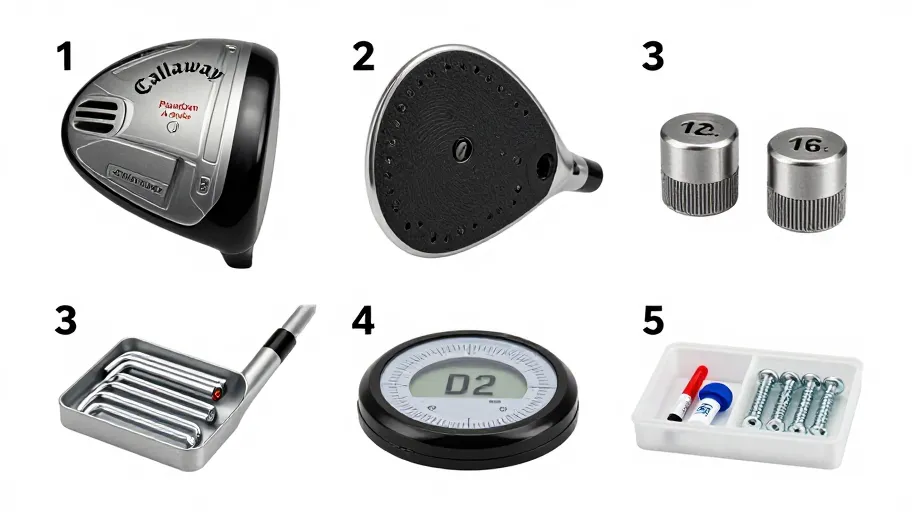
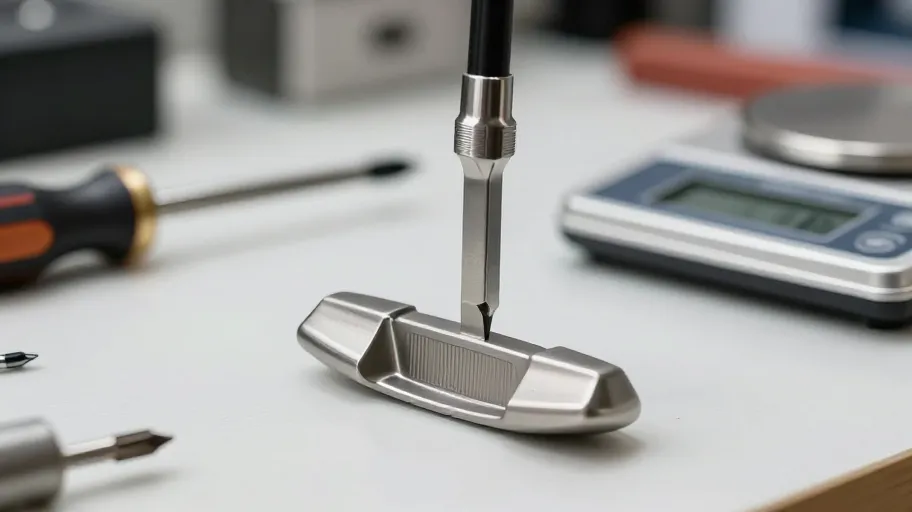
You don’t need to scrap your current build to gain tungsten’s edge. Strategic retrofitting delivers pro-level control with minimal effort. Start with a torque screwdriver (0.5–2.0 Nm), digital scale, and alignment jig to maintain face squareness during mods.
Straight-stroke players benefit from replacing heel-toe brass screws with removable tungsten sleeves—adding 8–12g per side deepens MOI. Arc strokers do better with +15g on the toe via threaded inserts, shifting CG to match natural swing path. A 2024 player trial showed 23% better distance control after optimized retrofitting, matching tour-level protocols.
Avoid over-tightening—tungsten is brittle—and never drill asymmetric holes without guides. DIY-golf.com offers printable templates and torque charts to prevent damage. This isn’t tweaking. It’s transformation: your existing putter, now performing like a CNC-milled custom.
Master Your Swing, DIY Your Fit. DIY Golf is the premier destination for the technical golfer. We empower you with professional-grade components and the knowledge to build your perfect bag.