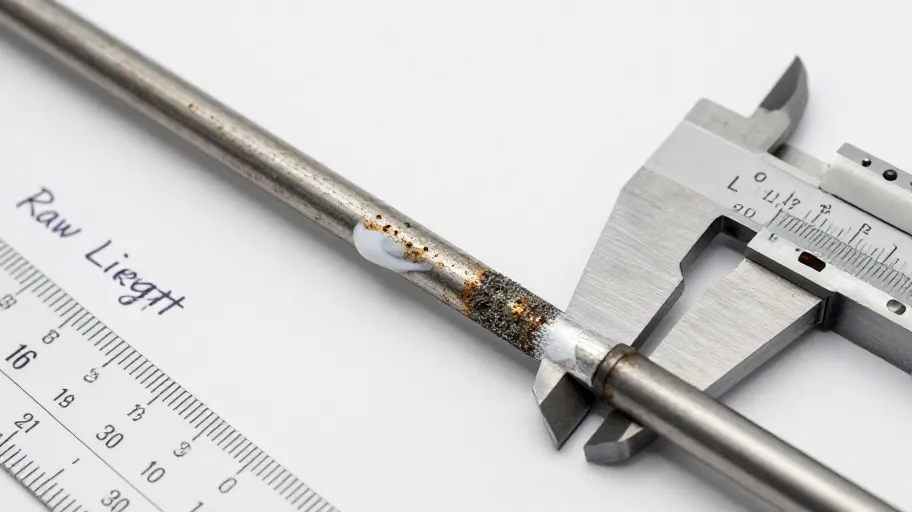
Cleaning rust off a golf club shaft is, first, an inspection method: a careful clean reveals whether corrosion sits on the surface or has pitted the steel and compromised the structure. Before you send any RFQ for a replacement shaft or component, document the exact fitment data for your club brand, family and model — tip diameter, butt diameter, raw length and trim notes — because cleaning tells you whether to source; specifications tell the supplier what to quote.
The SPEC-First Protocol
Use this framework before touching the RFQ button:
- S — Surface condition. Clean and inspect. Record where rust sits (hosel junction, tip section, mid-section) and whether the metal is smooth or pitted after cleaning.
- P — Purpose. Decide the goal: restore the current build, or change characteristics with a tuning component. Purpose determines every later specification.
- E — Exact fitment data. Capture measurements and the club's brand, family, model, and existing shaft markings.
- C — Compliance and confirmation. Confirm with the supplier that every policy and compatibility item is verified in writing before approving a quote.
Cleaning as inspection, not repair
A conservative cleaning sequence serves the sourcing decision:
- Remove loose debris with a soft cloth.
- Use a mild cleaning agent appropriate for the shaft material and rinse thoroughly.
- Dry completely and inspect under bright light.
- Run a fingernail or fine cloth along the cleaned area: roughness or pits that remain after cleaning are findings to document.
- Photograph the cleaned area — photos belong in your RFQ file if you proceed to replacement.
Two cautions. First, aggressive abrasion can thin the wall of a steel shaft or scratch a coated surface; treat any cleaning method as something to verify against the shaft manufacturer's guidance for the exact model. Second, if rust has entered the hosel joint or the tip section, that is a fitment and assembly question as much as a cleaning question — document it and ask the supplier how it affects replacement specs.
What cleaning cannot do: restore removed metal, reverse pitting, or tell you whether a replacement shaft will fit your club head. Fitment is a data problem, solved with measurements and supplier confirmation.
The specification set to document before quoting
For a sourcing-ready file, record:
- Club head brand, family and exact model.
- Current shaft brand and model, if marked.
- Tip diameter and butt diameter, measured with calipers.
- Current playing length and any raw/trim length notes.
- Hosel type where relevant to the assembly.
- Intended purpose: like-for-like replacement or tuning change.
- Photos of the cleaned corrosion and shaft markings.
None of these numbers belongs in an RFQ from memory. Measure, write, photograph, then quote.
Decision table: clean, re-spec, or replace
| Finding after cleaning | What it means | Action | RFQ needed? |
|---|---|---|---|
| Surface rust removed; metal smooth, no pits | Cosmetic issue only | Maintain and monitor | No |
| Discoloration remains but surface is intact | Possible coating damage | Document; verify with supplier whether coating matters for your model | Optional — confirmation question |
| Pitting or roughness at the tip section | Structural risk near the load-bearing joint | Stop using the club; measure and spec a replacement | Yes |
| Pitting along the mid or butt section | Wall integrity in question | Seek qualified inspection; prepare replacement specs in parallel | Yes |
| Rust bonded inside the hosel joint | Assembly-level problem | Ask supplier about tip prep and hosel fit for your head model | Yes — fitment question |
RFQ approval questions
Paste these into your enquiry and require written answers:
- Please confirm the shaft model you propose is compatible with the club head model I have listed, and state the basis for that confirmation.
- What are the tip diameter, butt diameter and raw length of the proposed component, as you measure them?
- What current sample policy applies to this component, including any fees, and who pays shipping? I will confirm the current terms directly with you before proceeding.
- What are your current production and delivery terms for this item, and what documentation will accompany the order?
- What is your current returns policy for components ordered against customer-supplied specifications?
- If a supplied measurement conflicts with your records, how do you resolve the discrepancy before production or dispatch?
Do not approve a quote until every answer is written down and matches your own measurements.
FAQ
Does rust on a shaft mean it must be replaced? Not automatically. Rust is a reason to inspect. If the surface cleans back to smooth, intact metal, the corrosion was cosmetic. If pits or roughness remain, document them and prepare replacement specifications. The decision rests on the post-clean condition, not the rust's appearance before cleaning.
Can I reuse measurements from an old build sheet instead of re-measuring? Verify rather than reuse. Shafts within the same model family can differ between generations, and a previous build sheet may reflect trimming already performed. Measure the current component and confirm the figures with the supplier before the RFQ.
What if I don't know my club head's exact model? Resolve that first. Model identification drives compatibility, and any replacement quote issued against a guessed model is a quote against a guess. Photograph the markings and ask the supplier to verify identification as part of the enquiry.
Should I clean the shaft before or after requesting a replacement quote? Before. A clean shaft photographs better, measures more reliably, and tells you whether a replacement is needed at all. Cleaning first prevents quoting for a part you may not require.
How do I know a proposed replacement will fit? You confirm it in writing. You supply the measured fitment data and the head model; the supplier confirms compatibility and its basis. Fitment confirmed in the RFQ exchange is evidence; fitment assumed from a catalogue listing is not.
Before the RFQ leaves your desk
Getting specifications right before the enquiry protects both sides of the transaction: you quote against documented data, and the supplier responds against your actual club rather than an assumption. To work through the full preparation sequence — triage, measurement, documentation, approval questions — 下载核对清单 and complete it before you send any RFQ.
Master Your Swing, DIY Your Fit. DIY Golf is the premier destination for the technical golfer. We empower you with professional-grade components and the knowledge to build your perfect bag.


