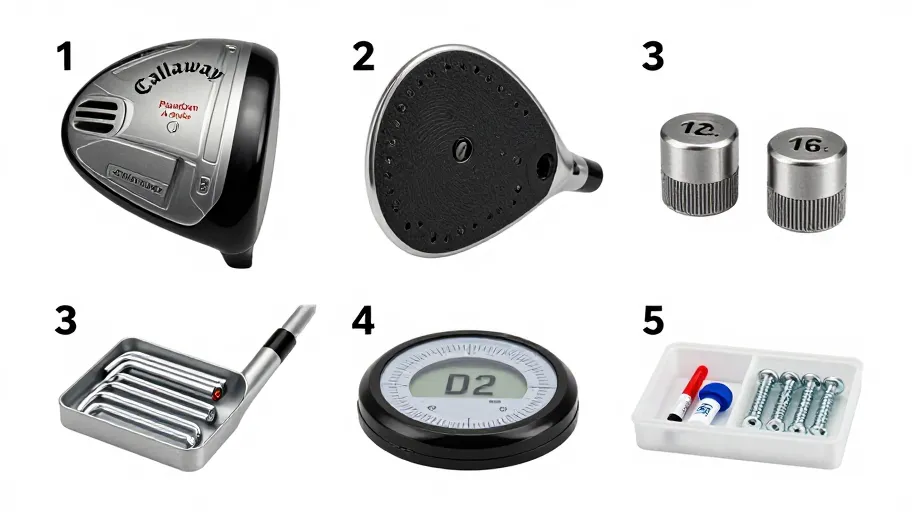
Short answer: Adjustable head weights can change how a club feels and, on designs with movable mass, how the manufacturer positions the center of gravity. They do not guarantee a fixed launch change, tighter dispersion, fewer strokes, or lower injury risk. Use the instructions for your exact club model, make one change at a time before the round, and keep the original setting as your baseline.
What head weights can—and cannot—tell you
Golf-club weighting is not one universal recipe. Total head mass, the location of that mass, shaft characteristics, club length, grip, and the player’s delivery all interact. A setting that helps one golfer may be neutral or unhelpful for another. Even two weights with the same printed mass can have different effects when they sit in different ports.
Moment of inertia (MOI) describes resistance to twisting around an axis. Center of gravity (CG) describes the balance point of the clubhead. Both matter in club design, but neither supports a universal promise such as “five grams adds a certain number of launch degrees” or “weight tuning saves a certain number of strokes.” Those outcomes require model-specific testing under controlled conditions.
Start with the exact club, not a universal number
Before moving or replacing any weight, identify the brand, model, model year, loft, current weight positions, and the markings on each weight. Then find the current manufacturer guide for that exact head. Similar-looking systems are not automatically interchangeable.
For example, the Titleist SureFit performance guide explains model-specific CG and weight settings. Its guidance for a particular Titleist head should not be copied to a different Titleist generation—or to another brand. The useful principle is to follow the clubmaker’s documented configuration, not to assume that “heavier back” or “heavier heel” produces the same result in every head.
A five-step head-weight check
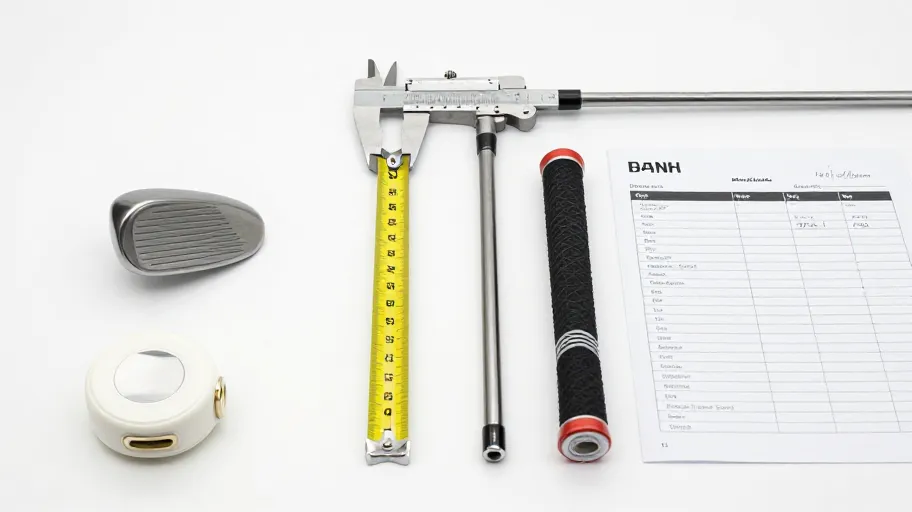
- Record the baseline. Photograph the sole, note every weight marking and position, and record the hosel setting. This gives you a reliable rollback point.
- Inspect before turning. Check for damaged screw heads, dirt in the port, missing washers, corrosion, or a weight that is already loose. Stop if a component binds or does not seat cleanly.
- Use the specified tool and parts. Follow the exact manufacturer manual and torque behavior. Do not force a screw or assume an aftermarket weight matches the original dimensions or material.
- Change one variable. Move one weight or use one approved alternate setting before play. If you change the weight, hosel, shaft, and ball together, you will not know what caused the result.
- Compare, then keep or revert. Test the baseline and alternate setting in comparable conditions. Keep the change only if the pattern is repeatable and useful for your intended shot.
How to compare settings without inventing a result
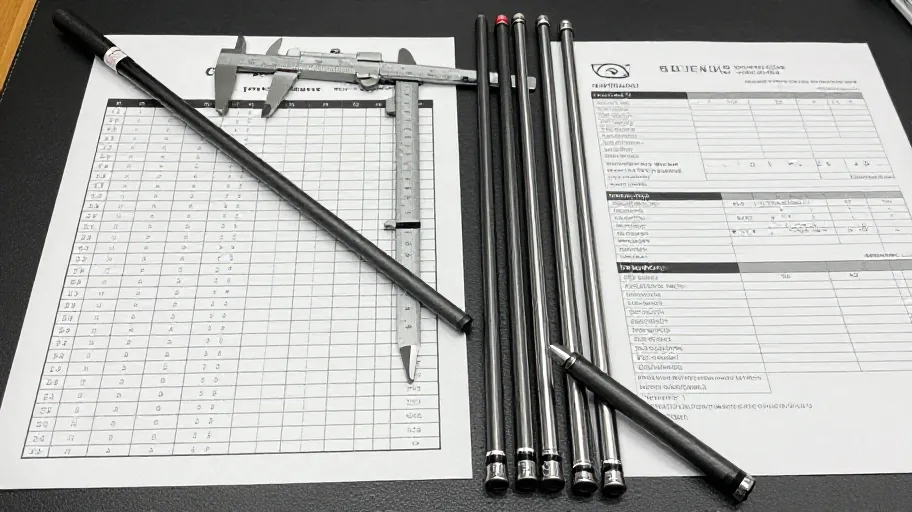
A launch monitor can help, but a simple range comparison is still more useful than guessing. Use the same ball model, target, warm-up, tee height, and club. Alternate between the baseline and new setting instead of hitting all baseline shots first and all test shots after fatigue sets in.
| Record | Why it matters |
|---|---|
| Impact location | A face mark or spray helps separate a weight-setting effect from a strike-location change. |
| Start direction and curve | These describe the actual flight pattern more clearly than “felt better.” |
| Launch and spin, if measured | Use averages and the spread of results; do not build a conclusion around one best shot. |
| Carry and left-right dispersion | Compare consistency as well as maximum distance. |
| Confidence and effort | Feel is personal. Record it, but keep it separate from measured ball flight. |
A small test cannot prove that a setting will lower your score. Its job is narrower: determine whether one documented configuration produces a more useful, repeatable pattern for you. A qualified fitter can control more variables and interpret the interaction between head, shaft, length, grip, and delivery.
Rules and safety boundaries
The R&A Equipment Rules allow certain weight-adjustment features when the mechanism meets the equipment requirements and all parts are firmly fixed. The USGA Rules of Golf, Rule 4.1a state that a player must not deliberately change a club’s performance characteristics during a round.
Make adjustments before the round, tighten the approved mechanism correctly, and confirm that the finished configuration conforms. If the exact part or setting is not covered by the manufacturer’s documentation, ask the manufacturer or a qualified club fitter before using it in competition.
What to ask a club fitter
- Which result are we trying to improve: strike pattern, start line, curvature, launch window, spin window, or consistency?
- Which variables will stay fixed during the comparison?
- Is this weight and screw specified for my exact head and model year?
- Can I see the baseline and alternate-setting data, including the misses rather than only the best shots?
- What is the original configuration, and how do I restore it?
Frequently asked questions
Does a heavier head always mean more forgiveness?
No. Forgiveness depends on the head’s complete design and where mass is located, not weight alone. Follow model-specific documentation and compare actual results.
Can a movable weight fix a slice?
Not by itself, and not for every player. Some manufacturers document settings intended to influence shot shape, but face angle, swing path, impact location, and delivery still matter. Treat the setting as a testable fitting variable, not a guaranteed cure.
Can I adjust the weights during a round?
No. Rule 4.1a prohibits deliberately changing a club’s performance characteristics during a round. Complete the adjustment and secure all parts before play.
Are aftermarket weights safe to use?
Do not assume compatibility from appearance or thread fit. Verify the exact head, dimensions, material, screw system, and manufacturer guidance. Stop if the part does not seat normally.
Method and sources
This guide separates documented equipment rules and manufacturer-specific settings from outcomes that require individual testing. It does not promise a score, distance, dispersion, or injury result. Primary references: the R&A Equipment Rules, USGA Rule 4.1a, and the Titleist SureFit performance guide linked above.
For more equipment decision guides, browse the DIY-Golf blog.