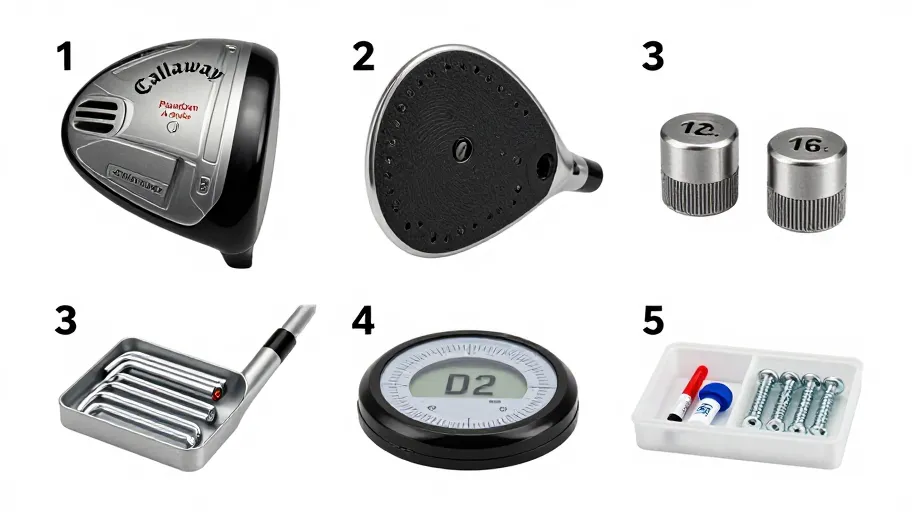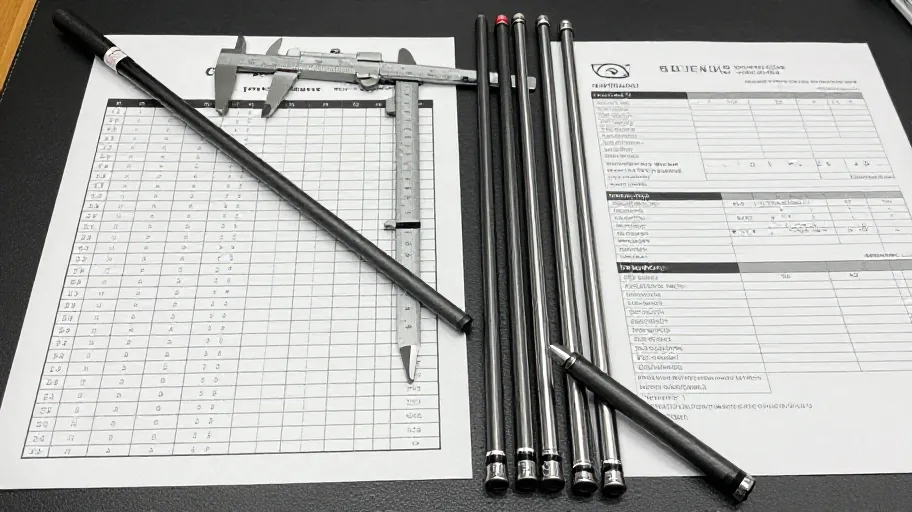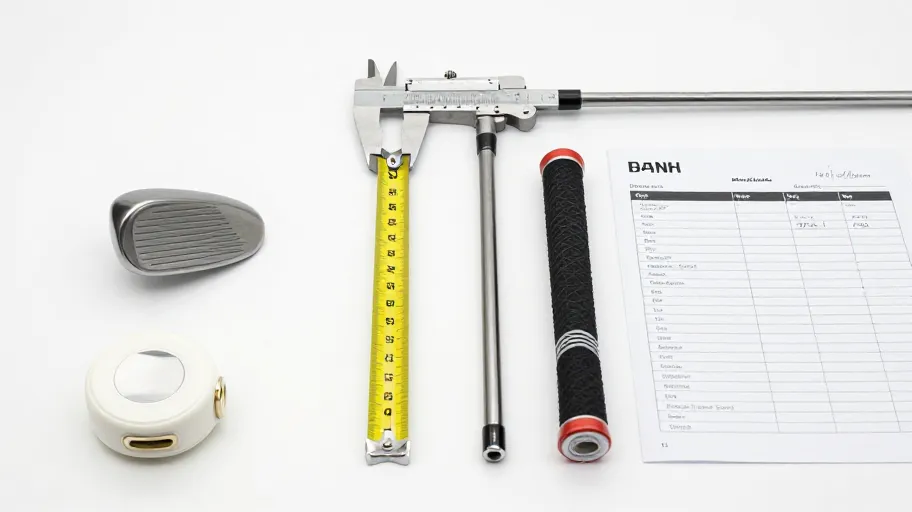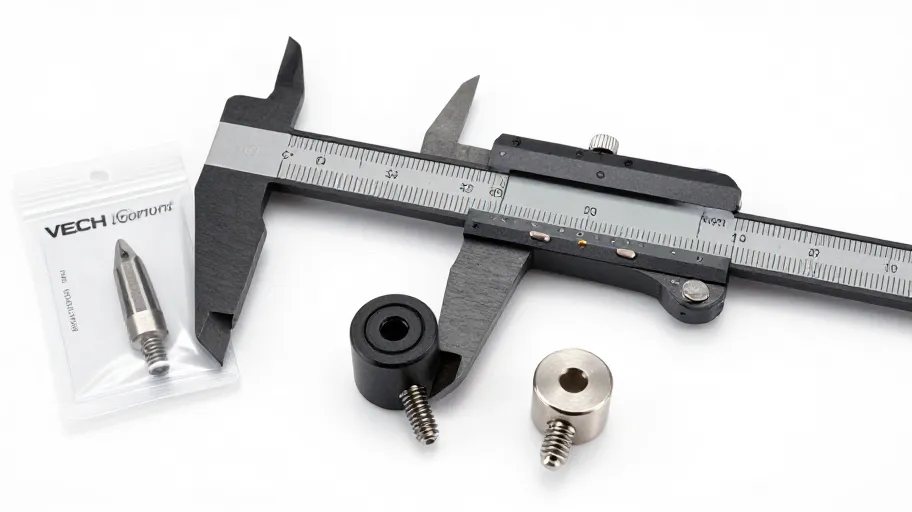
Buying a replacement or tuning weight for a golf club is a compatibility decision before it is a performance decision. Confirm the weight type (screw-in sole weight, hot-melt port weight, backweight or tip weight), verify the thread and seating geometry against your exact club brand, family and model, and check that the stated mass, finish and packaging match your project. Use the fitment selector before adding a component so the match is confirmed against your specific club rather than guessed from a photo.
Why weights are a compatibility-first purchase
A weight is one of the few golf components that either installs cleanly or does not install at all. A grip can be trimmed; a shaft can be tipped. A screw-in weight with the wrong thread form, pitch or seating face will not seat, and forcing it risks the port itself. That binary outcome is why every decision in this guide runs ahead of aesthetics, mass class and price: geometry first, everything else second.
The trap for a careful buyer is that many weight listings photograph well and describe poorly. Two weights can look identical and differ in thread pitch, wrench interface, seating angle or installed depth. The way out is not more browsing — it is a repeatable verification sequence applied to every candidate part.
The Verify–Match–Document framework
Verify the interface. Identify the exact weight system your club uses. Manufacturer families change port designs between model generations, so the family name alone is not enough — confirm the model year or generation stated in your club's specifications or the current product page. Record the thread or attachment interface, the wrench or driver type required, and whether the weight seats flush or sits recessed.
Match the build goal. A weight purchased for swingweight fine-tuning serves a different job than one replacing a lost factory sole weight, and both differ from a backweight added at the grip end for balance adjustment. Match the weight class and placement to the job, not to the largest available option.
Document every answer. Screenshot or save the listing details, the fitment selector result, and any answers you received about mass verification or finish. If a listing cannot answer a question in the checklist below, treat that as a reason to keep looking, not a reason to assume.
Weight selection decision table
| Weight class | Primary use case | What to verify before buying | Documentation to keep |
|---|---|---|---|
| Screw-in sole/head weight | Replacing a factory weight or shifting head mass | Thread form and pitch, wrench interface, seat geometry, model-year match | Fitment selector result, listing spec text |
| Hot-melt port weight | Adding mass inside the head during a tuning build | Port location and access method, compatibility with your head's port design | Head model notes, supplier confirmation |
| Backweight (grip end) | Adjusting balance point and feel | Shaft butt compatibility, retention method, mass options | Shaft butt spec, listing details |
| Tip weight | Swingweight adjustment during shaft installation | Shaft tip internal diameter, insertion method, mass range | Shaft tip spec, build sheet |
Tolerances: questions to ask instead of numbers to assume
This guide deliberately avoids quoting a numeric tolerance for mass or dimensions. Any specific tolerance figure belongs on the product page for the exact component you are buying — and if it is not there, the right move is to ask, not to infer. Use these project-specific questions with any supplier or listing:
- What is the stated mass tolerance for this exact weight, and where is that stated in writing on the listing?
- How is the stated mass verified before the component ships?
- Is the thread specification published for this part, and does it match my club's port for my exact model and generation?
- Does the seating depth of this weight match the factory weight it replaces, so it sits flush as intended?
- What happens if the part arrives and does not match the published specification — what does the current policy state?
Read the answers. A supplier who answers tolerance and verification questions in writing is giving you something more durable than a low price: a basis for approving or rejecting the part on arrival.
Finish selection and cosmetic matching
Finish matters more with weights than with hidden components, because many sole and port weights remain visible at address or on the shelf. The practical approach:
- Identify your club's cosmetic family. Note the factory finish of the weight you are replacing — colour, sheen and any markings.
- Compare against the listing's stated finish, not the photo. Photographic finishes shift with lighting; the written finish description is what you approve against.
- Ask about mixed-batch consistency if ordering multiples. If you need a matched set, confirm the listing states a single finish across the set rather than assuming it.
- Consider the environment. Ask the supplier how the stated finish is expected to hold up for your storage and use conditions, and treat their answer as a claim to note, not a guarantee to rely on.
Packaging: the last compatibility question
Packaging decisions are easy to skip and annoying to get wrong. What matters depends on your project:
- Single replacement: confirm the listing is for one weight, not a set, and note whether any wrench or tool is included.
- Tuning build: confirm whether weights are supplied in graduated steps so you can dial in mass, and how the steps are labelled.
- Stocking or repeat building: confirm how the weights are packaged and identified so you can pick the right one later without re-measuring.
None of the above can be assumed from a category page. Confirm the pack contents in the listing text before adding to your order.
Approval checklist: confirm before you buy
- Exact club brand, family, model and generation identified and written down
- Weight type confirmed against the club's system (screw-in, hot-melt port, backweight or tip)
- Fitment selector run for your exact club, result saved
- Thread or attachment interface stated on the listing and matching your club
- Stated mass and mass tolerance published for the exact part
- Finish description matches your club's cosmetic family
- Pack contents (quantity, steps, tool inclusion) confirmed in the listing
- Returns and delivery terms for this part read on the product page
- All answers documented in one place for future orders
FAQ
How do I confirm a screw-in weight fits my club head? Confirm your club's exact brand, family, model and generation, then run the fitment selector against that specification. Check that the listing states the thread or attachment interface and that it matches. If the listing does not state the interface, ask before ordering rather than inferring from the photo.
Can I use a heavier weight than the factory part to adjust swingweight? Whether a heavier weight suits your goal depends on your club, your target swingweight and your overall build. Confirm which mass steps are available for your exact model, verify how each step affects your measured result with your own scale or swingweight scale, and approve the outcome on evidence from your build, not on the label alone.
Are golf club weights sold individually or in sets? Both formats exist, but the pack contents for a specific part must be confirmed on its product page. Check quantity, whether graduated mass steps are included, and whether an installation tool comes with the weight. Do not assume from the product image.
What finish should I choose for a replacement sole weight? Match the written finish description on the listing to the factory finish of the weight you are replacing. If the listing's finish wording is vague, ask the supplier to confirm it in writing before ordering, and keep the answer with your order records.
What should I do if the weight does not fit on arrival? Stop before forcing the part. Compare the received weight against the published specification you documented, then contact the seller through the channel stated on the product page. Your documented listing details and fitment result are what make a resolution straightforward.
Before you add a component
Use the fitment selector before adding a component. It is the single step that converts a plausible-looking weight into a confirmed match for your exact club.
Not ordering today? Take the low-friction route: run the nine-point approval checklist above against any weight you are considering, wherever you buy it. If a listing fails three or more checks, you have your answer before checkout.
Master Your Swing, DIY Your Fit. DIY Golf is the premier destination for the technical golfer. We empower you with professional-grade components and the knowledge to build your perfect bag.