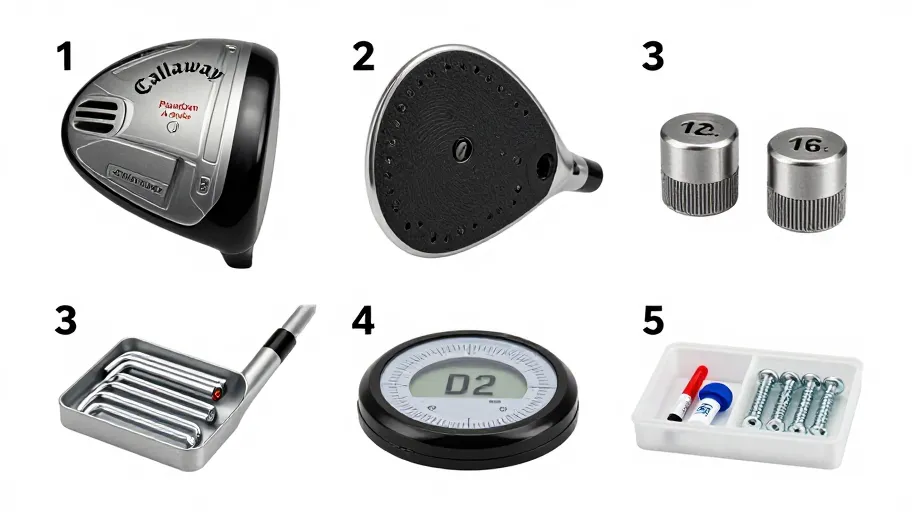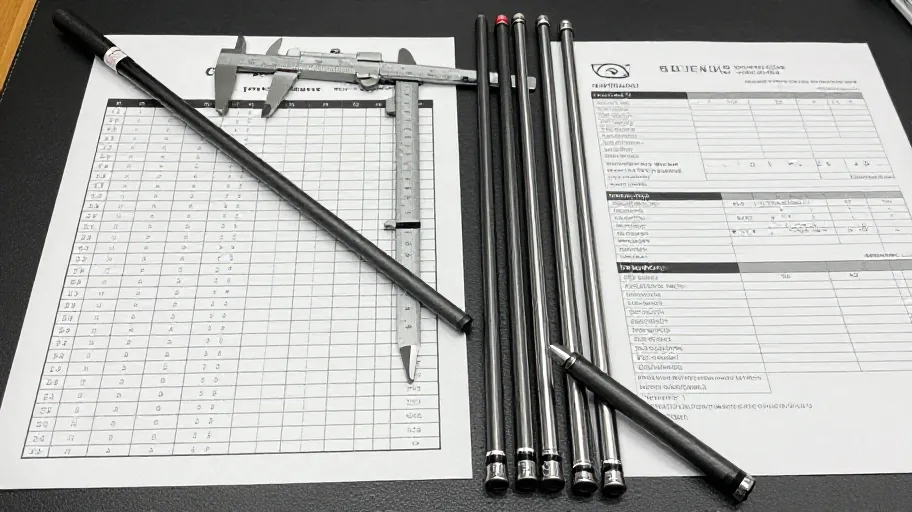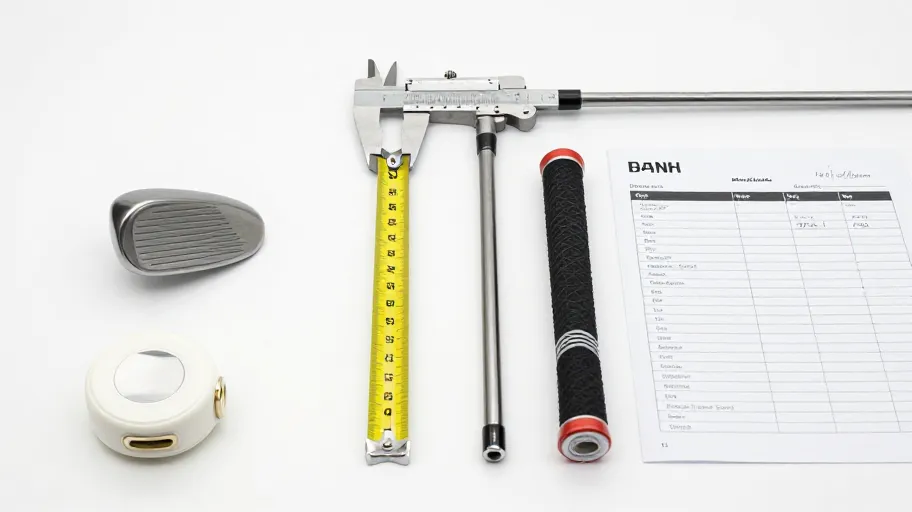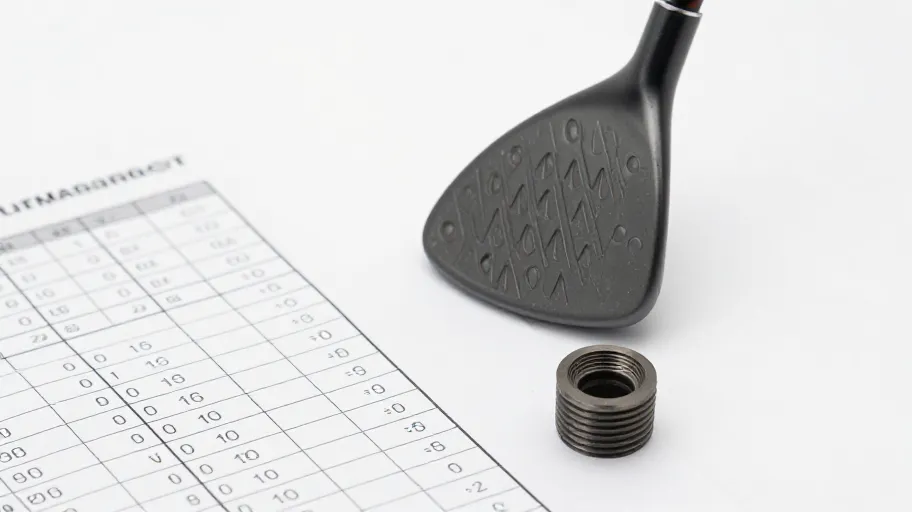
To confirm golf club weights compatibility, verify the exact mass, interface threading, and sole port or hosel geometry for your specific club model. Do not assume fitment across different families. Document the component specifications and use the fitment selector to approve the replacement before installation.
The WIGP Approval Framework
When sourcing golf club weights, you must transition from general assumptions to exact verification. The Weight, Interface, Geometry, Proof (WIGP) Approval Framework provides a structure for this process.
- Weight: Document the target mass. Swingweight adjustments require precise mass additions or reductions. Confirm the exact mass of the replacement component using a calibrated scale before installation. Do not assume the printed mass matches the actual mass.
- Interface: Identify the connection type. Weights secure via threading, friction, or adhesive. For threaded weights, you must confirm the thread pitch and diameter. For friction-fit or adhesive weights, confirm the required insertion depth and bonding requirements.
- Geometry: Map the physical dimensions. This includes the head style of the weight (hex, slotted, flat-head) and the driver profile required for installation. An incorrect driver profile can damage the weight or the club head.
- Proof: Demand evidence. Request current material specifications, finish details, and measurement documentation from the supplier. First-party verification of all specifications is mandatory before installation.
Decision Table: Component Verification Variables
| Variable | What to document | Risk if unverified | Action required |
|---|---|---|---|
| Target mass | Desired mass in grams for swingweight adjustment | Incorrect swingweight shift | Measure on a calibrated scale |
| Thread pitch | Threads per inch or millimeter measurement | Cross-threading or loose fit | Confirm specification with supplier |
| Driver type | Tool required for installation | Stripped weight head | Match tool to weight geometry |
| Material composition | Metal or polymer makeup | Corrosion or density mismatch | Request current material data |
| Finish | Plating or coating type | Aesthetic mismatch | Compare to original component |
Concrete Approval Questions
Before acquiring any golf club weights, compile the answers to these questions:
- What is the exact thread pitch and diameter for my specific club model?
- What driver profile is required to install this weight without causing damage?
- What is the actual, measured mass of this specific component?
- What material and finish does this component use, and do I have current documentation to prove it?
- Does this component possess first-party verified evidence of compatibility for my exact club family and model?
Frequently Asked Questions
Can I use a weight from a different club family if the mass is the same? No. Even if the mass is identical, the interface threading and sole port geometry differ across club families. You must verify thread pitch and geometry to prevent damage. Use the fitment selector to confirm compatibility.
How do I verify the actual mass of a component? You must use a calibrated scale. Do not rely on printed specifications. Document the measured mass before installing the component to ensure it meets your swingweight adjustment requirements.
What should I ask a supplier regarding material composition? Request current material specifications and finish documentation. Do not assume the material matches the original component. Verify the material to prevent density mismatches or corrosion issues.
Why is the driver profile important for weight installation? The driver profile must match the weight head geometry. Using an incorrect driver can strip the weight, damage the club head, or prevent proper torque application. Confirm the required tool before beginning installation.
Do I need to confirm the current sample or shipping policy? Yes. You must confirm all current policies regarding samples, shipping, and returns directly. No specific policies are assumed or guaranteed.
Use the fitment selector before adding a component to verify all variables.
Low-Friction Checklist CTA
Download the WIGP verification checklist to document your component specifications before purchase.
Master Your Swing, DIY Your Fit. DIY Golf is the premier destination for the technical golfer. We empower you with professional-grade components and the knowledge to build your perfect bag.