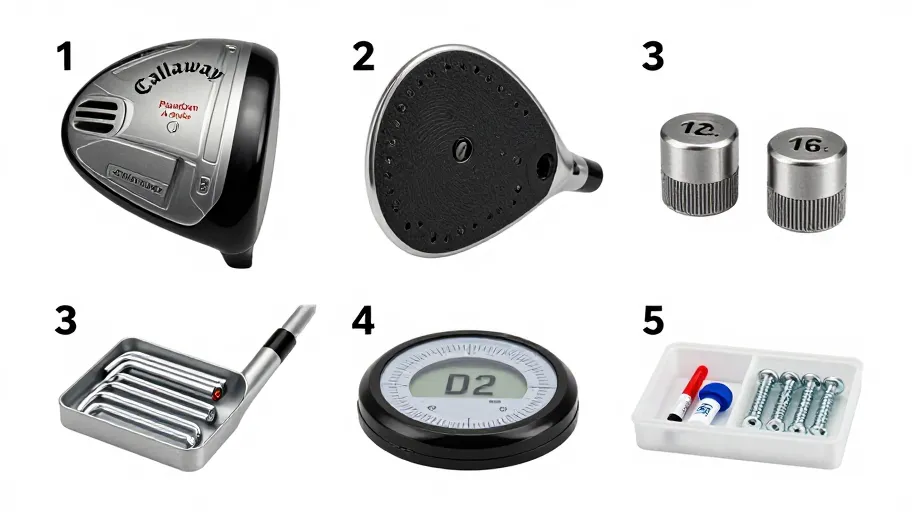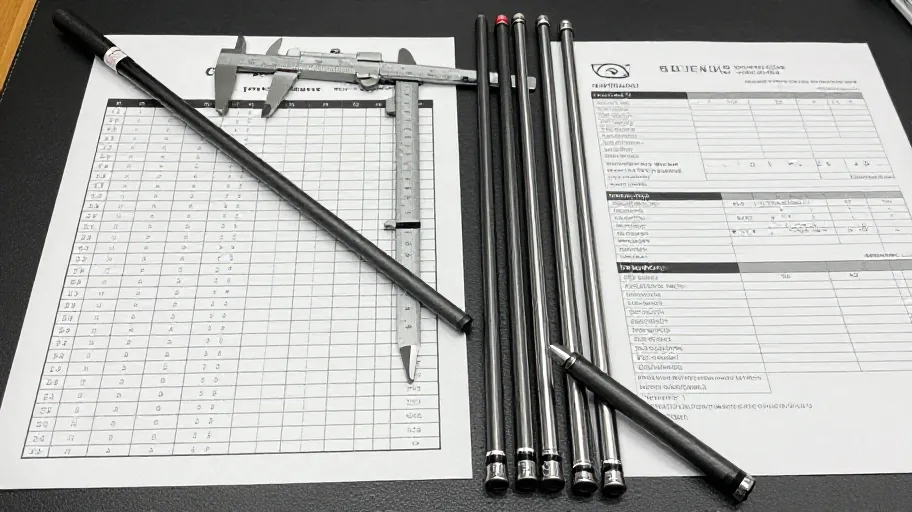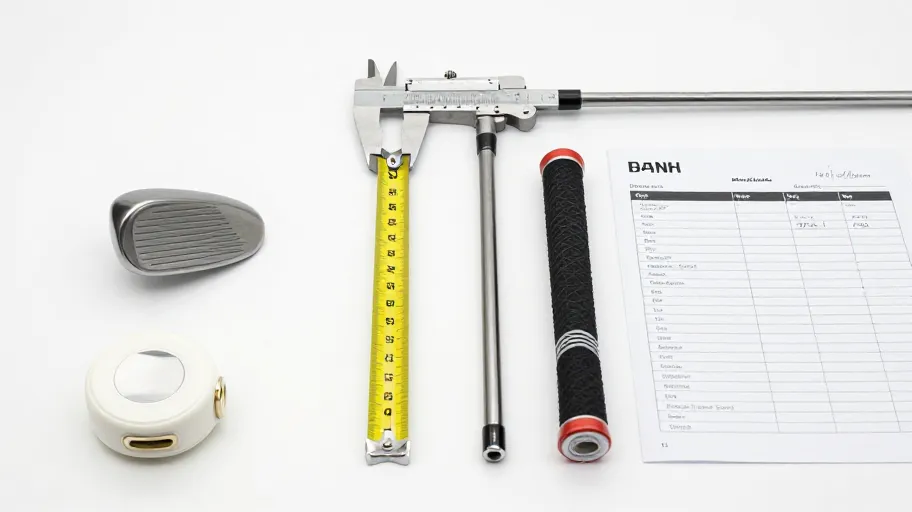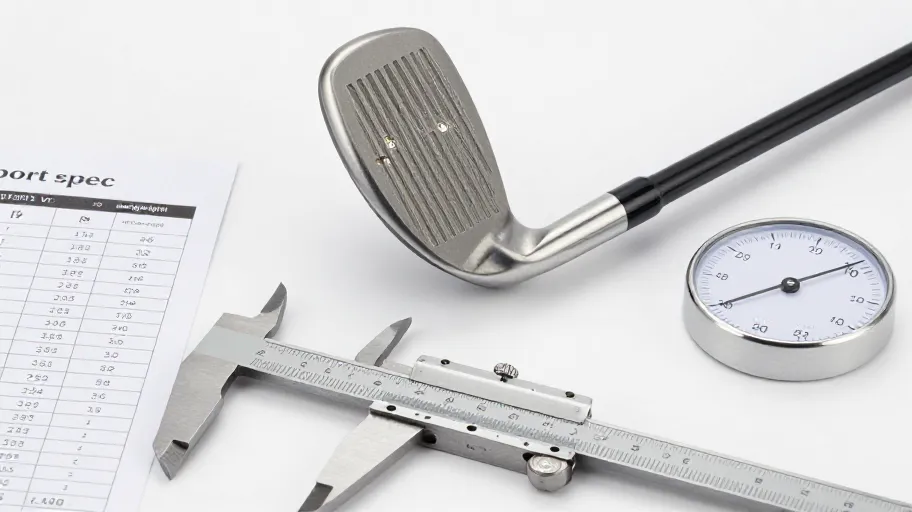
Golf club weights fit correctly only when the weight's seating geometry, thread or engagement detail, and mass reference point match the exact club family and model you are servicing. Before ordering any golf club weights, verify the port spec, define your target (grams vs. swingweight), and confirm current policy with the seller. This article gives you a repeatable pass.
Why weight specifications cause rework
Rework in weight installation comes from three specification gaps, and none of them are about quality — they are about reference points.
Gap 1: Undefined mass reference. A listing that says "10" could mean ten grams of component mass, a ten-gram change to total head weight, or an estimated swingweight shift. If the reference point is not confirmed, the component may be ordered against the wrong target entirely.
Gap 2: Unverified engagement geometry. Sole ports, hosel cavities and shaft tips each accept weights through a specific seat shape, depth, retention method or thread. A weight with the correct mass but the wrong engagement detail does not install — or installs partially and creates a removal job on top of the original task.
Gap 3: Unstated installation assumptions. Some weights are retained by thread, some by press fit, some by adhesive, some by a combination. Each method implies different preparation, tooling and reversibility. If the method is not documented before purchase, the install becomes an experiment.
The way through is a fixed verification pass, applied the same way every time.
The SPECS framework for golf club weights
S — Socket. Identify the exact socket or cavity the weight occupies: sole port, hosel bore, shaft tip interior, butt end, or a hot-melt cavity inside the head. Each socket has its own geometry vocabulary, so name the socket first and compare components only within it.
P — Profile. Confirm the physical profile: seat angle, head shape, shoulder depth, and whether the weight sits flush, proud or recessed. Where a drawing or measurement is available, compare it against your measured cavity. Where it is not, ask the seller to state the profile in writing before you order.
E — Engagement. Establish how the weight is retained — thread, press, adhesive or mechanical clip. If threaded, confirm thread specification and direction directly with the seller for the exact component; do not infer it from a similar-looking product, because families within the same brand can differ.
C — Class. Define the weight class you need by stating your reference point explicitly: component mass in grams, target total head weight, or target swingweight change. Document which one you are ordering against, and keep that note with the work order.
S — Screw and accessory detail. Confirm whether the component needs a matching tool, screw, washer, O-ring or adhesive that is not included. Missing accessories are a quiet source of delay even when the weight itself is correct.
Decision table: verification focus by weight type
| Weight type | Primary spec to verify | Secondary spec to confirm | Rework risk if skipped |
|---|---|---|---|
| Sole/port weight | Port diameter, seat profile, thread spec | Torque limit for the retaining screw | Stripped port or weight that cannot be removed |
| Hosel/backweight | Cavity depth and diameter | Retention method (press/adhesive) | Loose rattle or stuck component |
| Tip weight | Internal shaft tip diameter | Adhesive compatibility and install depth | Difficult extraction, scrapped shaft section |
| Butt weight | Grip cap and shaft butt internal diameter | Grip re-install plan | Weight migration inside the shaft |
| Hot melt | Cavity access point and target mass | Removability plan for future adjustment | Over-applied mass requiring reheating cycles |
Use this table to decide where your verification effort goes for the socket you are actually servicing.
Approval questions to resolve before ordering
Because no sample, cost, shipping, stock or production policy was supplied for any product referenced here, treat these as project-specific questions for the seller — not questions with assumed answers:
- What mass reference does the listed value use — component grams, total head weight, or estimated swingweight change?
- What is the engagement specification for my exact club family and model, and can you confirm it in writing?
- Is the component confirmed compatible with my specific model, and on what first-party evidence?
- What retention method and tooling does installation require, and are accessories included?
- What are the current stock, price, shipping and return arrangements for this exact component, and can I confirm them at checkout?
- If the fit is wrong, what does the exchange process require from me?
Any question the seller cannot answer for your exact model is a signal to pause, not a reason to guess.
Pre-order documentation checklist
- Club brand, family, model and year identified exactly.
- Socket type named (sole, hosel, tip, butt, cavity).
- Engagement spec confirmed in writing for this model.
- Weight reference point defined and noted (grams vs. swingweight).
- Retention method and required tooling listed.
- Current stock, price, shipping and return policy confirmed directly.
- Compatibility evidence checked for the exact component and model.
Frequently asked questions
Are golf club weights interchangeable between models in the same family? Do not assume so. Families can change port geometry and thread detail between model years. Verify the engagement spec for your exact model before ordering.
How do I know whether a weight listing means grams or swingweight? Ask the seller to state the reference point in writing. If a listing does not define it, treat the number as unverified and resolve it before purchase.
Can I confirm fitment without disassembling the club? Start with the brand's model documentation, then confirm the component spec with the seller for your exact model. Physical measurement of the cavity remains the strongest evidence before an adhesive or press installation.
What if the correct weight is installed but the feel is still off? Weight is one variable among several — length, lie, loft and shaft properties all interact. A documented before/after record of mass and swingweight helps you or a qualified fitter isolate the cause on the next adjustment.
Do returns apply if I ordered the wrong spec? No return policy was supplied for any product here. Confirm the current return and exchange terms for the exact component before adding it.
Before you add a component
Use the fitment selector before adding a component. It forces the model-by-model confirmation this article describes, so the weight you order is matched to the club in front of you rather than to an assumed spec.
If you are not ready to order, run the pre-order documentation checklist above and keep the answers with your work order. Approving components on documented specs — not on look-alike comparisons — is what removes rework from the job.
Master Your Swing, DIY Your Fit. DIY Golf is the premier destination for the technical golfer. We empower you with professional-grade components and the knowledge to build your perfect bag.