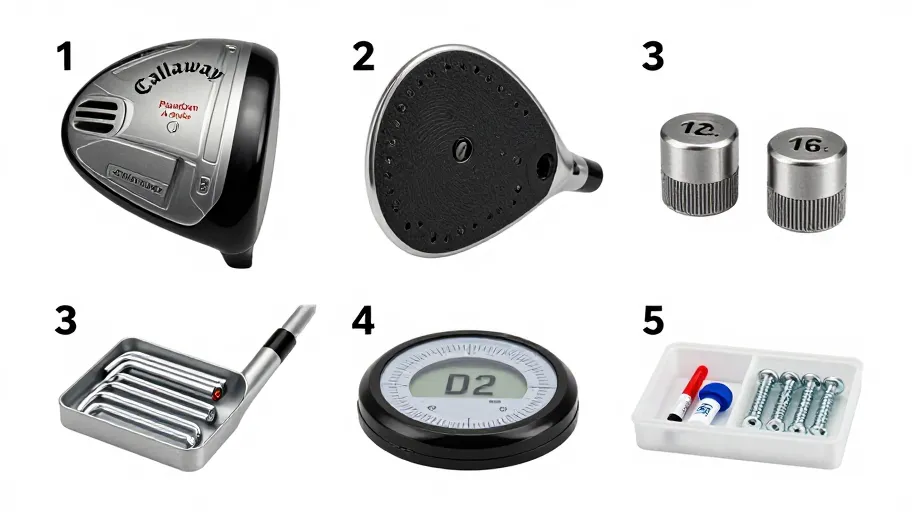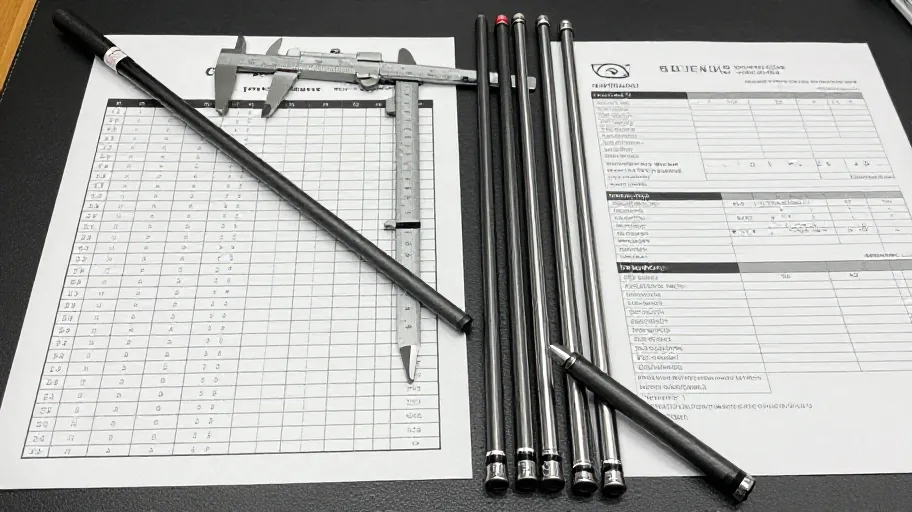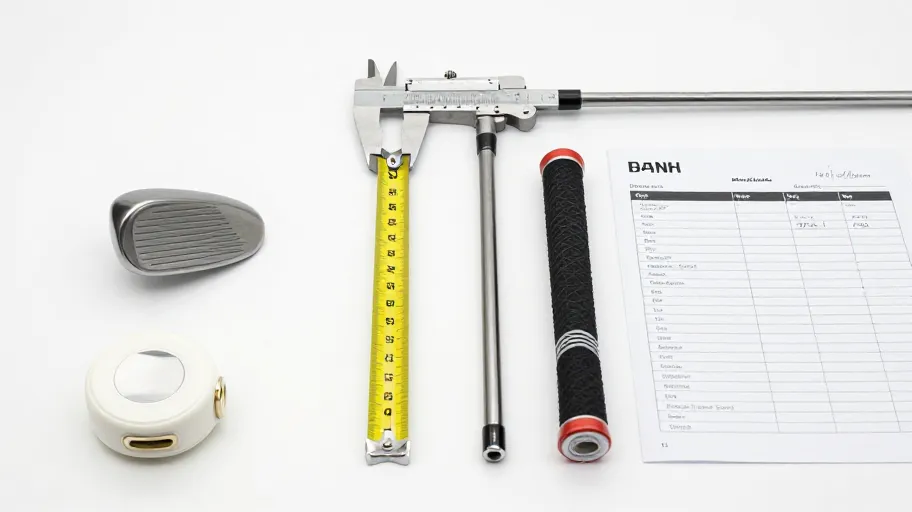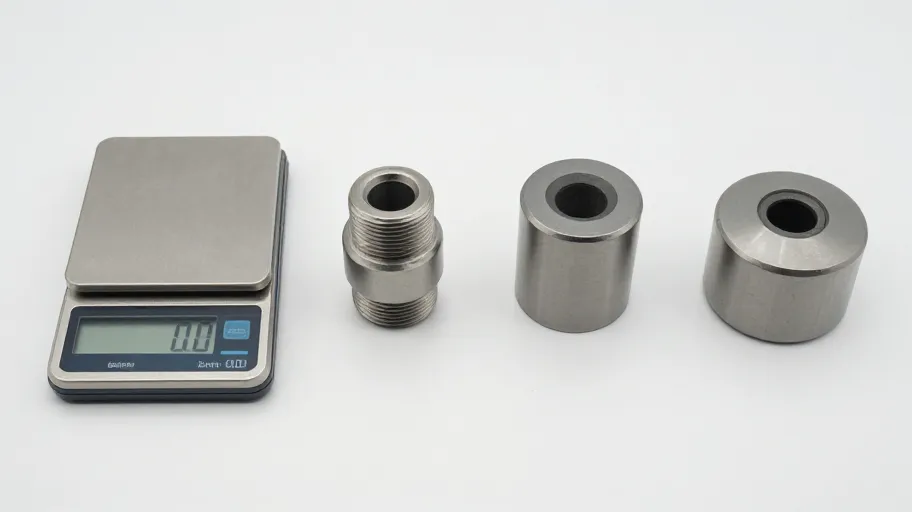
An approved sample of golf club weights only becomes a production order when the sample's attributes are written down, agreed and frozen before purchasing. The handoff should compare each incoming production piece against the approved sample — mass, thread or seat fit, finish and material as documented — never against memory or a marketing description. Confirm the current sample, pricing, shipping and production policies directly with the supplier, then use the fitment selector before adding a component.
Sample approval and production are two different events
Approving a sample answers one question: does this exact physical part fit and behave as intended on my club? Placing a production order answers a different one: can the supplier reproduce that exact part in the quantities I need? The gap between the two is where approved specifications get lost. A weight that seated cleanly on your club during sampling can arrive from a production lot with a different thread form, a different plating, or a mass outside the band you approved — unless the handoff itself is documented.
The handoff is a transfer of information. Your job is to make that transfer complete enough that the supplier can quote, build and be checked against it. Where you don't know an attribute, you don't guess it — you put it on the confirmation list for the supplier.
The SAMPLE-FROZEN handoff framework
Use this framework to move from an approved sample to a controlled production order. Each letter is an action you own or a question you put in writing.
| Letter | Meaning | What you do |
|---|---|---|
| S — Specification | Write the spec | List every attribute of the approved weight: nominal mass, thread or seat type, head style, tool interface, finish, material as marked or declared. |
| A — Anchors | Keep the physical anchor | Retain the approved sample, labelled and unmodified, as the reference for the goods-in check. Ask the supplier how they anchor their side. |
| M — Match | Match to the club model | Record the exact club brand, family, model and weight port the sample was approved on. |
| P — Point of contact | Name both contacts | Agree who signs off the spec on your side and who owns it on the supplier side. |
| L — Load | State the quantity need | Give the quantity range you intend to order so the supplier can confirm capability in writing. |
| E — Evidence | Ask for verification | Ask what inspection evidence comes with the lot and what the current policy is for discrepancies. |
| F — Freezing | Freeze the spec | Agree in writing that the specification cannot change without notice before production begins. |
| R — Revision | Control changes | Require written notice of any material, finish or dimensional substitution before it happens. |
| O — Options | Pre-agree alternatives | If an attribute can't be held, decide in advance which alternatives you would still accept. |
| Z — Zone of acceptance | Define "matching" | Agree how incoming pieces will be compared to the sample and what counts as inside or outside acceptance. Ask the supplier how they define it. |
| E — Expiry | Date the approval | Agree how long the sample approval remains valid before re-verification is required. |
| N — Naming | Label everything | Give the approved sample and the spec sheet a shared reference used on the purchase order, packing and inspection records. |
Decision table: freeze, measure or confirm
Not every attribute deserves the same treatment. Sort them before the handoff.
| Attribute | Action before handoff | Why |
|---|---|---|
| Nominal mass of the sample | Freeze — measure and document it | The core function of the weight; must be reproducible. |
| Thread or seat fit to your club's port | Freeze — confirm with the fitment selector and physical trial | Compatibility is the reader's primary search job; it is model-specific. |
| Head style and tool interface | Freeze — record type and size | Determines installation and future removal. |
| Finish / plating as supplied | Freeze — describe or photograph | Substitution here affects corrosion and seat seating; require notice of change. |
| Material declaration | Confirm with supplier | Ask what the current material declaration is and get it in writing. |
| Mass tolerance band | Confirm with supplier — ask, do not assume | Any numerical tolerance must come from the supplier's current published or quoted spec for your exact order. |
| Production quantity capability | Confirm with supplier | Capability is order-specific; ask for written confirmation. |
| Lead time | Confirm with supplier | Do not accept any transit or production duration that isn't quoted in writing for your order. |
| Inspection evidence per lot | Confirm with supplier | Ask what documentation accompanies the lot and what the discrepancy process is. |
Concrete approval questions to put in writing
Send these with the spec sheet and the named sample reference:
- Can you confirm in writing that the production lot will be built to the attached specification, referenced by sample name?
- What mass tolerance band do you hold for these golf club weights against the approved sample? Please quote it for my exact order.
- Will you notify me in writing before any change to material, finish or dimensions during production?
- What inspection evidence is provided with the lot, and how do you compare outgoing pieces to the approved sample?
- What is the process and current policy if an arriving piece differs from the sample in mass, thread or finish? Please confirm the current terms directly.
- How long does this sample approval remain valid before re-verification?
- What quantity range can you confirm for this specification, and what lead time do you quote for my order?
- Who is the named contact responsible for this specification on your side?
The delivery gate: goods-in checklist
When the lot arrives, check it before it enters your build stock.
Goods-in checklist for a production lot of golf club weights:
- Purchase order, packing list and spec sheet all carry the same sample reference.
- Approved sample is present at the bench, unmodified and correctly labelled.
- Club brand, family and model on the order match the club the sample was approved on.
- Fitment selector re-run for the exact model before the first piece is installed.
- Piece-by-piece comparison of mass against the approved sample, recorded.
- Thread or seat fit trialled on the target club with installation and removal.
- Finish checked against the sample under the same lighting.
- Any discrepancy photographed, logged and raised with the named supplier contact the same day.
- Discrepancy outcome and any agreed resolution documented against the sample reference.
Frequently asked questions
How do I confirm a replacement golf club weight fits my club model? Start with the exact club brand, family and model, then verify the weight port type and the seat or thread form against the supplier's fitment information for that model. Finish with a physical trial of the approved sample. Use the fitment selector before adding a component so the model is confirmed first, not last.
What should I document about the sample before ordering? Nominal mass, thread or seat form, head style, tool interface, finish, and any material declaration the supplier provides. Add the club model it was approved on and the date of approval. Anything you cannot document belongs on the supplier-confirmation list, not in your assumptions.
Can I assume a production lot will match the approved sample? No. Matching is something you define and verify, not something you assume. Freeze the specification, ask the supplier how they compare outgoing pieces to the sample, and run the goods-in checklist when the lot arrives.
What if the supplier proposes a different material or finish for production? Treat any substitution as a revision, not a detail. Require written notice before the change, decide whether the alternative falls inside your pre-agreed options, and re-run the sample approval if the change touches fit or mass. Confirm the current policy on changes and discrepancies with the supplier directly.
How long is a sample approval valid? That is a supplier-specific term. Ask for it in writing during the handoff, date the approval, and re-verify if the supplier changes process, source or specification in the interim.
Before you order
Use the fitment selector before adding a component, so the club brand, family and model are confirmed before the specification is written and the order is placed.
Prefer to move in smaller steps first? Take the goods-in checklist above, adapt it to your club model, and run it against your next delivery — five minutes of documentation now is what makes the next handoff fast.
Master Your Swing, DIY Your Fit. DIY Golf is the premier destination for the technical golfer. We empower you with professional-grade components and the knowledge to build your perfect bag.