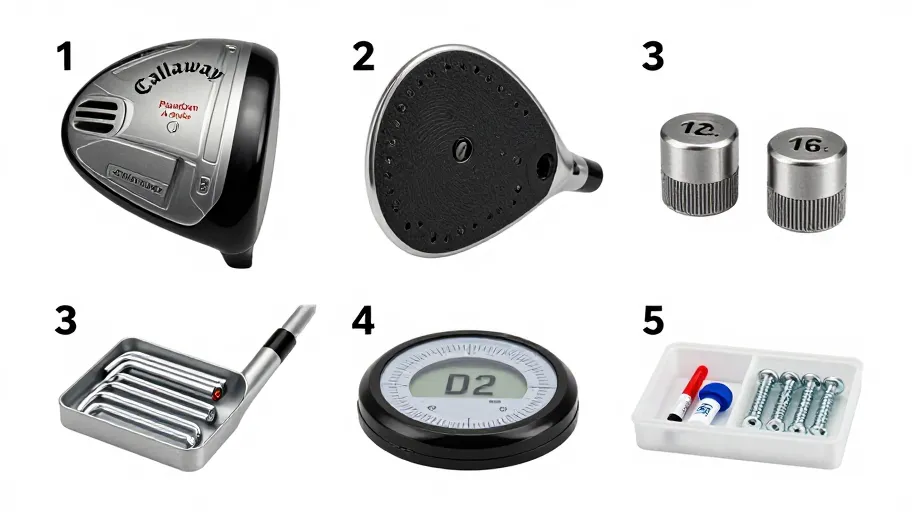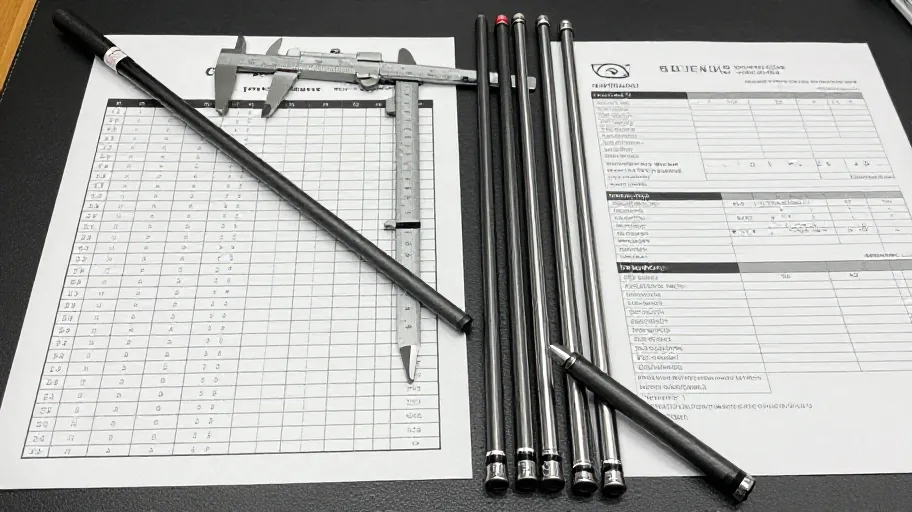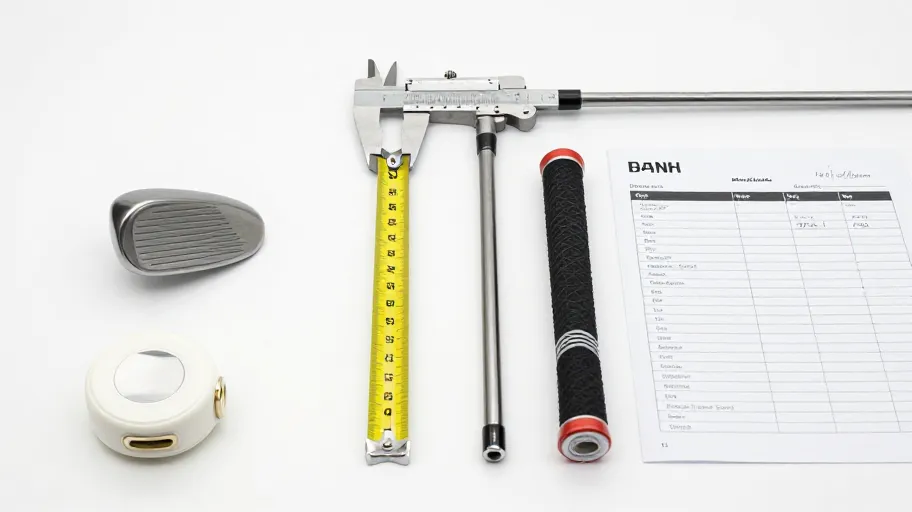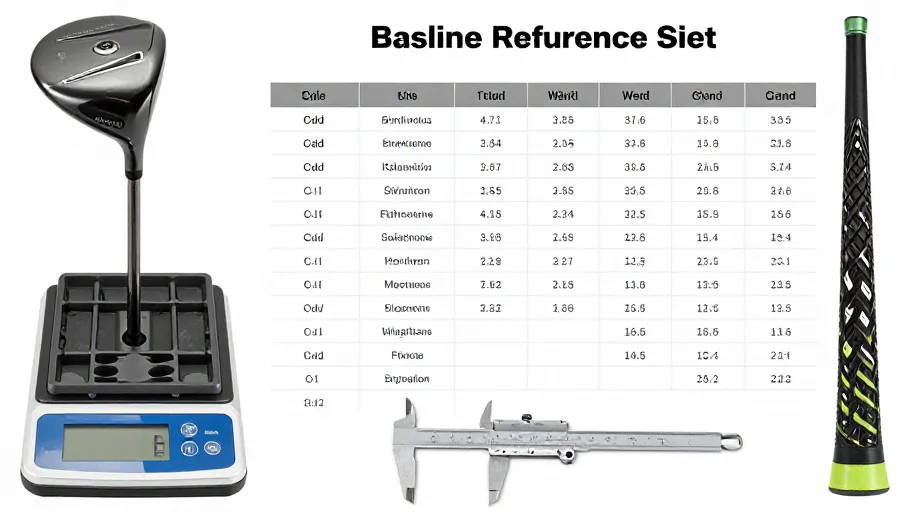
When a revised golf club weight sample arrives, do not restart the full evaluation. Compare it against your documented baseline from the first sample, audit only the attributes that changed or were corrected, and re-confirm fitment against your exact club model before approving. Golf club weights sit in a precise system of balance and swingweight, so the review question is narrow: does the revision preserve what you already approved, and is the change the one you requested?
The R.E.V.I.E.W. framework for revised samples
- R — Reference the baseline. Retrieve your notes, photos and measurements from the first sample round. If round one was not documented, document it now, even retrospectively, so this revision becomes your baseline going forward.
- E — Evaluate the requested change. Confirm the revision matches the correction you actually asked for. If the supplier changed anything beyond your request, treat that as a new evaluation item, not a carry-over.
- V — Verify fitment for your exact model. Re-confirm that the revised weight is compatible with your specific club brand, family and model — including the port type, thread, or mounting interface if applicable. Compatibility claims must be verified for the exact product and model, not assumed from the family name.
- I — Inspect the attributes that interact with weight. Mass placement, finish integrity, seating depth and how the weight interfaces with the housing all interact with the performance you are tuning. Inspect these even if the stated change was cosmetic.
- E — Endorse or escalate. Approve in writing against your acceptance criteria, or escalate with a specific, single-issue correction request. Avoid bundling multiple new change requests into a revision that already addressed one issue.
- W — Write-off or lock the baseline. If approved, lock this sample's documented attributes as the reference standard for future batches. If rejected, record exactly why so the next revision can be evaluated narrowly.
Decision table: re-check or carry over?
| Attribute of the revised sample | Re-check fully? | Carry over from round one? | Notes |
|---|---|---|---|
| Mass value of the weight itself | Yes | No | The core change; measure and record independently |
| Fitment interface (thread, port, housing) | Yes | Partly | Re-verify against your exact model even if unchanged in design |
| Finish and surface quality | Yes | Compare visually to round-one photos | Changes in finish can accompany changes in process |
| Seating and alignment in the club | Yes | No | Function test in the actual club head |
| Your swingweight target | Re-measure | Re-measure | Every revision round should be re-measured in the built club |
| Documentation and photos | Update | Extend | Append the revision to the existing record rather than starting a new file |
The principle is simple: attributes the supplier touched, plus attributes that mechanically interact with weight, get re-checked. Everything else carries over from your documented baseline — which is only defensible if the baseline was actually written down.
Concrete approval questions to send the supplier
Before endorsing a revised golf club weight sample, send these questions in writing and keep the replies with your records:
- Which specific attributes were changed in this revision compared with sample round one, and which were left untouched?
- Can you confirm, in writing, compatibility with our exact club brand, family and model — including the interface type — for this revised component?
- What dimensional and mass checks did you perform on this revision, and can you share the results for this specific sample?
- If we approve this sample, what acceptance criteria will apply to subsequent batches, and how will consistency with this approved sample be maintained?
- What are the current sample, cost, shipping and return terms that apply to this order? (These terms were not supplied to us; they must be confirmed directly and currently.)
- If a further correction is needed after approval, what is the process for raising and resolving it?
None of these questions presume a specific policy, tolerance or duration. They convert unknowns into documented answers attached to this revision.
Documentation checklist for each revision round
- Round-one baseline retrieved: measurements, photos, approval notes
- Requested change written down before the sample is inspected
- Actual change compared against the requested change
- Fitment verified against exact club brand, family and model
- Weight measured and recorded independently
- In-club seating and swingweight re-measured
- Supplier answers to the approval questions filed in writing
- Approval or rejection recorded with reasons and date
- If approved: sample locked as reference baseline for future batches
FAQ
Do I have to re-verify fitment if the revision only changed the mass value? Yes. Verify fitment against your exact club model every revision round, because a mass change can alter how the weight seats or interfaces with the housing. Fitment is model-specific: confirm it for the exact product and model rather than relying on the club family name.
Can I approve a revised sample based on supplier photos alone? Photos document appearance but not seating, measured mass or in-club behaviour. For a component as consequential as a golf club weight, combine photographic comparison with your own measurement and function test in the actual club before approving.
What should I do if the revision fixed my issue but introduced something else new? Separate the two findings. You can acknowledge the corrected issue in writing while escalating the new observation as a distinct, single-issue change request. This keeps each revision cycle narrow and auditable.
How do I keep future batches consistent with the approved sample? Lock the approved sample's documented attributes — measurements, photos, supplier confirmation — as your reference baseline, and state in your approval that subsequent deliveries will be compared against it. Ask the supplier what checks they will apply to future batches against this sample; do not assume any specific consistency process.
From the supplier, confirmed directly at the time of ordering. No sample policy, cost, shipping arrangement or production policy was supplied here, and none should be assumed — ask for current terms in writing as part of your approval questions.
Before you add any component
Use the fitment selector before adding a component. Compatibility must be confirmed for your exact club brand, family and model — the fitment selector is the step that does this before anything goes into your basket.
Or, if you are not ready to select yet: start with the low-friction option — copy the revision documentation checklist above into your build file so your next sample review starts from a written baseline instead of a blank page.
Master Your Swing, DIY Your Fit. DIY Golf is the premier destination for the technical golfer. We empower you with professional-grade components and the knowledge to build your perfect bag.