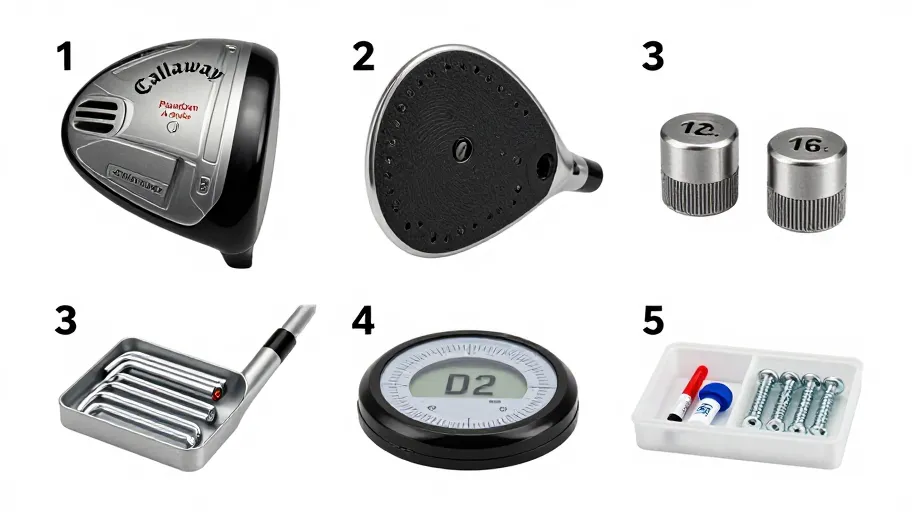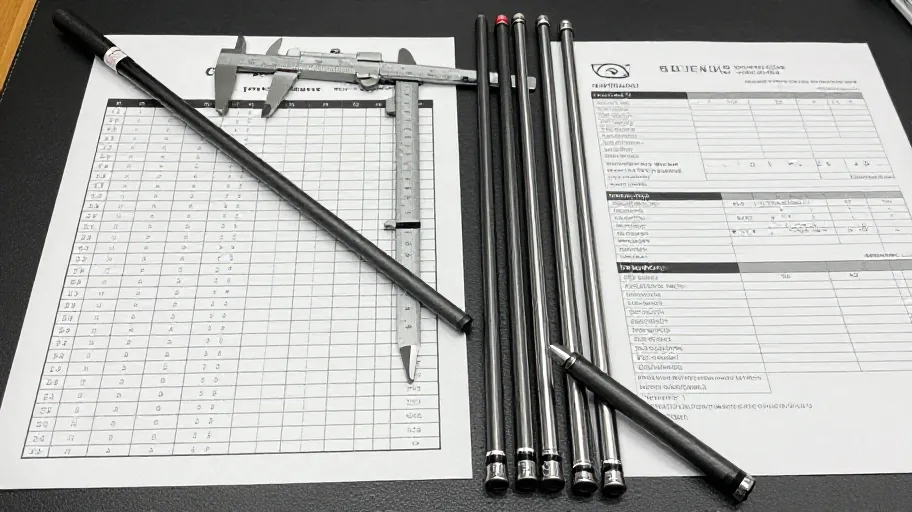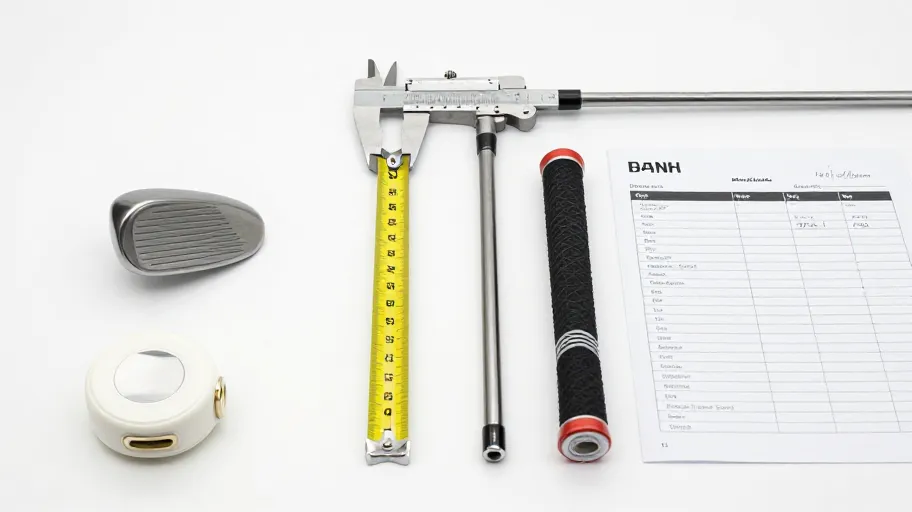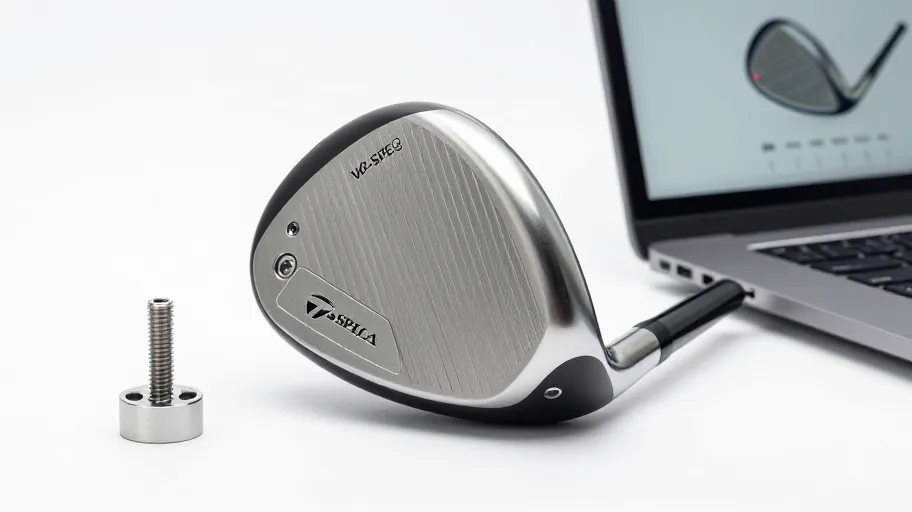
Golf club weights are not interchangeable parts: fitment depends on the exact club brand, family and model, including the weight port geometry, screw thread and seating depth. Before requesting any golf club weights, verify the part against your specific club using the W-SPEC framework below, and use the fitment selector to confirm the match before adding a component.
Why golf club weights are a compatibility decision, not a shopping decision
When a club is designed, the weight system — the ports, the screws, the mass distribution — is engineered around that specific head. A weight that looks identical in a product photo can differ in thread pitch, head shape, seating depth or mass placement from what your club accepts. Because these differences are not visible from a listing alone, the correct purchasing posture is a documented verification step, not an assumption based on appearance.
For club builders and golfers sourcing replacement or tuning weights, the practical risk is straightforward: an incompatible weight may not seat, may not secure correctly, or may not deliver the tuning effect intended. Every one of those outcomes is avoidable with a short, structured check.
The W-SPEC framework
Use these five checks in order. If any one is unresolved, pause and confirm before requesting the component.
W — Weight class. Identify the mass you need and why. Are you replacing a lost part to restore the original configuration, or adding mass to change swing weight or feel? Write the target mass and the tuning goal in one sentence.
S — Screw thread and head. Weight screws vary in thread pitch, diameter and driver-head shape (torx, hex, slot, proprietary). Record what your current weight uses, and request the equivalent specification for any candidate part.
P — Position. A club may have front, back, heel or toe ports, and each position affects performance differently. Confirm the port location the weight is intended for matches your club's design.
E — Exact model. Confirm the full brand, family, model, and where relevant the generation or version of your club. Model names alone can span revisions with different hardware. Locate the identifier on the club itself rather than from memory.
C — Confirmation step. Close the loop with a documented confirmation — a fitment-selector result, a written confirmation from the supplier for your exact model, or both.
Decision table: turning requirements into an RFQ
| Requirement | What to verify | Evidence to request | Risk if skipped |
|---|---|---|---|
| Correct mass for the tuning goal | Target mass and intended effect (restore vs. adjust) | Written confirmation that the offered mass matches the listed spec | Tuning result differs from intent |
| Thread and head compatibility | Thread pitch, diameter, driver type of your current weight | Supplier confirmation of the candidate part's thread spec | Weight will not seat or secure |
| Port position match | Which port the weight is for (front/back/heel/toe) | Fitment-selector result or supplier confirmation for your model | Part fits the wrong port or none |
| Exact club identity | Brand, family, model, generation | Photo of the club's markings alongside your request | Wrong-family part ordered |
| Seating and finish acceptance | How a correctly installed weight should sit flush | Installation guidance and a written acceptance description | Dispute over what "correct fit" means |
| Post-delivery verification | How you will verify mass and fit on arrival | Your own scale and visual check against the agreed spec | Defects or mismatches discovered late |
Approval questions to send with your request
Copy these into your enquiry and record the answers:
- Can you confirm in writing that this weight is compatible with [exact brand, family, model and generation]?
- What are the thread specification and driver type for this weight?
- What is the confirmed mass of the part, and how should I verify it on arrival?
- Which port positions on my club is this weight specified for?
- What is your current policy on samples, shipping, returns and exchanges for this component? (Confirm directly — no policy details are stated here.)
- If the part does not seat correctly, what documentation do you need from me to resolve it?
These questions do not assume any supplier policy; they ask the supplier to state the current one. That distinction protects both sides.
Pre-request checklist
- Club brand, family, model and generation identified from the club itself
- Current weight removed, inspected, and thread/head type recorded
- Target mass and tuning goal written in one sentence
- Port position confirmed
- Fitment selector run for the exact model
- Written supplier confirmations received and saved
- Acceptance criteria agreed before the component ships
Frequently asked questions
How do I confirm a golf club weight will fit my club? Verify the exact brand, family and model of your club, then run the fitment selector with those details and request written confirmation from the supplier. Compatibility cannot be confirmed from appearance or a product photo alone.
Can I mix weights from different clubs in the same brand? Do not assume so. Even within one brand, different club families can use different threads and port geometries. Treat every cross-family swap as unverified until confirmed against your exact model.
How do golf club weights affect swing weight? Adding or removing mass at the head changes swing weight, and the size of the change depends on the mass, its position, and the club's overall build. Define your goal first — restoration or adjustment — and confirm the expected effect with your fitter or the supplier in writing.
What should I do if a weight arrives and does not seat correctly? Stop before forcing it. Photograph the part, the port and the original weight if you have it, and compare against the agreed specification and confirmations. Send the documentation to the supplier and follow their stated process for resolution.
Is a heavier weight better for stability? There is no universal "better." The right mass depends on the club design, your build goals and your swing. Verify what your club supports, document your goal, and compare options against that goal rather than against generic advice.
Next step
Use the fitment selector before adding a component. It is the fastest way to confirm that the golf club weights you are considering match your exact brand, family and model — and it turns your requirement into a request a supplier can answer precisely.
Short on time? Run the pre-request checklist above with the club in hand — even a partial pass will surface the exact model details you need before your next step.
Master Your Swing, DIY Your Fit. DIY Golf is the premier destination for the technical golfer. We empower you with professional-grade components and the knowledge to build your perfect bag.