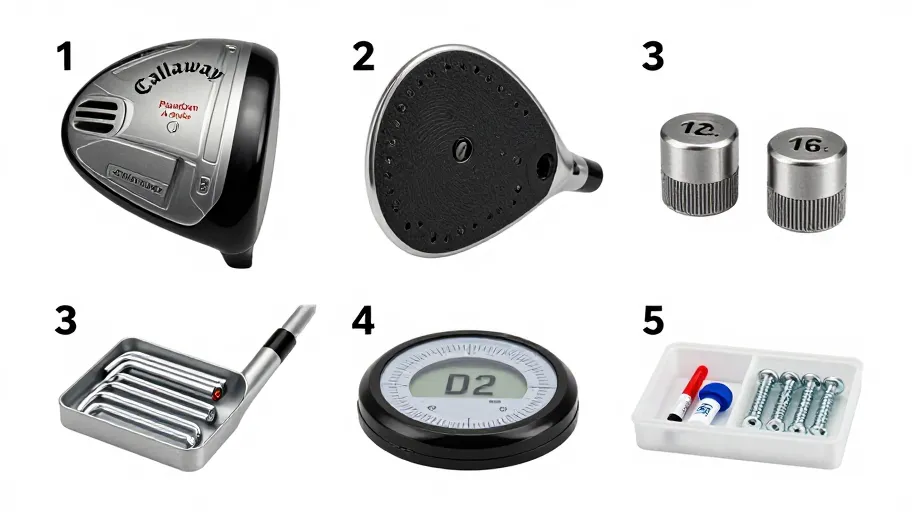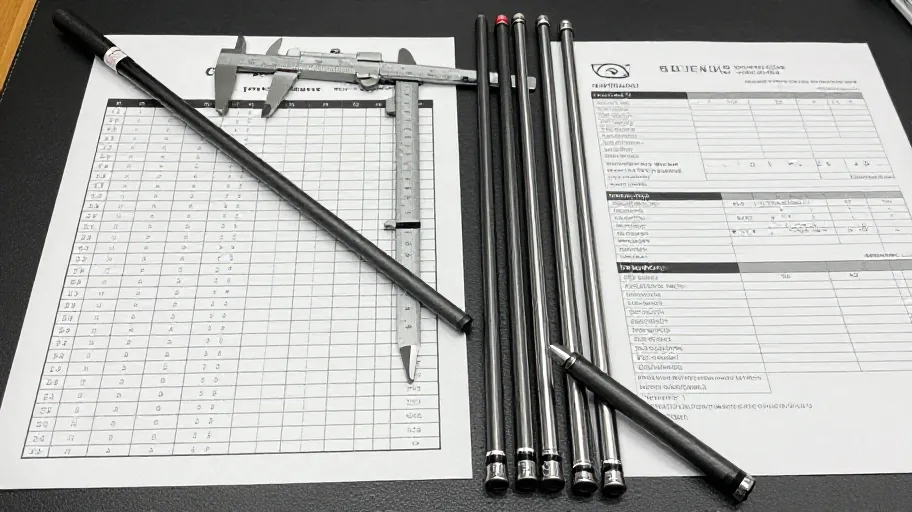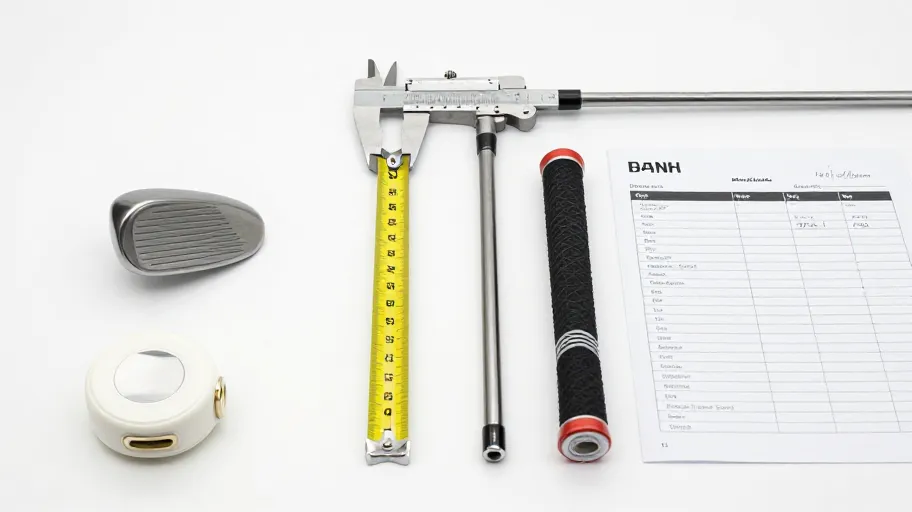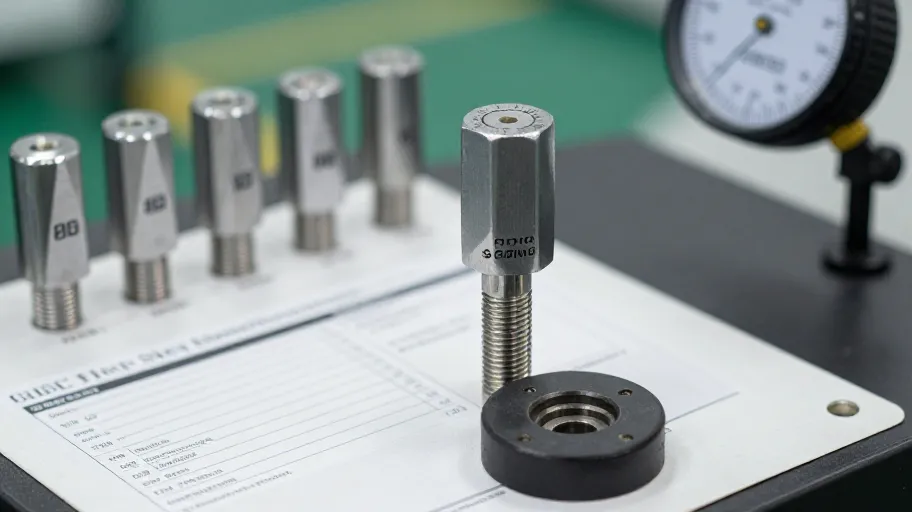
Before you approve golf club weights for bulk production or purchase, confirm three things in writing: that the weight matches your exact club brand, family and model; that the mounting interface — thread, port or channel — matches that model's specification; and that a verified sample from the current production batch matches the specification you approved. Weight errors that pass a generic listing still fail at the bench. This article sets out a five-check framework, a decision table and the approval questions to resolve before you sign off.
The Weight Compatibility Gate
The Weight Compatibility Gate (WCG) is a five-check sequence. Each check produces a documented answer, and bulk approval should wait until all five are closed.
- Model confirmation. Record the exact brand, family, model and generation of the club. Two clubs with similar names can carry different weighting systems.
- Interface verification. Confirm the mounting method — threaded port, press-in channel, sliding track or adhesive mount — and its dimensions as stated by the club manufacturer or your own measurement of the club in hand.
- Mass and material confirmation. Confirm the stated mass of the weight and the material, because mass tolerance and material both affect whether the weight performs as intended in the port.
- Sample-to-batch match. Confirm that any sample you evaluated came from, or is traceable to, the batch you will receive, and that the supplier will confirm this in writing.
- Policy confirmation. Confirm current sample policy, pricing, shipping terms, minimums, lead times and returns directly with the supplier. Do not rely on archived listings or third-party descriptions.
The gate exists because the riskiest failure in weight selection is not a bad product — it is a good product that does not match the club.
Decision table: what to verify by weight system
| Weight system | What you must confirm | Verification action | Approval condition |
|---|---|---|---|
| Threaded screw-in port | Thread size, pitch and seating depth for the exact model | Compare club manufacturer spec or measured port against supplier's stated thread spec | Written match on thread, pitch and depth for the model |
| Press-in or interference fit | Port diameter and retained depth in the clubhead | Request supplier dimensional statement and confirm against the model's port spec | Confirmed diameter and depth, with sample verified in an actual clubhead |
| Sliding channel / track weight | Channel geometry and locking mechanism compatibility | Confirm channel profile and lock type against the model family | Documented match, sample slides and locks in the target club |
| Adhesive / hot-melt applied mass | Application method and mass measurement process | Confirm how mass is verified before application | Mass verification method documented and repeatable |
| Interchangeable cartridge system | Cartridge format and any tooling required | Confirm cartridge format and tool compatibility for the model | Format and tooling confirmed in writing |
Approval questions to resolve before sign-off
Put these to the supplier and record the answers. Any question that cannot be answered with current first-party evidence should pause approval.
Specification
- What is the stated mass, material and dimensional specification of this weight, and how do you verify each before dispatch?
- Which club models and generations has this specification been confirmed against, and can you share that confirmation?
- What dimensional and mass tolerance do you hold this component to for the batch I am approving?
Sample and batch
- Can I receive a sample from the current batch, and what is your current sample policy, including any fees and who covers shipping?
- How do you ensure the shipped batch matches the sample I verified?
- What is your process if the batch does not match the approved sample?
Commercial and logistics
- What is your current minimum order quantity for this component, and is it negotiable for a first approval run?
- What is the current lead time from approval to dispatch, and what confirmation will I receive at each stage?
- What are your current shipping options, costs and returns terms for this component?
These questions deliberately avoid assumptions. Sample fees, shipping responsibility, refund treatment, minimums and lead times vary by supplier and change over time, so treat every one as a current-policy question, not a fixed fact.
Compatibility checklist before you approve
Run this checklist and keep the record with your project file. Do not approve bulk production with open items.
- Exact club brand, family, model and generation documented.
- Mounting interface type identified (thread, press-fit, channel, adhesive or cartridge).
- Supplier's stated dimensions and mass compared against the model's specification.
- Sample requested from the current batch under the supplier's current policy.
- Sample verified in the actual club, not just against the listing.
- Sample-to-batch traceability confirmed in writing.
- Current pricing, minimums, lead times, shipping and returns confirmed directly with the supplier.
- Every answer recorded with a date, because policies and stock change.
Frequently asked questions
How do I confirm a golf club weight will fit my club model? Document the exact model, identify the mounting interface, then compare the supplier's stated dimensions and mass against the model's specification or your own measurement. Use the fitment selector to record each confirmation step before adding the component.
Why can't I rely on "fits most" listings? Club families change weighting systems between generations, and a weight that fits one model may not seat correctly in another. Model-level confirmation is the only evidence that supports an approval decision.
What should I do if the supplier cannot confirm model compatibility? Pause the approval. Ask which specific models the component has been confirmed against and request a sample under the supplier's current sample policy so you can verify fitment in the actual club yourself.
Should I approve bulk production after verifying one sample? Only if the supplier confirms in writing that the shipped batch will match the verified sample. Sample-to-batch consistency is a separate question from sample quality, and both need documented answers.
Do weight specifications change between production runs? They can, which is why the gate asks for a sample from the current batch and a written batch-match commitment rather than relying on an earlier verified sample or an archived listing.
Before you add any component
Use the fitment selector before adding a component. It walks the compatibility gate step by step for your exact club family and model, so each confirmation is recorded rather than assumed. That record is what makes a bulk approval defensible.
Not ready to select yet? Download the compatibility checklist above, resolve the open questions with your supplier, and come back to the selector once every box is checked. Verification first; approval second.
Master Your Swing, DIY Your Fit. DIY Golf is the premier destination for the technical golfer. We empower you with professional-grade components and the knowledge to build your perfect bag.