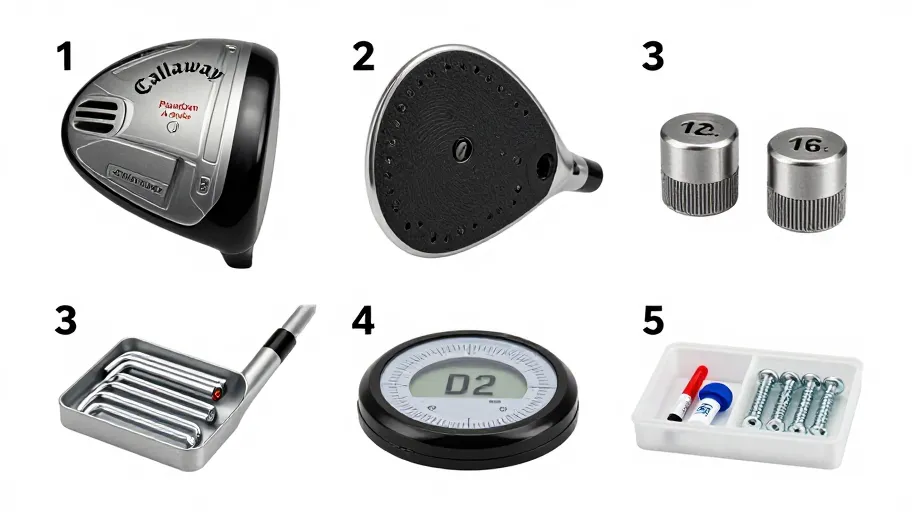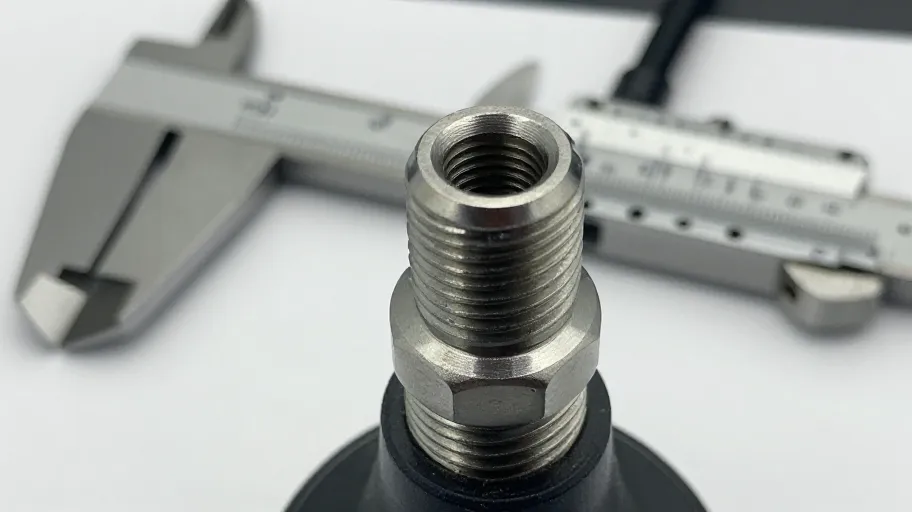
When a supplier proposes a material change for a golf club weight, treat it as unverified until you confirm five things: the achieved weight stays within your target, the thread or port matches your exact club model, the alloy's properties suit the application, written fitment confirmation exists for your club family, and you have documented approval before ordering. Use the fitment selector before adding a component.
Why "same part number" is not enough
A weight that shares a part number with your original can still behave differently after a material substitution. Density differences between alloys mean two visually identical weights can land at different masses. Surface treatments, thread forming behaviour, and long-term corrosion response also change with the alloy — all of which affect whether the component installs cleanly and stays put.
None of this means a substitution is wrong. Material changes can be sound engineering decisions. The point is that you, as the person responsible for the build, need to convert the supplier's suggestion into a set of checkable claims. That is what the W-SWAP framework does.
The W-SWAP framework
W — Weight target. Ask the supplier to state the achieved weight of the substituted component in writing, and how it compares to your original weight's specification for your club model. Do not accept "equivalent" without a number and a unit — and without you confirming that number against your own measurement or the club manufacturer's published spec for your exact model.
S — Screw thread and port. Ask whether the thread pitch, diameter, and engagement length are identical to your original weight, and whether the port geometry on your club family requires any change to install the new part. Ask explicitly: "Has this been confirmed on the exact club model I own, not just the family?" Family-level compatibility is not model-level compatibility.
W — Working properties of the alloy. Ask what alloy or material grade is proposed, and request the material specification in writing. Then ask targeted questions: how does it respond to repeated installation and removal, to moisture and cleaning solvents, and to torque at installation? These are project-specific questions; the answers belong in your approval file, not in assumptions.
A — Approval trail. Every claim the supplier makes — weight, thread, fitment, material grade — should exist in a written message you can retrieve later. A documented substitution protects both sides if the component does not perform as described.
P — Proof before purchase. Before you commit, verify the substitution against your club's actual hardware where possible: compare the original weight side by side, measure what you can measure, and confirm the current policy directly regarding samples, returns, and any other terms. Confirm the current policy directly.
Decision table: material substitution scenarios
| Scenario | What the supplier says | What you must verify | Approve only if |
|---|---|---|---|
| Alloy swap, same design | "Same weight, different material" | Achieved weight in writing; material grade; thread match to your exact model | Written weight matches your target and thread is confirmed model-specific |
| Density compensation via size change | "We adjusted dimensions to hold the weight" | How the geometry change interacts with your weight port and seating depth | Port fit confirmed for your club model in writing |
| Coating or finish change | "Just a finish difference" | Whether the finish changes thread dimensions or seating | Thread and seat confirmed unaffected, in writing |
| Substitute brand or aftermarket equivalent | "Fits the same clubs" | Whether the claim covers your exact model, not just the family | Model-level fitment confirmation, and you check the fitment selector |
| No documentation offered | Verbal assurance only | Everything | Do not approve; request written specification first |
Concrete approval questions to send the supplier
- Please confirm the achieved weight of the substituted component, with unit and tolerance stated in writing.
- Please state the material grade and provide its specification sheet.
- Please confirm the thread pitch, diameter, and engagement length match the original weight for my exact club model [state brand, family, model, and serial or head type].
- Has this component been installed on this exact model? If so, please describe the verification in writing.
- What installation torque do you specify, and does it differ from the original weight?
- If the component does not fit my stated model, what is the process for resolving it? Confirm the current policy directly.
Keep the answers together. If any answer arrives as a verbal assurance, restate it in an email and ask for a simple confirmation.
Building your approval trail
An approval trail is short: the club's brand, family and model; the original part reference; the proposed substitution with material grade; the supplier's written answers to the questions above; and your decision. Save it with your build records. If the component later behaves differently, you have a documented basis for the conversation — and if it behaves exactly as described, you have a template for the next substitution decision.
FAQ
Does a material change always alter the swingweight? Not necessarily, but only the supplier's stated achieved weight — checked against your own scale or the manufacturer's spec — can tell you. Do not infer it from the material name. Confirm the achieved weight in writing.
Can I trust fitment confirmation for the club family rather than my model? Verify it at model level. Families can share naming while varying in port geometry or thread detail. Ask for confirmation naming your exact model, and run the fitment selector yourself as a second check.
What documentation should I ask for with any substitution? Material grade or specification, stated achieved weight, thread details, model-specific fitment confirmation, and the supplier's answers in retrievable written form. Anything not written is not part of your approval file.
Who decides whether a substitution is acceptable? You do, as the builder or owner of the build. The supplier proposes; you verify, compare, document, and approve. If evidence is missing, the decision is simply deferred until it arrives.
What if the substituted weight fits but changes the feel of the club? That is a performance question you can only assess after installation on your exact setup. Document the pre-change configuration so you can compare honestly and reverse the change if needed — which is another reason to keep the original component until the substitution is proven.
Use the fitment selector before adding any component. It is the fastest way to check that a golf club weight matches your exact club brand, family and model before you commit to a substitution.
Low-friction next step: copy the six approval questions above into your notes or an email draft, fill in your club model, and send them to your supplier today. Ten minutes of questions prevents an unverified substitution.
Master Your Swing, DIY Your Fit. DIY Golf is the premier destination for the technical golfer. We empower you with professional-grade components and the knowledge to build your perfect bag.