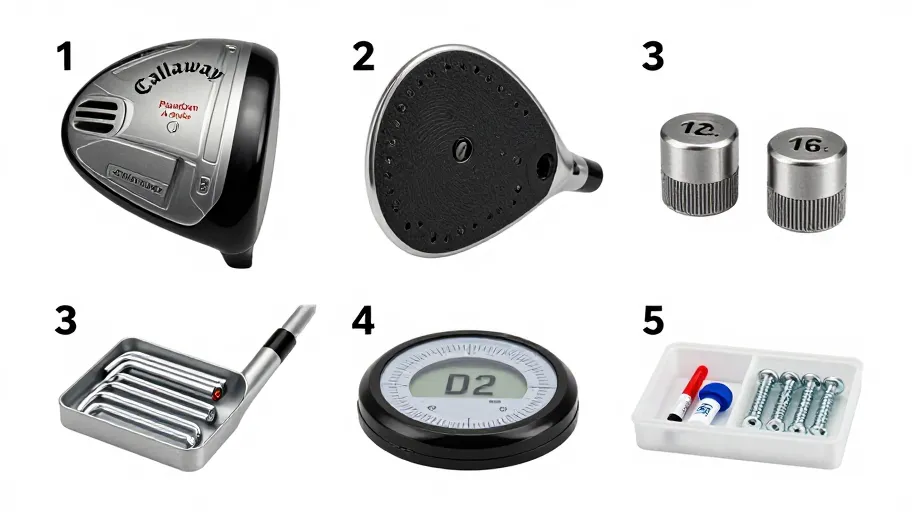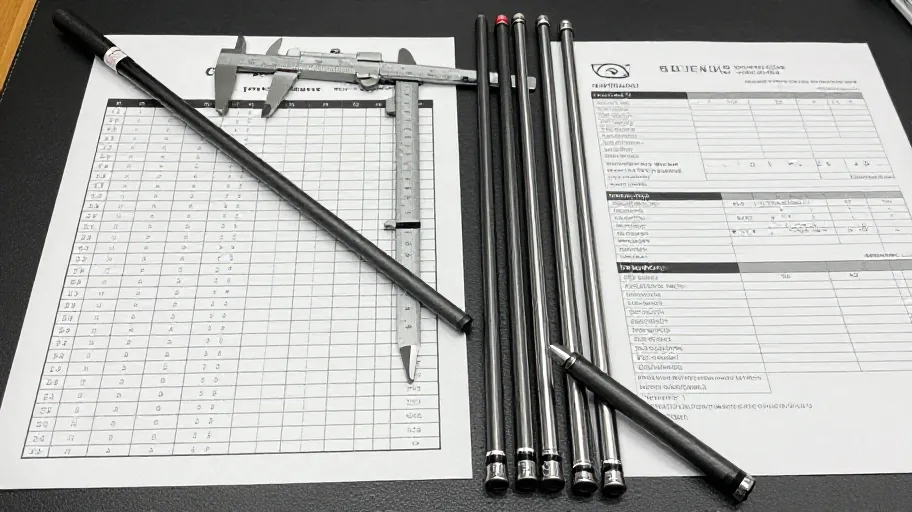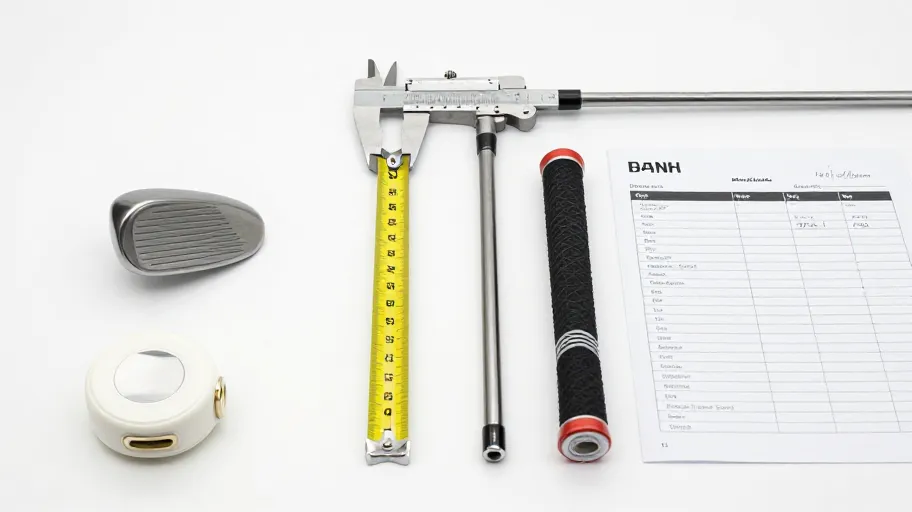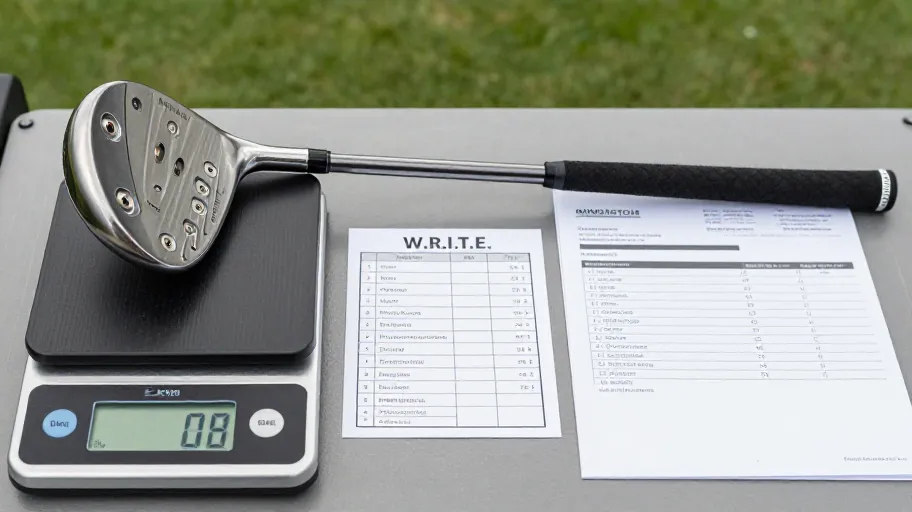
When checking compatibility for a weighted component, record five things about golf club weights: the exact weight value and unit, the weight type (head, tip, back or hosel), the interface it must match on your specific club model, the recorded before-and-after balance reading, and the supplier's written confirmation that the part fits your exact brand, family and model. Compatibility is model-specific, so no general claim here substitutes for checking your club directly. Use the W.R.I.T.E. framework to keep the records clean and reusable.
The W.R.I.T.E. framework for recording golf club weights
W — Weigh. Take your own measurement of the current component with a scale you trust before ordering anything. Do not rely on a catalog figure alone; your club's installed weight is the baseline every replacement will be judged against.
R — Record. Write down the number, the unit (grams or points), and where on the club the reading was taken. A weight noted without context is unusable later. Record head weight, shaft weight, grip weight and any installed tip or back weights separately.
I — Identify. Identify the exact club brand, family, model, model year and — where relevant — the adjustable setting in place when you weighed it. A weighted component that fits one generation of a model family may not fit another, so treat each model as its own case and verify rather than assume.
T — Test-plan. Decide before ordering how you will evaluate the change: which balance reading you want to see after installation, and what result would make you remove the component. Planning this in advance prevents motivated reasoning after the part arrives.
E — Evidence. Keep a written record of the supplier's confirmation that the part matches your recorded model and interface. If the confirmation exists only in a chat, save it. If it does not exist yet, request it before approving the order.
What to record per weight type: decision table
| Weight type | What to record | Compatibility question to answer | Evidence to keep |
|---|---|---|---|
| Head weight | Total head mass in grams; stated target balance | Does this head weight match the intended build for my model family? | Supplier confirmation naming your exact model |
| Tip weight | Weight value in grams; shaft tip diameter and hosel depth | Does the tip weight fit the shaft and hosel combination in my club? | Fitting note listing shaft model and tip spec |
| Backweight / counterweight | Weight value; attachment point on your model | Does my model accept a backweight at the stated position? | Photo of the installed interface plus written confirmation |
| Adjustable port weight | Thread or port specification for your exact model | Is the port on my model generation the same as the listing states? | Model-year documentation from the manufacturer |
| Swingweight points | Before reading; target after reading | What point change does this component produce on my length and grip setup? | Your own before/after scale and balance readings |
Approval questions to confirm before ordering
Before you approve any weighted component purchase, send these questions to the supplier and record the answers:
- Can you confirm in writing that this component fits the exact brand, family, model and model year I have listed?
- What is the current stock position for this exact part, and what is your current policy on returns or exchanges if the fit does not match?
- Is the listed weight value for the bare component or the installed configuration, and in which unit?
- What is your current policy on samples, shipping arrangements and any applicable fees? Confirm the current terms directly rather than relying on older listings.
- If the component requires an adhesive, tool or torque step for installation, what does the current instruction documentation specify for my model?
None of these questions assumes any answer. Policies, stock and fitment details change, so the point is to obtain a dated, written answer you can attach to your build record.
Pre-order weight compatibility checklist
- Current club weighed and baseline recorded with unit and date
- Exact brand, family, model and model year written down
- Interface (hosel, port, tip or attachment point) identified for your specific model
- Target post-installation reading defined before ordering
- Supplier written fitment confirmation received and saved
- Current sample, shipping, fee and returns policy confirmed directly
- Removal plan documented in case the fit or balance does not match
Frequently asked questions
Is swingweight the same as head weight? No. Head weight is a mass measurement in grams; swingweight is a balance reading that also reflects shaft length, grip weight and component distribution. Record both, but never substitute one for the other when comparing parts.
Can I use a weight listed for another model in the same family? Do not assume so. Families change interfaces between generations, so a part that fits one model year may not fit the next. Verify against your exact model and keep the supplier's written confirmation.
How many weight readings should I record per club? At minimum: current head or component weight, your baseline balance reading, and your target reading after installation. If you are testing multiple configurations, record each one separately rather than overwriting.
What if the supplier's listed weight differs from my scale? Record both figures and the conditions of each measurement, then ask the supplier to confirm which configuration their figure describes. Do not average or guess; document the discrepancy and resolve it before ordering.
Should I confirm the returns policy before or after ordering? Before. Request the current policy in writing as part of your approval questions, and save it alongside your weight records.
Before adding any weighted component, use the fitment selector to confirm the part matches your exact club brand, family and model — then attach that confirmation to your build record.
Secondary CTA: Download or copy the pre-order weight compatibility checklist above and complete every line before your next component order.
Master Your Swing, DIY Your Fit. DIY Golf is the premier destination for the technical golfer. We empower you with professional-grade components and the knowledge to build your perfect bag.