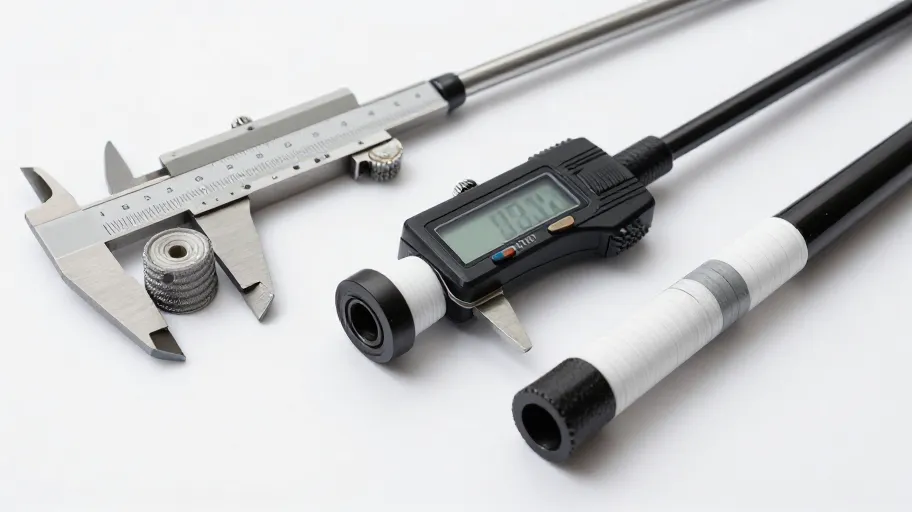
Golf grip size is defined by three measurements working together: the grip's core size, the shaft's butt diameter, and the total installed thickness including any build-up tape. Most sizing mistakes happen because buyers compare grip model names and hand feel while never measuring the butt diameter of the specific shaft they are regripping. Capture all three numbers before ordering, and the grip-size decision becomes a documented comparison rather than a guess.
The Grip-Size-First Sourcing Framework
The framework has four steps, and each step produces a number or a written confirmation you can attach to your order enquiry.
Step 1 — Measure the shaft butt diameter. This is the outside diameter of the shaft at the grip end, after the old grip and tape are fully removed. It is the single most-missed measurement because grip listings lead with core size, and buyers assume the two are the same thing. They are not. The butt diameter of the shaft you own determines how a given grip core installs on that specific club. Measure it with calipers and write the number on your spec sheet.
Step 2 — Record the grip's stated core size and check how the listing defines it. A grip's core size is the internal dimension before installation, and the installed feel depends on the interaction between that core and your measured butt diameter. When a listing omits the core size, do not infer it from the model name — ask the supplier to state it in writing for the exact product and model you intend to buy.
Step 3 — Measure your glove hand. Measure the length from the wrist crease to the tip of the middle finger, and the circumference around the widest part of the palm below the fingers. These two numbers give you a starting point for the undersize/standard/midsize discussion with a fitter or supplier. Treat them as inputs to a decision, not as a verdict — grip feel is personal, and layering changes everything.
Step 4 — Decide the build-up plan before purchase. Build-up tape changes installed thickness. If you already know you will add layers under the lower hand, that knowledge should influence which grip model and nominal size you select in the first place. Planning build-up after the grips arrive means you are adapting to a purchase instead of specifying one.
Decision table: mapping your measurements to a grip-size direction
Use this table to turn your recorded numbers into a direction to verify — not a final answer — then confirm fitment against the exact product listing.
| What you measured | What it suggests | Verification action before ordering |
|---|---|---|
| Butt diameter matches the grip's stated core pairing, hand measurements in the middle range | Standard nominal size is the starting direction | Confirm the listing states the core size and matches your shaft measurement |
| Smaller hand measurements, or a lighter club build overall | Undersize direction worth evaluating | Compare at least two undersize models and document why one fits the build |
| Larger hand measurements, or a preference for reduced hand action | Midsize direction worth evaluating | Confirm midsize availability for the exact model; verify installed feel with a fitter if possible |
| Butt diameter does not pair with the grip's stated core | Fitment risk — do not order yet | Send the supplier your measured butt diameter and ask which core they recommend for that shaft |
| Listing omits core size or any dimensional data | Insufficient specification to approve | Request written dimensions for the exact product and model before purchase |
| Set contains mixed shafts (e.g., irons vs. wedges from different families) | One grip size may not apply across the set | Document per-club butt diameters and approve grips per club family, not per set |
Approval questions to send before ordering
Paste these into your enquiry and keep the written replies with your build records:
- What is the stated core size and the nominal installed outer diameter of this exact grip model?
- Which shaft butt diameters does this grip pair with according to your current product data?
- Can you confirm current stock for the exact model, colour and size I have selected?
- What is your current returns position if the grip is unused and I have mis-measured? (Confirm the policy directly; do not assume it.)
- If I plan build-up tape, do your listed dimensions refer to installed size with or without tape?
- For a mixed set, can the same model be supplied in more than one nominal size, and what is the current availability of each?
None of these questions assumes any sample policy, fee treatment or delivery term — those must be confirmed directly with the supplier at the time of enquiry, and the answers should be kept in writing.
Build-up tape: a planning variable, not a patch
If the first brief omits butt diameter, build-up tape becomes the fix for a mis-ordered grip. If the brief includes it, build-up tape becomes a tuning tool you chose in advance. The difference matters for sourcing: a documented plan lets you compare models on equal terms, while an undocumented one locks you into whatever you already bought. Decide the number of layers, and where on the grip you will apply them, before you approve the order — then record both in your build sheet.
Set logic: one size rarely tells the whole story
When a set combines shafts from different families — a common situation in component builds and single-club replacements — a single nominal grip size may not produce consistent installed thickness across every club. Document butt diameter per club, group the clubs by shared shaft family, and approve grip specifications per group. This is more work in the brief stage and less work at installation.
Frequently asked questions
Which single measurement matters most when planning a regrip? The shaft butt diameter, measured after full tape removal. It determines how any given grip core installs on your specific club, and it is the measurement most frequently missing from a first purchase brief.
How do I know whether to choose undersize, standard or midsize? Start with your measured hand length and palm circumference, then verify the installed feel — including any planned build-up tape — through comparison or a fitting session. Hand measurements give you a direction to test, not a conclusion to skip testing.
Can I use one grip model across a mixed set? You can use one model, but verify fitment per shaft family rather than per set. Different butt diameters in the same bag can produce different installed thicknesses with the identical grip.
What should I do if a listing does not state the core size? Do not infer it. Request the written core size and pairing data for the exact product and model from the supplier, and hold the order until you have it.
Do I need to plan build-up tape before buying? Yes, if you already anticipate adjusting installed thickness. A pre-planned layer count changes which nominal size you should compare, so record it in the brief rather than deciding at the workbench.
Next step: read the fitting guide
The measurements in this article are the entry point. Read the fitting guide to work through the full selection sequence, compare grip-size categories against your documented spec sheet, and approve your order with every number in hand.
Before you order: the five-line spec checklist
Copy this into your build record and complete every line before approving any grip purchase:
- Shaft butt diameter measured (calipers, tape fully removed): ______
- Grip stated core size confirmed in writing for exact product and model: ______
- Hand measurements recorded (wrist-to-fingertip and palm circumference): ______
- Build-up plan documented (layers and placement): ______
- Supplier written confirmation of fitment and current stock received: ______
Five completed lines turn a grip order into a documented sourcing decision. Read the fitting guide to finish the sequence.
Master Your Swing, DIY Your Fit. DIY Golf is the premier destination for the technical golfer. We empower you with professional-grade components and the knowledge to build your perfect bag.


