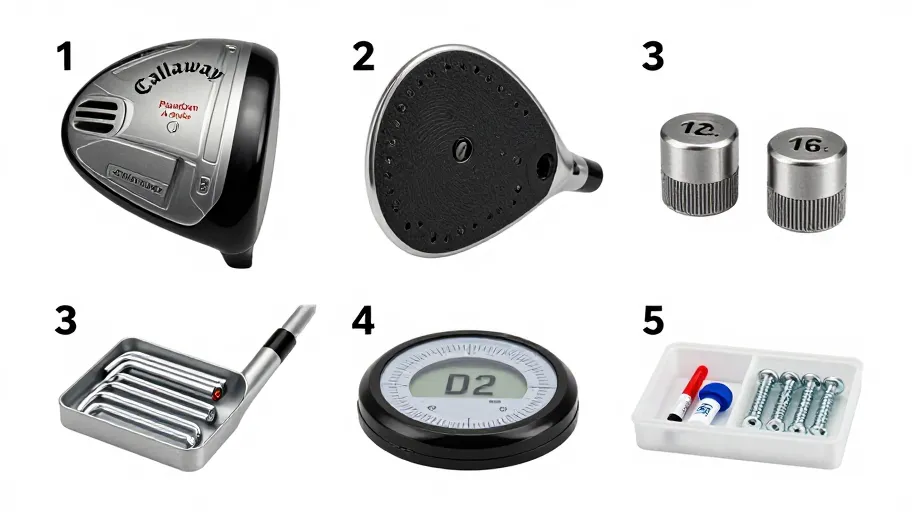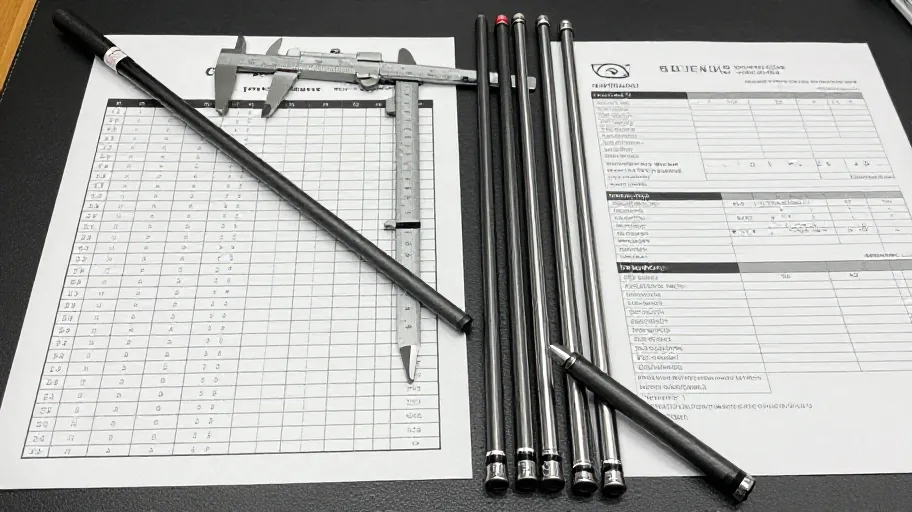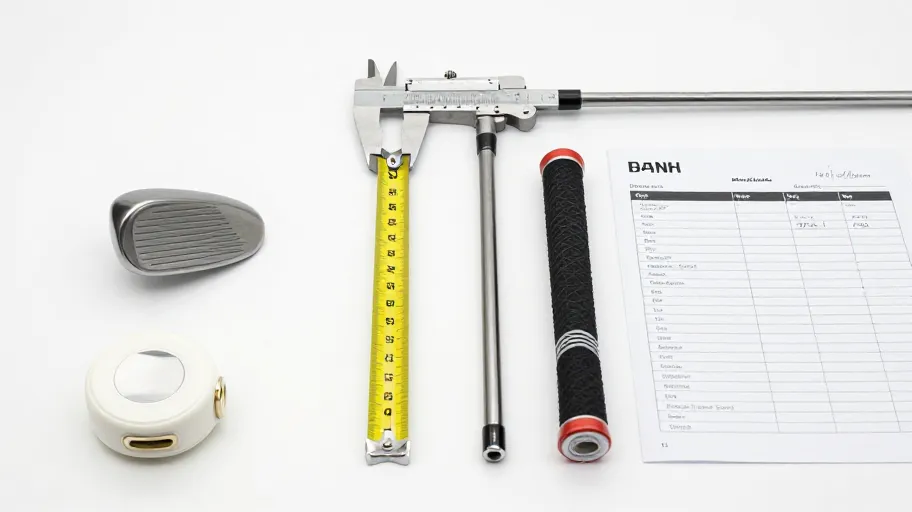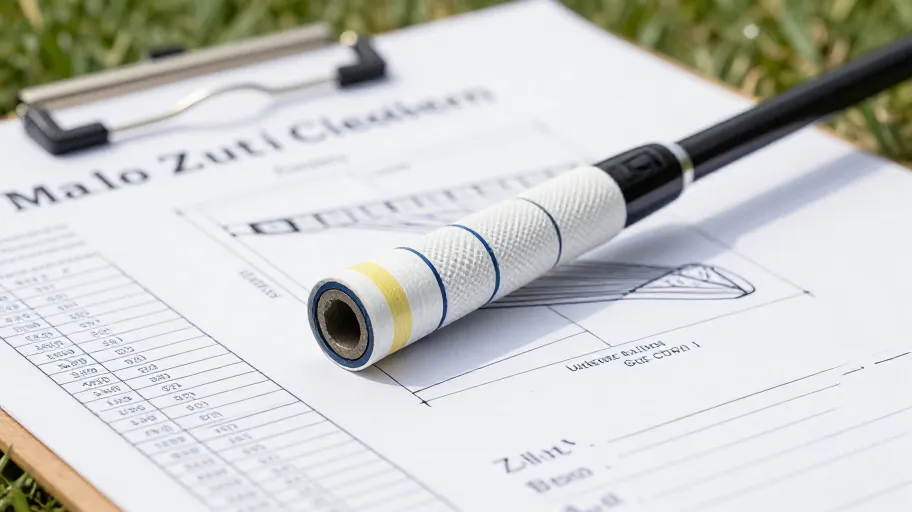
Golf grip size is the set of dimensions and selections — core inside diameter, butt-end outside diameter, grip length profile, undersize/standard/midsize/oversize designation, wrap count and build-up tape layers — that determine whether a grip seats correctly on a specific shaft. Every one of those values belongs in writing: on the component drawing, in the bill of materials and in your approval notes. This article gives you a framework for deciding which detail goes where, and which questions to ask before you approve a grip for installation.
The DRAW-BOM gate: five checks before you approve any grip
When you document a golf grip size decision, the failure mode is not ignorance — it is omission. A grip that "felt right" last season cannot be reproduced if the build-up tape layers, wrap designation or core size were never written down. Use the DRAW-BOM gate, a five-pass check you run across all three documents:
- D — Diameter. The grip's core inside diameter and the shaft's butt outside diameter. These two numbers must be recorded as a pair, never separately, because the interference between them is what holds the grip in place.
- R — Round or undersize variant. Many grip models ship in round and ribbed (reminder) variants, and in undersize through oversize designations. Record the exact variant code, not just the model name.
- A — Alignment features. Ribs, reminder ribs, cap markings and any visual alignment aids. These affect both orientation at install and orientation checks after install.
- W — Wrap count. If you select a wrapped grip construction, the number of wraps is part of the size decision, not a decorative detail.
- B — Build-up tape. Layers of tape under the grip change the effective playing diameter. Record the tape type, layer count and where layers were concentrated, because this is the single most frequently undocumented variable in regrip projects.
Run each pass three times: once against the drawing, once against the BOM and once against the approval notes. If a pass fails any document, the specification is incomplete.
Which detail belongs in which document
Not every detail belongs everywhere. Drawings carry geometry and acceptance references; the BOM carries identity and quantity; approval notes carry the decisions and confirmations a human made. The decision table below separates critical from preference items so you can route each detail correctly.
| Detail | Critical or preference | Drawing | BOM | Approval notes | Must confirm with supplier? |
|---|---|---|---|---|---|
| Grip core inside diameter | Critical | Yes — paired with shaft butt OD | Yes — part of variant code | Yes — with measured confirmation | Yes, per exact model |
| Shaft butt outside diameter | Critical | Yes | Yes, if shaft is also sourced | Yes | Yes, per exact shaft model |
| Grip length and profile | Critical | Yes | Note model designation | Yes | Yes |
| Round vs ribbed variant | Critical | Yes — alignment feature | Yes | Yes — installer acknowledgement | Yes |
| Undersize/standard/midsize/oversize designation | Critical | Yes | Yes — variant code | Yes | Yes |
| Wrap count (wrapped constructions) | Critical | Yes, if wrapped | Yes | Yes | Yes |
| Build-up tape type and layers | Critical (variable) | Reference only | List tape as separate line item | Yes — layer count and placement | Confirm tape compatibility with grip model |
| Texture, colour, decoration | Preference | No | Yes — variant code covers it | Optional | Confirm availability per model |
| Solvent / activation method | Process, not geometry | No | Optional line item | Yes — method recorded | Confirm with grip manufacturer |
| Cure or wait period before play | Process | No | No | Yes — confirm current guidance | Yes, per product |
Two boundaries on this table. First, no numerical tolerance, price, lead time or stock position appears here because none was supplied — treat each as an open question for DIY-Golf rather than a known value. Second, compatibility between a grip and a specific shaft is never automatic; it is a verified pairing you document after confirmation for the exact models involved.
Concrete approval questions to ask before you sign off
Move these from your head into the approval record. A sourcing-grade approval note answers each one in writing:
- What is the core inside diameter of this exact grip variant, and what shaft butt outside diameter does it pair with?
- Does this model exist in round and ribbed versions, and which variant code am I approving?
- For this club's target feel, what effective diameter results from the chosen designation plus the build-up tape layers I have specified?
- What tape type and layer count am I approving, and is that tape listed as a line item in the BOM?
- What installation method does the grip manufacturer currently specify for this model, and what should I record about the wait period before the club is played?
- Are there any current stock, pricing, shipping or return conditions for this exact variant, and who confirmed them and when?
The last question matters because policies change. Record the date of confirmation and the person or channel that provided it, so a future regrip can be re-verified rather than assumed.
Avoiding the undocumented variables
Most regrip disappointments trace back to three silent variables: build-up tape, wrap selection and installation method. None of them appear on the grip itself, and all of them change the effective golf grip size the golfer actually feels.
- Tape drift. If the second regrip uses one fewer tape layer than the first, the club plays differently and nobody knows why. The fix is a BOM line item plus an approval-note layer count.
- Variant drift. A model name without a variant code invites substitution. Insist on full variant codes in the BOM.
- Method drift. Recording the installation method and post-install guidance in the approval notes makes the outcome reviewable if something feels wrong.
If a specification cannot be reproduced from the paperwork alone, it is not yet an approval — it is a memory.
Regrip documentation checklist
Use this checklist each time a grip size decision is made:
- Core inside diameter recorded and paired with shaft butt outside diameter
- Exact variant code (round/ribbed, size designation) written in the BOM
- Wrap count recorded if the grip is a wrapped construction
- Build-up tape type, layer count and placement in approval notes
- Installation method and any post-install wait guidance confirmed for the exact model
- Stock, price, shipping and returns confirmed directly with DIY-Golf, with date and channel noted
- All DRAW-BOM gate passes run against drawing, BOM and approval notes
- No dimension, tolerance or policy treated as known until confirmed for the exact product
FAQ
Does grip size affect shot shape? Grip size influences how the hands interact with the club, and many fitters treat it as part of a fitting conversation. But no specific performance outcome can be claimed for any particular size without current first-hand evidence for your swing and equipment. Treat size as a feel and repeatability decision you document, then evaluate yourself.
How do I know whether I need undersize, standard, midsize or oversize? That depends on hand measurements, preference and the effective diameter after tape — a fitting question, not a catalogue default. Read the fitting guide to work through the measurement sequence before choosing a designation.
What is the difference between core size and grip diameter? Core size is the inside diameter of the grip before installation; effective playing diameter is what results after the grip is stretched over the shaft and any build-up tape. Both belong in your paperwork, as a pair.
Can I reuse measurement records from a previous regrip? Only as a starting point. Confirm current product specifications for the exact grip variant you are ordering now, because the previous record may reference a discontinued variant or undocumented tape layers.
Who should I ask about stock, pricing and returns for a specific grip? Ask DIY-Golf directly for the exact variant, and record the answer, date and channel in your approval notes. No sample, shipping, cost or returns policy is stated in this article because none was supplied.
Next step
Ready to turn these documents into a decision? Read the fitting guide and work through the measurement sequence for your specific club before you approve a grip variant.
Prefer to start smaller? Copy the regrip documentation checklist above into your next build sheet — it takes one pass and prevents the most frequent documentation gaps.
Master Your Swing, DIY Your Fit. DIY Golf is the premier destination for the technical golfer. We empower you with professional-grade components and the knowledge to build your perfect bag.