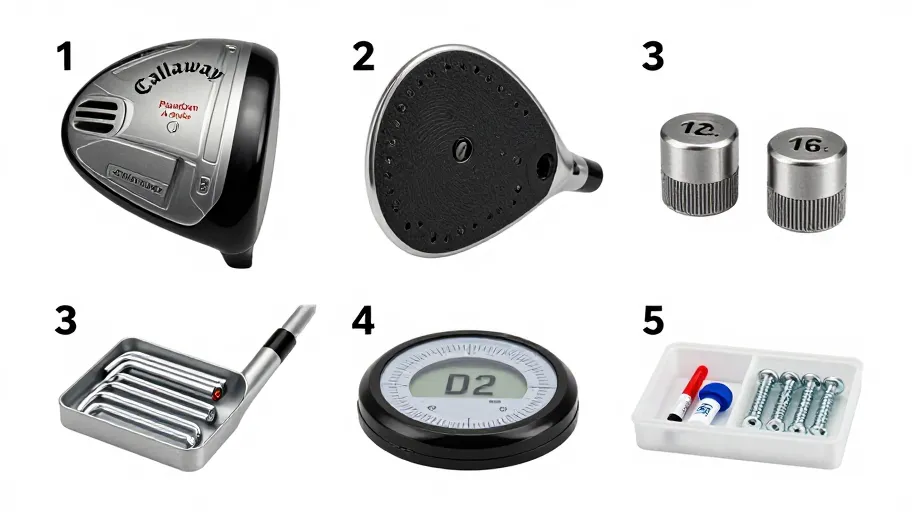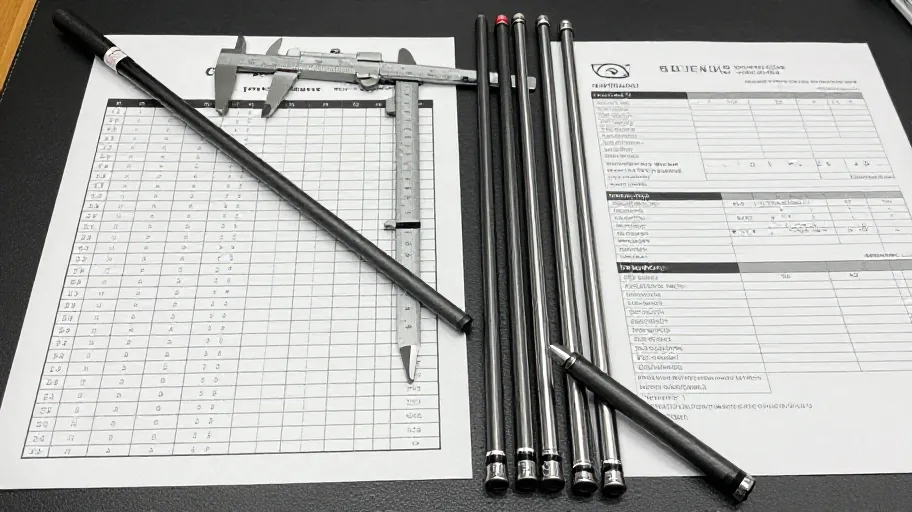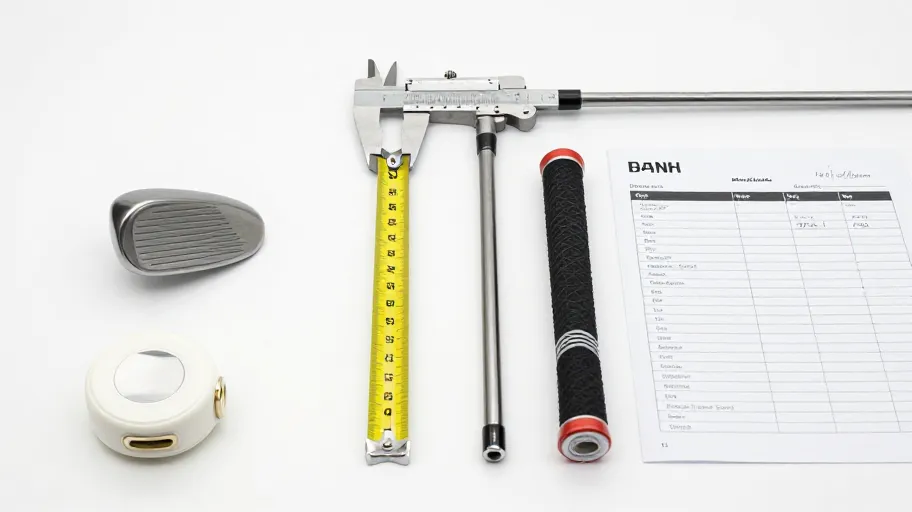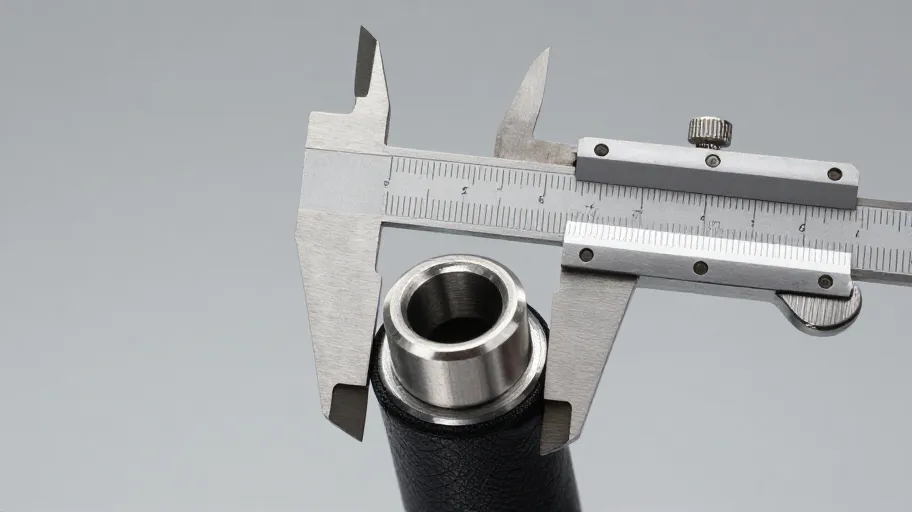
A golf shaft sleeve adapter cannot be confirmed from photos alone because the features that decide fitment — tip bore, collar height, hosel seat profile and model-year markings — are either internal or too fine to judge visually. Verify the club's exact brand, family, model and revision year, then compare the sleeve against the installed adapter or the head manufacturer's fitment reference using the MATCH-6 framework below. Document every measurement before approving a sample.
Why photographs are not evidence
A listing photo answers one question: what the adapter looks like. It does not answer the questions that matter to a builder or a golfer replacing a shaft:
- Does the tip bore accept the shaft diameter you intend to install?
- Does the collar height match the hosel recess of your specific head?
- Does the sleeve's seat profile rest flush against the head's internal geometry?
- Is the unit produced for your model year, or a visually identical sibling from a different revision?
Adapters across and within club families can share external silhouettes while differing in the dimensions that decide whether a shaft seats, squares and holds. The purpose of a sample comparison is to replace visual judgement with recorded evidence.
The MATCH-6 framework
Use MATCH-6 to compare any candidate sleeve against your reference — the adapter currently in the head, a second sample, or the club's published fitment reference for that exact model and revision:
- Model identity. Record the head's brand, family, model and revision year. Where the model had a mid-cycle change, record the serial or marking that distinguishes the version.
- Adapter geometry. Compare the outer form, screw position and any indexing features against the reference, noting that visually identical parts can still differ internally.
- Tip diameter. Confirm the internal bore the shaft tip enters. Ask the supplier to state the tip specification for the exact SKU and compare it to your shaft's tip measurement.
- Collar height. Measure the collar that contacts the hosel. A mismatch here shows up as a proud or sunken sleeve at address — something a photo cannot reveal.
- Hosel seat. Confirm how the sleeve seats inside the head: the contact surface, depth and alignment. Ask whether the seat profile matches your model's head, and record the answer.
- Markings. Photograph and log all etched or moulded identifiers on both the head and the sleeve. Markings are your audit trail if a dispute or re-order arises.
The framework's value is not any single check; it is that each comparison produces a written record you can reuse for future builds on the same head.
Decision table: comparing two golf shaft sleeve adapter samples
| MATCH-6 element | What to record | Pass condition | Fail signal | Action on fail |
|---|---|---|---|---|
| Model identity | Brand, family, model, revision year, serial/marking | Matches head's documented model and revision | Model ambiguous or revision unconfirmed | Confirm revision with the head's documentation before proceeding |
| Adapter geometry | Outer form, screw position, indexing features | Consistent with reference on direct side-by-side | Any visible dimensional or positional difference | Reject or request a specification sheet for the exact SKU |
| Tip diameter | Bore specification stated by supplier; your shaft's tip measurement | Supplier-stated spec matches your shaft | Spec unstated or hedged | Request written confirmation before ordering |
| Collar height | Measured collar height of sample vs reference | Agreement at your measured precision | Measurable discrepancy | Do not install; query the discrepancy |
| Hosel seat | Seat profile and depth relative to your head | Supplier confirms seat matches your exact model | Confirmation is generic, not model-specific | Pause the order until model-specific confirmation exists |
| Markings | Photos and written log of all identifiers | Identifiers documented and consistent | Markings absent or contradictory | Request clarification and retain the correspondence |
No row should be marked "pass" on appearance alone. If a condition cannot be verified, it is unverified — not passed.
Approval questions to confirm before ordering
Send these to the store for the exact sleeve SKU and your exact head model, and keep the written replies with your build record:
- Which club models, families and revision years does this specific adapter SKU fit? Please confirm against my head's model and serial.
- What is the tip bore specification for this SKU, stated in writing?
- Does the collar and seat profile match my head's model generation? If the model changed mid-cycle, which version does this sleeve match?
- What markings or identifiers should I expect on the sleeve, so I can verify I received the documented part?
- What is the current sample policy, cost and shipping arrangement — and are any of those conditions subject to change?
- What should I do if the received sample does not match the documented specification?
The last two questions matter because sample terms, fees and shipping arrangements are commercial policies, not technical facts. Do not rely on remembered or third-party descriptions of those terms; confirm the current policy directly at the time of ordering.
Sample sign-off checklist
Before you approve a golf shaft sleeve adapter for a build:
- Head's brand, family, model, revision year and serial recorded
- Reference adapter photographed and measured
- All six MATCH-6 rows completed with written entries, not memory
- Supplier's model-specific fitment confirmation saved
- Tip bore spec confirmed in writing against your shaft
- Markings on the received sample logged and compared to documentation
- Current sample, cost and shipping policy confirmed directly
- Any discrepancy documented and resolved before installation
A completed checklist is your approval gate. An incomplete checklist is a decision to accept risk you have not measured.
FAQ
Can two golf shaft sleeve adapters look identical but not be interchangeable? Yes. External appearance does not establish fitment. Tip bore, collar height and hosel seat profile can differ while the outer silhouette stays the same. That is precisely why the MATCH-6 framework records measurable and supplier-confirmed facts rather than visual similarity.
I know the club model. Isn't that enough to confirm compatibility? Model identity is necessary but not sufficient. Model families can carry mid-cycle revisions, and adapter fitment depends on geometry beyond the model name. Record the revision year and marking, then complete the remaining MATCH-6 checks against your specific head.
What should I do if my model had a mid-cycle revision? Log the distinguishing serial or marking on your head, and ask the store to confirm in writing which revision the adapter SKU matches. Retain that confirmation as part of your build record so any future re-order points to the same documented part.
How do I handle specs the listing doesn't state? Treat unstated specifications as open questions, not assumptions. Request the tip bore and seat profile in writing for the exact SKU, and only approve once the answers align with your recorded measurements.
Whose responsibility is it to confirm sample and shipping terms? The buyer's. Sample policies, costs and shipping arrangements can change; verify the current terms directly with the store at the time of ordering rather than relying on earlier descriptions or third-party accounts.
Confirm your club model in the fitment selector
Before comparing samples or sending approval questions, confirm your exact club model in the fitment selector. Compatibility starts with a verified model identity — everything in MATCH-6 depends on getting that first row right.
Next step: download or copy the sample sign-off checklist above and complete it for your current build. Even one documented comparison gives you a reusable reference for every future shaft swap on the same head.
Master Your Swing, DIY Your Fit. DIY Golf is the premier destination for the technical golfer. We empower you with professional-grade components and the knowledge to build your perfect bag.