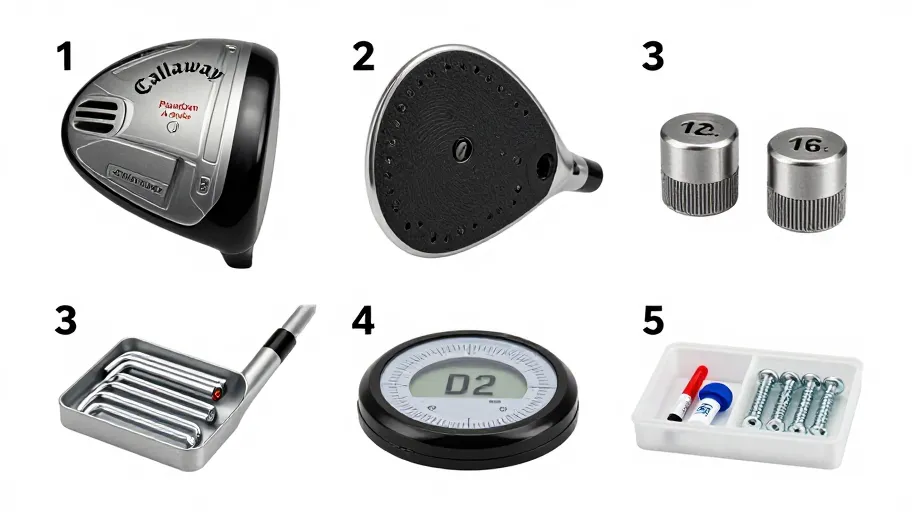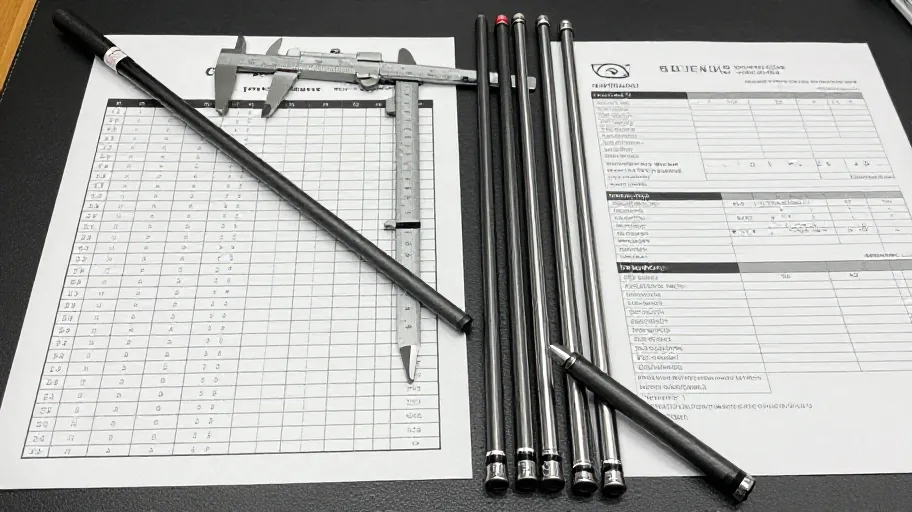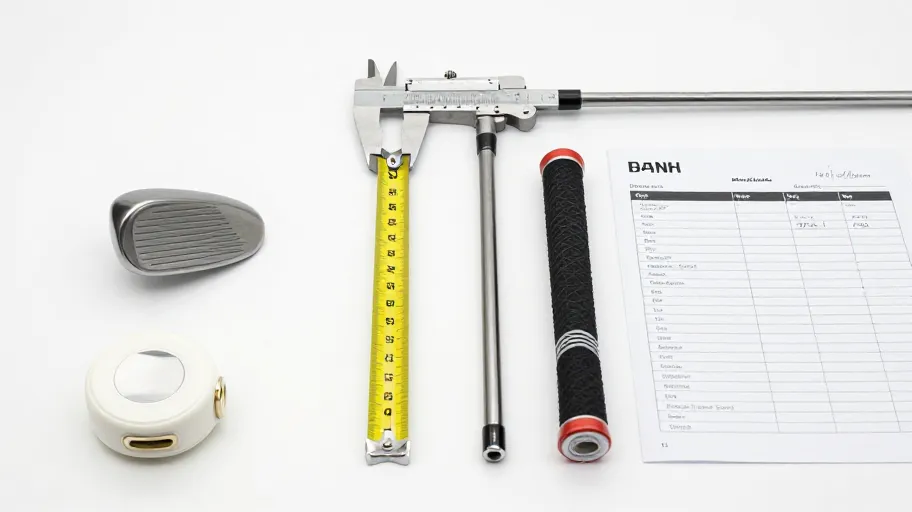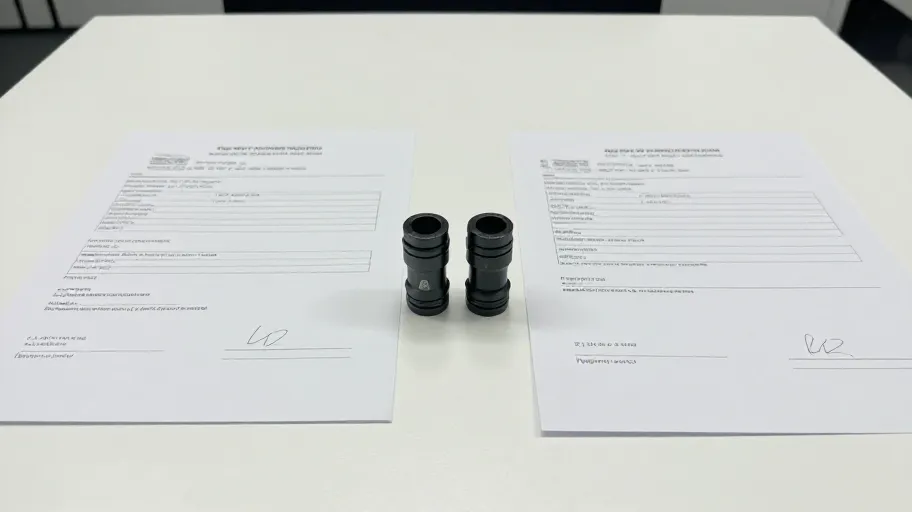
Two golf shaft sleeve adapter quotes are only comparable once every line item answers the same question set: confirmed fitment for your exact club model, stated attributes, modification terms, and a documented paper trail. Compare compatibility first, price last. An unanswered line is a risk line, not a bargain.
Why compatibility comes before price
A golf shaft sleeve adapter is a precision interface. It has to seat against the hosel, align the shaft to the correct orientation, and hold torque during play. If any of those conditions fail, the cheaper quote becomes the more expensive mistake — you pay twice, once for the part and once for the rework.
That is why a line-by-line quote comparison for a shaft sleeve adapter should begin with compatibility confirmation and only then move to commercial terms. A supplier who confirms fitment in writing, against your exact club brand, family and model, has already removed the largest single risk in the purchase. A supplier who skips that step has left the largest risk in the quote, whatever the number at the bottom.
The CLAMP-2 method for comparing two quotes
Use the CLAMP-2 framework to walk both quotes through five gates. A quote cannot pass a gate it has not addressed.
C — Compatibility. Does the quote name your exact club model, not just the brand? Adapter families evolve between model generations, and a sleeve that suits one generation may not suit the next. Require written confirmation against the specific model.
L — Line items. Break each quote into identical rows: the adapter itself, any fixing hardware, packaging, labelling, inspection and documentation. If one quote omits a row the other includes, mark it "not quoted" — never assume it is included at no cost.
A — Attributes. Ask each supplier to state, in writing, the material specification, the finish, the torque specification and the indexing orientation for your model. Where a numerical tolerance would matter to your build, ask the supplier to state the value rather than accepting an unspecified description. Do not accept "same as standard" — ask what standard, written where.
M — Modification terms. If you need any adaptation — an unlisted finish, custom marking, a variant for a niche model — capture the terms in the quote: what changes, who approves the drawing, and how a change is priced. Unquoted modifications are the most frequent source of mid-order disputes.
P — Paper trail. A quote is evidence. Keep both quotes, your compatibility question, and each supplier's written answer in one file. If a dispute arises later, the documented answer protects you; a verbal assurance does not.
Decision table: normalising two quotes line by line
Copy this grid, put Supplier A and Supplier B in the columns, and do not approve until every row reads "confirmed in writing".
| # | Line item | What "confirmed" looks like | Supplier A | Supplier B |
|---|---|---|---|---|
| 1 | Club model fitment | Written confirmation naming your exact brand, family and model | ☐ | ☐ |
| 2 | Adapter designation | Supplier states the exact adapter version quoted | ☐ | ☐ |
| 3 | Fixing hardware | Listed as included or quoted separately — one or the other, in writing | ☐ | ☐ |
| 4 | Material and finish | Specification stated in the quote, not "equivalent" | ☐ | ☐ |
| 5 | Torque and indexing | Values or references stated by the supplier | ☐ | ☐ |
| 6 | Dimensional tolerances | Supplier states the applicable values on request | ☐ | ☐ |
| 7 | Sample policy | Current policy confirmed directly; terms recorded before approval | ☐ | ☐ |
| 8 | Lead time and capacity | Stated per your quantity; no unstated assumptions | ☐ | ☐ |
| 9 | Shipping and incoterms | Stated, with destination and responsibility named | ☐ | ☐ |
| 10 | Inspection and rework | What is inspected, what happens on a rejected unit | ☐ | ☐ |
| 11 | Modifications | Priced and approved by drawing before order | ☐ | ☐ |
| 12 | Change process | How a mid-order change is raised, priced and documented | ☐ | ☐ |
Scoring rule: a row left blank by a supplier is not neutral. It transfers risk to you. If both quotes leave the same row blank, that row is your first follow-up question to both.
Approval questions to send both suppliers
Send the identical list to both suppliers so the answers are comparable:
- Please confirm in writing that the quoted golf shaft sleeve adapter fits the [brand, family, model, and generation] of the club I will be installing it on.
- Which exact adapter designation are you quoting, and does it differ from the sleeve currently installed on my club?
- Please state the material specification, finish, torque specification and indexing orientation for the quoted adapter.
- What sample policy applies to this part at present? Please confirm the current terms directly, including any conditions, before I approve anything.
- If I request a modification — finish, marking or a variant fitment — how is it quoted and approved?
- What is your stated lead time for my quantity, and what happens if the quantity changes?
- What inspection applies before dispatch, and what is the process if a unit is rejected on arrival?
- How do you document a mid-order change so both sides hold the same record?
Suppliers who answer fully and precisely are giving you more than information — they are demonstrating how they will handle problems after you have paid.
The delivery gate: what must be true before you approve
Do not approve either quote until all four statements hold:
- Compatibility for your exact club model is confirmed in writing, not inferred from a product name.
- Every row in the comparison grid reads "confirmed in writing" or has been consciously accepted as a documented risk by you.
- The winning quote is selected on completeness and evidence, not on the lowest unexplained number.
- Your file contains both quotes, your questions and both sets of answers.
FAQ
Do all adapters for one brand fit every club in that brand's range? No — and you should not assume so. Adapter compatibility can vary between families and model generations within a single brand. Confirm the exact model, and the generation where relevant, with the supplier in writing before approving any quote.
What if one supplier refuses to state tolerances or specifications? Treat the omission as a decision input, not an inconvenience. A supplier who will not document specifications is asking you to absorb specification risk. Ask once more in writing; if the answer is still absent, score that row as open and weigh it against the other quote.
How do I compare quotes when the line items differ? Normalise first. Force both quotes onto the same grid — part, hardware, packaging, inspection, shipping, modifications — and mark missing rows "not quoted". Only after the grids match are the totals comparable.
Should I ask about a sample before comparing quotes? Yes, as one row of the comparison. Sample terms differ between suppliers and change over time, so ask each supplier to confirm their current policy directly and record the answer in your file rather than relying on prior experience with any supplier.
Confirm your club model in the fitment selector
Before you shortlist either quote, confirm your exact club model in the fitment selector. Every line-by-line comparison depends on that first confirmation being correct — verify the model, then compare the quotes.
Low-friction next step: download or copy the twelve-row comparison grid above, send the eight approval questions to both suppliers today, and keep every answer in one file. Ten minutes of preparation turns two opaque quotes into one defensible decision.
Master Your Swing, DIY Your Fit. DIY Golf is the premier destination for the technical golfer. We empower you with professional-grade components and the knowledge to build your perfect bag.