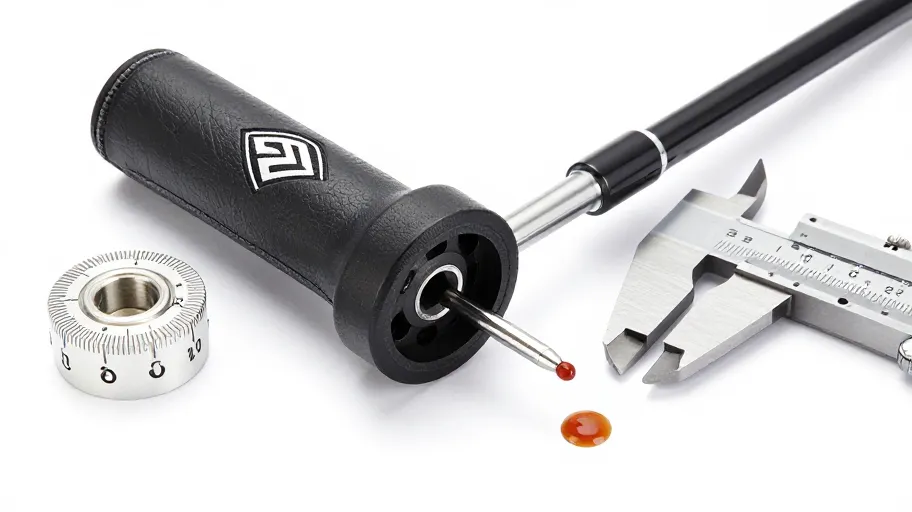
Before any supplier can quote a golf shaft sleeve adapter accurately, you need to confirm six things: the club head's brand, family and exact model; the adapter generation and revision for that head; the shaft tip diameter and tip prep protocol; the hosel depth and seating design; the bolt pattern or securing mechanism; and the intended playing configuration. Supply those in writing and you will get a precise quote instead of an estimate based on assumptions.
Why accuracy starts with you, not the supplier
A golf shaft sleeve adapter is the interface between your shaft and your club head. When a builder or golfer requests a replacement, the most frequent cause of a wrong part is not supplier error — it is an incomplete specification. Adapter families get revised between club generations, and two club heads that look near-identical can accept different sleeves. The sourcing job, therefore, is to document your configuration first, then ask the supplier to confirm compatibility against that documentation.
The SHAFT-Check framework
Use this six-point framework to assemble everything a supplier needs before quoting:
- S — System (club head identification): Brand, family, exact model name and, if visible, any revision or marking on the head or hosel.
- H — Host interface: The hosel opening design and how the adapter seats — including bolt or screw count and thread type if you can inspect it.
- A — Adapter generation: The specific adapter generation the head was designed around, as documented for that model. Do not assume; ask the supplier to confirm the mapping.
- F — Fitting spec of the shaft: Tip diameter, and whether the shaft requires a specific prep protocol before the adapter is bonded.
- T — Target configuration: Loft and lie adjustment range you intend to use, and the face angle setting — because the adapter's adjustability must match the head's adjustment mechanism.
- And the sixth point: Hole and bolt pattern: Count the securing points and record the tool required, so installation can be completed with the correct equipment.
Decision table: which specification path fits your situation
| Your situation | What to document first | Question to put to the supplier | Risk if skipped |
|---|---|---|---|
| Replacing a broken adapter on an unchanged shaft | Adapter generation, head model, existing sleeve markings if readable | "Can you confirm this adapter generation maps to my exact head model and revision?" | Sleeve seats incorrectly or cannot be torqued |
| New shaft into an existing adjustable head | Shaft tip diameter, tip prep protocol, adapter generation | "Does this adapter accept my shaft's tip diameter, and what prep does the tip require?" | Bond failure or improper seating |
| Head and adapter both new to you | Full head identification plus shaft spec | "Which adapter generation do you document for this head, and what fitting spec does it assume?" | Ordering a sleeve for the wrong generation |
| Multiple club heads in one project | A separate SHAFT-Check record per head | "Please confirm compatibility per model — do any of these share a generation?" | Mixed orders with mismatched sleeves |
| Uncertain about the head's revision | Photographs of hosel, sole markings and current sleeve | "Can you identify the revision from these images before quoting?" | Quote based on assumed model |
Approval questions to send before you accept any quote
Put these questions in writing and keep the answers in your project file:
- "Which adapter generation do you document as compatible with [exact head model and revision]?"
- "What shaft tip diameter does this adapter accept, and what tip prep protocol do you specify?"
- "Does this adapter support the loft, lie and face-angle settings of my head's adjustment system?"
- "What securing mechanism and tool does installation require?"
- "What is your current sample policy, and what does it cover?" — confirm the current terms directly; nothing about samples should be assumed.
- "What are your current shipping arrangements, costs and lead expectations for this item?" — again, request the current terms in writing; do not rely on prior orders or third-party reports.
- "If the adapter does not fit once received, what is your return or exchange process?" — confirm the current policy directly before ordering.
Pre-quote checklist: compile before you contact anyone
Use this checklist so your first email is also your last:
- Head brand, family and exact model recorded
- Revision or hosel marking photographed or noted
- Current adapter markings recorded (if the original sleeve is available)
- Shaft tip diameter confirmed from the shaft's own marking
- Tip prep protocol identified for the shaft
- Intended loft/lie/face settings written down
- Bolt or screw count and tool type noted
- Supplier's current sample, shipping and return policies requested in writing
- All answers filed against this checklist for the order record
What you should never let a supplier assume
A supplier who quotes without asking about your head model, adapter generation or tip diameter is quoting blind. If you receive a quote that references none of your SHAFT-Check data points, ask for the quotation to be reissued against your documented specification. That reissued quote becomes your approval record: it states what was confirmed, by whom, and against which configuration. If any element is unclear — the revision mapping, the prep protocol, the securing mechanism — resolve it in writing before you approve.
This documentation habit also protects you across future projects. A completed checklist per club means the next adapter order for the same head is a lookup, not an investigation.
Frequently asked questions
How do I identify which golf shaft sleeve adapter generation my club head uses? Start with the head's exact model name and any revision markings on the sole or hosel, plus markings on the original sleeve if available. Then ask the supplier to confirm the adapter generation mapped to that model. Do not rely on appearance alone — request written confirmation.
Can I reuse my old adapter with a new shaft? That depends on the condition of the old sleeve, the new shaft's tip diameter and prep protocol, and how the original bond was removed. Document the sleeve's condition and the shaft spec, then ask the supplier whether reuse is appropriate for your configuration.
Do all adjustable heads in the same brand use the same adapter? No assumption should be made here. Adapter generations change between model families and revisions even within one brand. Confirm the mapping for your specific head before ordering.
What if I cannot read the markings on my current adapter? Photograph the hosel opening, securing mechanism and sole markings, and send them to the supplier with your model details. Ask them to identify the generation from those images before quoting, and keep their written identification in your file.
Should I confirm shipping, samples and returns before approving a quote? Yes. These policies are project-specific and subject to change, so request the current terms in writing for every order rather than relying on past arrangements.
Confirm your club model in the fitment selector
Before you request any quote, confirm your club model in the fitment selector. It is the fastest way to anchor your specification and reduce back-and-forth.
Low-friction alternative: Not ready to quote yet? Run the pre-quote checklist above for your club and file it — you will have everything the supplier needs when the time comes.
Master Your Swing, DIY Your Fit. DIY Golf is the premier destination for the technical golfer. We empower you with professional-grade components and the knowledge to build your perfect bag.


