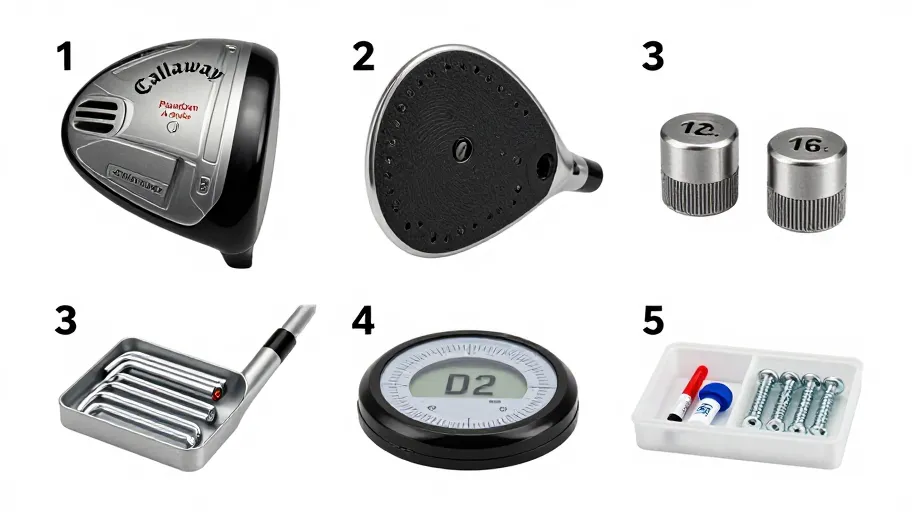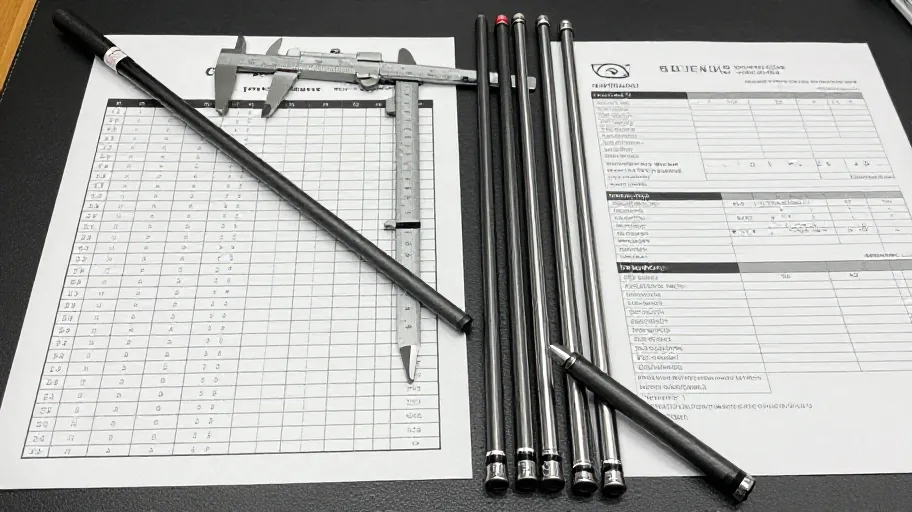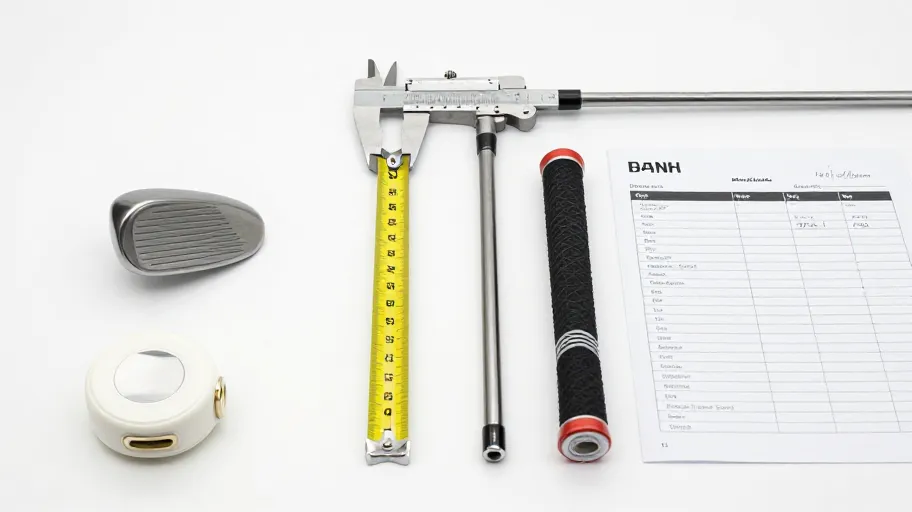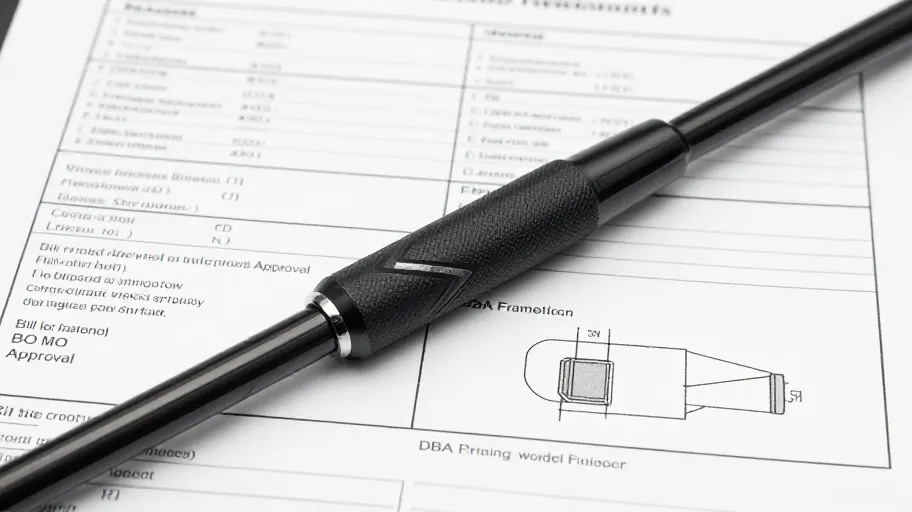
A golf shaft sleeve adapter requires three documented elements to confirm compatibility: a verified technical drawing, a detailed bill of materials (BOM), and explicit approval notes. By applying the DBA Framework—Drawing, BOM, Approval—builders can match the exact sleeve geometry to the target club model without relying on assumptions. This process isolates the specific adapter family and confirms fitment prior to any modification.
The DBA Framework: Documenting a Golf Shaft Sleeve Adapter
When replacing a golf shaft sleeve adapter, the sourcing process relies on precise documentation. The DBA Framework forces the builder to separate physical measurements from material specs and project-specific tolerances.
1. Drawing Requirements
The technical drawing is the primary reference for the physical interface between the shaft, the adapter, and the clubhead. A proper drawing for a golf shaft sleeve adapter must include the external hosel geometry, the internal shaft bore diameter, and the overall profile.
Because manufacturers alter sleeve designs across different club generations, the drawing must state the exact OEM interface profile. Do not assume adapter compatibility based on visual similarity. The drawing should document the specific taper angle and the collar configuration. If a detailed drawing is unavailable, request the exact interface profile directly from the supplier. Document any missing dimensional data as an open question rather than an assumption.
2. Bill of Materials (BOM)
The BOM isolates the material and structural composition of the component. For a shaft adapter, the BOM must specify the primary material—such as aluminum or titanium—and any distinct composite or polymer elements integrated into the sleeve.
The BOM must separate the golf shaft sleeve adapter specifications from the shaft itself. A common sourcing error is conflating the shaft tip diameter with the adapter's internal bore. The BOM should clarify the exact internal diameter designed to accept the shaft, alongside the external geometry designed to fit the clubhead. Verify the material grade documented in the BOM against the requirements of the target club model.
3. Approval Notes
Approval notes capture the project-specific questions and requirements that fall outside the standard drawing and BOM. This section of the framework is where the builder documents compatibility confirmations, finish requirements, and policy inquiries.
If the component is intended for a specific club family, the approval notes must state the exact club model and generation. This is also the designated area to ask the supplier about surface treatments or markings. Any unanswered questions regarding the adapter's fitment should be recorded here. Confirm the current policy directly for samples, lead times, and production capabilities.
Sourcing Decision Table: Matching Club Requirements to Documentation
| Club Requirement | Documentation Field | Verification Action |
|---|---|---|
| Clubhead hosel interface | Drawing | Verify the external taper and collar geometry against the specific club model. |
| Shaft tip diameter | BOM | Confirm the internal adapter bore matches the shaft tip dimensions. |
| Material strength | BOM | Document the specified material grade and verify it against the application. |
| Surface finish | Approval Notes | Specify the required finish and request confirmation of availability. |
| Model generation | Approval Notes | Document the exact club generation to prevent cross-generation mismatches. |
Concrete Approval Questions for the Supplier
Before finalizing the selection of a golf shaft sleeve adapter, present these questions to the supplier to confirm compatibility and sourcing parameters.
- Compatibility: Does this specific sleeve profile match the [Insert Club Brand, Family, and Model] clubhead?
- Internal Geometry: What is the exact internal bore diameter designed to accept the shaft tip?
- Material Specification: What material grade is documented for this specific component?
- Markings and Finish: Are there specific surface treatments or alignment markings applied to this sleeve?
- Policy Verification: What is the current policy regarding samples, production timelines, and order minimums?
Frequently Asked Questions
What details must be on the technical drawing for a golf shaft sleeve adapter? The drawing must show the external hosel geometry, the internal shaft bore, and the collar configuration. These details confirm the physical interface between the clubhead and the shaft.
How does the BOM separate the adapter from the shaft? The BOM isolates the material composition of the sleeve and specifies the internal bore diameter designed to accept the shaft, ensuring the builder does not confuse shaft dimensions with adapter dimensions.
Why are approval notes necessary if the drawing and BOM are complete? Approval notes document project-specific variables, such as the exact club generation and surface finish requirements, which standard technical drawings may not explicitly cover.
How do I confirm compatibility across different club generations? Compatibility is confirmed by verifying the exact club model and generation in the approval notes and matching it against the drawing's external hosel geometry.
What should I do if a specification is missing from the documentation? Record the missing specification as an open question in the approval notes and request the data directly from the supplier.
Action and Verification
To ensure you are sourcing the correct component, verify your exact club specifications.
Confirm your club model in the fitment selector
Low-Friction Sourcing Checklist
Before proceeding with your component selection, complete this brief checklist:
- Identify the exact club brand, family, and model.
- Document the required shaft tip diameter.
- Request the technical drawing for the adapter.
- Verify the internal and external dimensions on the drawing.
- Record all project-specific requirements in the approval notes.
- Confirm the current policy directly with the supplier.
Master Your Swing, DIY Your Fit. DIY Golf is the premier destination for the technical golfer. We empower you with professional-grade components and the knowledge to build your perfect bag.