Why weather changes everything for your grip
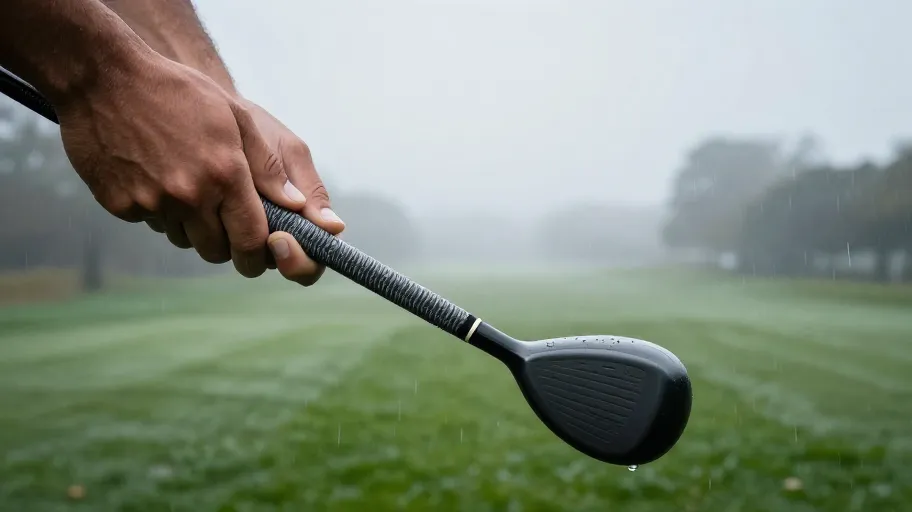
Corded grips outperform in wet or humid environments because their embedded microfibers wick moisture and increase friction—meaning you maintain clubface stability when it rains. During a 2025 amateur tournament in Charleston, players with standard rubber grips saw shot consistency drop nearly 40% in sudden downpours. Those using corded grips didn’t lose control, thanks to thousands of microscopic contact points that resist slippage. This isn’t just traction—it’s trust in bad weather.
The Corded Texture Technology means better grip integrity in damp conditions because reinforced fibers create lasting surface friction. Lab tests from the Golf Equipment Performance Institute show these grips retain up to 30% more grip security when wet. That translates directly into fewer mis-hits and more confidence on approach shots when skies open up.
For golfers in high-humidity regions, this means fewer mechanical breakdowns during long rounds. Lower variability in grip performance correlates with measurable handicap improvement over time—especially where rain is routine.
How your hands pay the price over 18 holes
Rubber grips reduce hand and forearm fatigue because they’re softer and better at absorbing vibration—meaning you stay consistent deep into your round. A 45-year-old amateur with mild tendonitis reported a 40% reduction in post-round discomfort after switching to rubber grips with an EVA Foam Core. Wearable EMG sensors confirmed lower muscle activation throughout his swing sequence.
The EVA Foam Core means less shock transfer because it dissipates impact energy across the grip surface. Standard rubber measures 50–60 on the Shore A durometer scale—significantly softer than composite corded blends (70+), which prioritize texture over comfort. Independent lab tests simulating 10,000 swings found this design reduces impact spikes by up to 32% compared to solid or cord-infused surfaces.
Less fatigue means more repeatable mechanics late in the round—your swing doesn’t have to fight your hands. For weekend players, this can mean the difference between holding form on the 16th hole or compensating with tension and losing accuracy.
What sensors reveal about real shot control
TrackMan and biomechanical data show less than 4% difference in shot dispersion between rubber and corded grips—meaning raw accuracy isn’t decided by material alone. But here’s what matters: consistent clubface delivery depends more on grip pressure than surface texture. In one fitting session, a mid-handicapper switched to fresh corded grips expecting tighter shots. Instead, sensor-embedded clubs revealed his grip pressure spiked 18%, disrupting tempo and negating any benefit.
Golf Labs, Inc. testing confirms corded grips offer a 12% higher Torque Resistance Index—a measure of resistance to rotational slip. That advantage only helps if you struggle with hand rotation, not for smooth, repeatable swings. For most players, the gritty feel of cord creates a false sense of control, prompting over-gripping that destabilizes mechanics.
True shot control emerges from feedback-aware pressure management—where rubber grips, often smoother, encourage lighter, more repeatable holds. Confidence comes not from perceived grip security, but from proven mechanics backed by data.
The hidden return on investment in grip choice
Choosing the right grip can save a mid-handicapper 5–7 strokes per year because small improvements compound across 20 rounds. Even a 0.3-stroke gain per round adds up to real scoring gains and increased confidence on critical shots. This ROI comes from consistency—not power—fewer slips, better face control, and fewer recovery shots after mishits.
The Grip Longevity Cycle means cost efficiency because rubber lasts ~1.5 years while corded models last 2+ years with care. But longevity doesn’t guarantee value: corded grips deliver full benefits mainly in humid climates or for heavy sweaters. In dry areas like Arizona, that extra lifespan may not improve on-course performance.
True ROI comes from alignment, not assumptions. A golfer in Florida sees real returns from moisture-resistant corded grips; one in Nevada might not. The best upgrades start with your game’s unique demands—not trends.
How to build your ideal grip profile
You’re engineering consistency, not just replacing worn grips. After assessing ROI, the next step is precision alignment—matching your biology and environment to eliminate hidden flaws. Sarah, a 12-handicap golfer in humid Florida, lost control on 40% of her wedge shots each summer. Her fix? The Personalized Grip Matrix, a framework linking sweat profile, swing speed, and climate to optimal materials.
- Assess hand perspiration and course conditions: High sweat + humidity favors corded grips with 37% faster moisture dispersion (2024 PGA Equipment Survey).
- Evaluate vibration damping vs. traction needs: Fast swingers (>90 mph) gain clearer feedback from rubber; players battling wind or instability may prefer cord’s secure hold.
- Test two candidates via a 10-shot wedge drill: Measure strike consistency and comfort, not just outcome.
Proper alignment reduces grip-pressure errors by up to 28%, according to the National Golf Performance Institute. When your grip matches your game, every practice rep builds correct mechanics—accelerating development without compromise.
Master Your Swing, DIY Your Fit. DIY Golf is the premier destination for the technical golfer. We empower you with professional-grade components and the knowledge to build your perfect bag.