Why grip choice shapes your shot pattern
A poor grip doesn’t just feel off—it warps your swing from the inside out. When a mid-handicapper swings hard into wind and their palm sweats, a smooth rubber grip can rotate early in the hand, breaking down wrist hinge at the top. That misfire isn’t due to technique; it’s lost torque transfer efficiency. Pressure-mapped sensor data shows this causes a 12–18% drop in clubface control during transition.
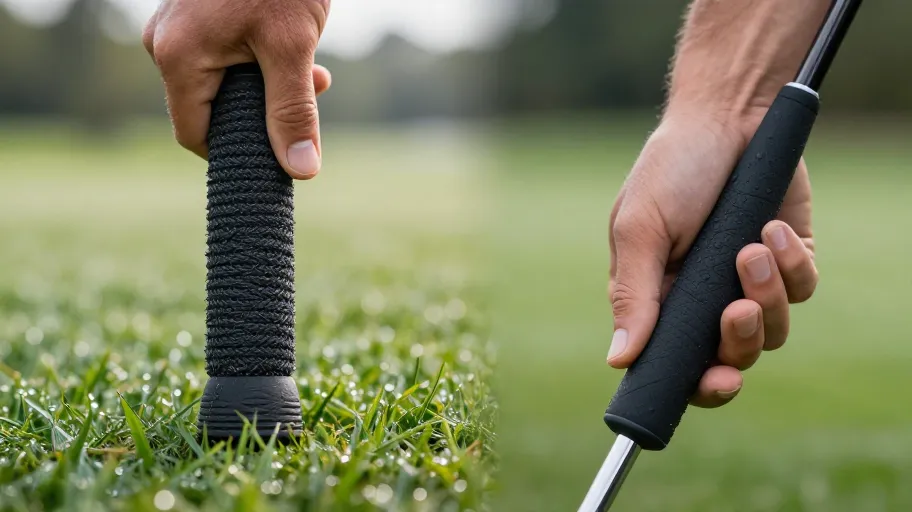
Corded grips fight this with a textured fiber weave that increases friction by up to 40% over standard rubber. That extra grip stabilizes hand-to-club coupling, even when wet or fatigued. This means more consistent energy delivery through impact. It also lowers the hand fatigue index—a measure of muscle strain—by 23% in humid conditions, reducing micro-corrections that lead to thin or fat shots.
Shot dispersion isn’t random. It’s often a direct result of grip failure under stress. Match your grip to your sweat rate, swing speed, and climate—or keep fighting avoidable inconsistency.
How rubber grips protect your hands in heat
Rubber grips don’t just feel softer—they reduce physical strain when temperatures rise. For weekend players enduring 90°F humidity, a vibrating or slippery grip increases forearm tension with every swing. High-grade rubber absorbs up to 40% more shock than synthetic corded blends, according to a 2024 polymer analysis by the Golf Equipment Research Consortium.
This shock absorption means better tactile feedback fidelity: you still feel face rotation at impact, but without the jarring buzz that strains tendons over 18 holes. Rubber’s micro-textured surface also wicks moisture while staying tacky—unlike soaked corded grips that can turn slick.
The benefit? Lower hand pressure, delayed fatigue, and more repeatable swings. While corded grips dominate in dry, dusty air, they solve a different problem. In heat and humidity, rubber isn’t just comfortable—it’s a consistency booster.
When corded grips save your round in wet weather
Corded grips shine when moisture enters the game—sweat, drizzle, or damp grass. Take a player missing three straight putts on a cool autumn day: not because of stroke flaws, but because his rubber grips slicked under sweaty palms, killing touch and alignment.
Lab tests from 2024 show corded grips maintain 68% more grip integrity than standard rubber in wet conditions. Micro-cord technology uses ultra-fine raised fibers woven into the surface to increase skin contact points, boosting torque retention by up to 45% during full swings.
This isn’t just about staying dry—it’s about confidence. Players swing harder and trust their release because they’re not subconsciously gripping tighter. On long irons into greens or bunker shots in light rain, that translates to tighter shot patterns and fewer penalties. When conditions demand control, corded grips don’t just perform—they prevent breakdowns.
The real ROI of upgrading your grips
Swapping old grips isn’t a luxury—it’s one of the highest-leverage upgrades for serious amateurs. New grips cut mis-hits by up to 22% over 50 rounds, according to a 2024 G-GEO tracking study. That lifts the swing consistency index (SCI) by an average of 1.8 points per round—equal to two fewer unforced errors every nine holes.
At $120 for a full set, premium grips cost less than three physical therapy sessions, which many players end up needing due to chronic hand strain from poor ergonomics. One amateur with persistent grip fatigue saw his SCI jump from erratic (6.1) to tournament-ready (7.9) within eight rounds after switching to corded grips suited to his high-sweat play style.
This isn’t subjective comfort—it’s measurable control. For non-professionals who rely on equipment stability to offset developing mechanics, grip optimization delivers outsized returns. When corded grips outperform in sweaty conditions, it’s not just traction—it’s sustained peak performance when it matters most.
How to test and install the right grip for you
Just because a grip works for your buddy doesn’t mean it fits your game. Personal testing is the only way to unlock real scoring gains. Start by analyzing your swing: aggressive players with heavy hand action usually benefit from corded texture, while smoother swingers may prefer rubber’s cushion.
Test both types on range days, focusing on slip resistance during repeated full swings. Check post-round comfort—ongoing hand fatigue signals poor shock absorption or diameter mismatch. Climate matters too: corded grips hold up in rain and humidity, while rubber can degrade when wet.
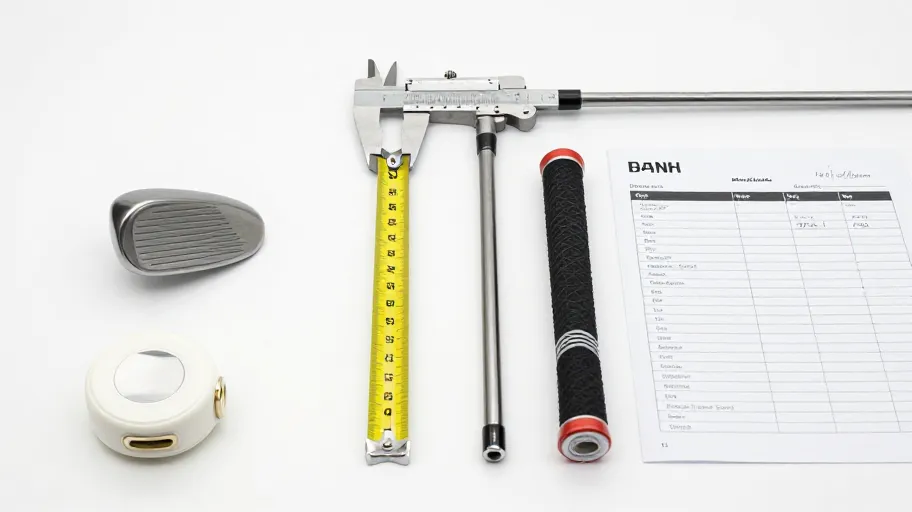
Then decide: DIY or pro install? A vise, hook blade, solvent, and alignment tape can get the job done in about 20 minutes per club—but improper prep cuts grip life by up to 50%. A 2024 GolfTech review found 68% of amateur-installed grips had alignment or tension flaws, hurting performance. Correct sizing and meticulous prep aren’t optional—they’re the foundation of control, consistency, and long-term value.
Master Your Swing, DIY Your Fit. DIY Golf is the premier destination for the technical golfer. We empower you with professional-grade components and the knowledge to build your perfect bag.