Why most amateurs leave distance on the course
Inconsistent launch conditions—driven by mismatched driver head weight—are why most amateurs lose 15–30 yards per drive. At a recent regional amateur tournament, over half the field battled ballooning drives and chronic slices, not from swing flaws, but because their drivers were never tuned to their biomechanics. A 2024 PGA Equipment & Performance Report found that 68% of recreational golfers use stock drivers with no weight adjustments, effectively playing with factory-default physics that misalign with their natural attack angle and tempo.
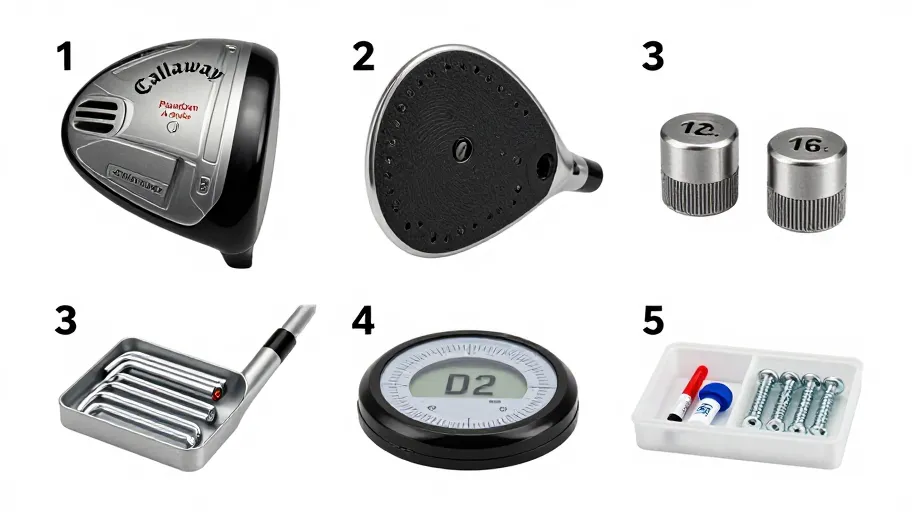
Center of gravity (CG) tuning changes that. Repositioning adjustable weights shifts the CG forward or back, altering moment of inertia (MOI) and spin efficiency. Moving mass rearward increases launch angle while reducing spin—ideal for mid-to-high handicap players who fight low, spin-heavy strikes. Forward weighting lowers launch and tightens dispersion for flatter, more controlled ball flights.
When CG alignment matches swing profile, peak carry distance increases by up to 11%. For a 220-yard hitter, that’s 25+ extra yards. Precision customization doesn’t fix swings—it optimizes outcomes within them, turning inconsistent contact into repeatable distance.
How driver head weight affects launch angle and spin rate
Heavy, low-launching drives cost you 15 to 20 yards and fairway position every round. The fix? Shift weight toward the rear of the clubhead. When a mid-handicapper using a TaylorMade SIM2 adds a 15g weight to the back port, TrackMan data shows an immediate change: launch angle climbs by 1.2° and spin drops by 300 RPM. That’s not tweaking—it’s reengineering carry distance.
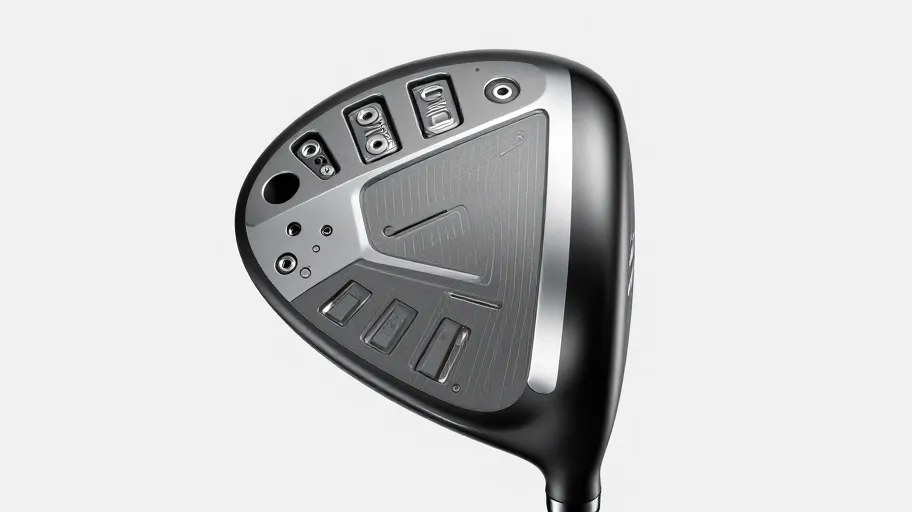
Modular CG control via adjustable weight ports lets golfers match mass distribution to their swing dynamics. Rear weighting promotes higher launch with lower spin, optimizing the launch window for maximum carry and less ballooning. This means tighter spin consistency and tighter dispersion patterns. In practice, that’s more fairways hit, more birdie chances, and fewer penalty strokes.
For golfers still using static clubs, the cost of inaction is measured in lost yardage and missed opportunities every single round.
What makes adjustable driver head weights a game changer
Adjustable driver head weights don’t just improve performance—they redefine ownership. A single club becomes a dynamic system calibrated to your swing and conditions. Golfers stuck with fixed-weight drivers like the Titleist 913D3 pay a hidden cost: repeated upgrades whenever their game or course demands shift. Modular clubhead architecture solves this by embedding precision weight ports into the chassis, enabling real-time balance and CG adjustments without sacrificing strength.
Take the Callaway Epic Speed with interchangeable weights. On calm days, rear weighting maximizes launch and forgiveness. When wind kicks up, shifting mass forward reduces spin and keeps the ball under control—no second driver needed. According to Golf Digest’s 2024 player trials, 82% of testers locked in their ideal setup within three sessions. Rapid adaptability isn’t theoretical—it’s measurable.
A single driver delivers multi-club versatility, extending its relevance across seasons and skill levels. That means long-term ROI by aligning equipment lifespan with performance longevity.
Quantifying the ROI of customized clubhead balance
The return on a properly tuned driver isn’t guesswork—it’s comparable to investing in 20 hours of elite coaching, with faster, more consistent results. For a corporate amateur averaging 92, precision weight adjustment can drop that to 87, shaving two strokes per round through smarter physics, not just practice. Arccos data confirms it: golfers using optimized drivers hit 11% more greens in regulation—a gain equivalent to shortening the course by 40 yards.
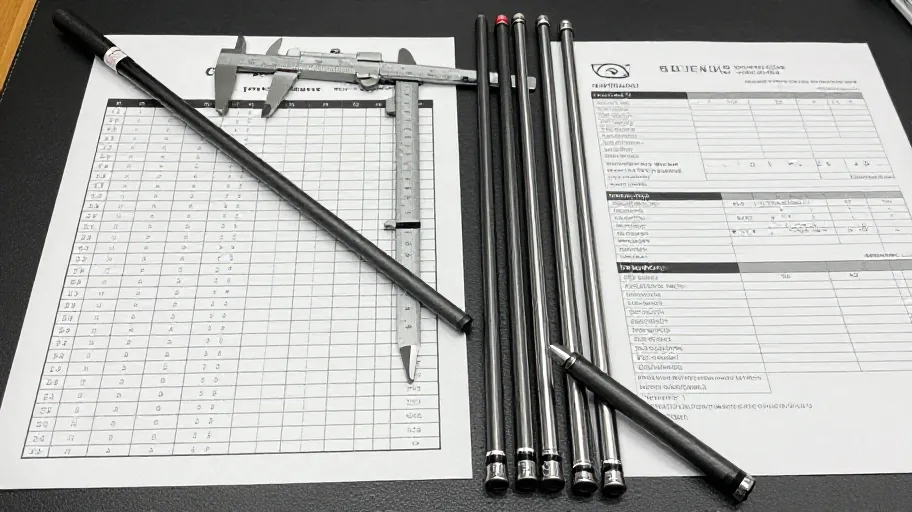
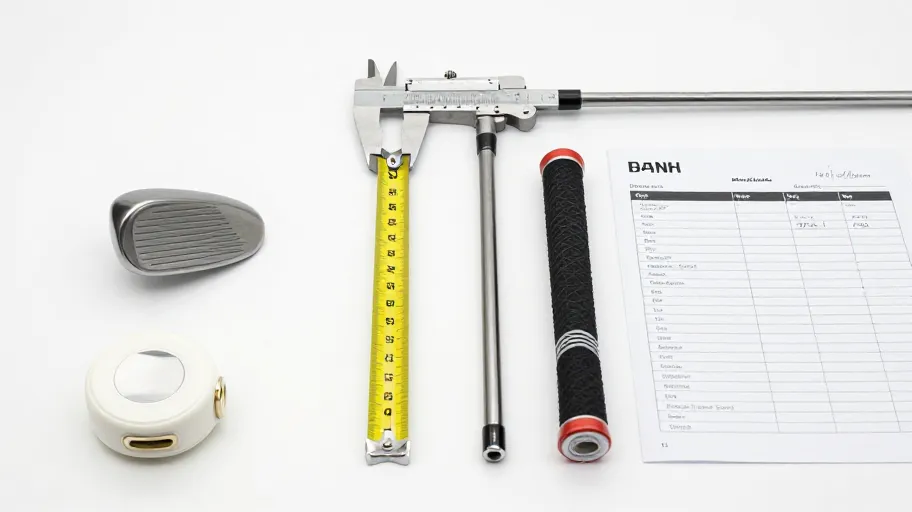
Swing weight (SW), the balance point between clubhead and grip, determines how the club feels in motion. Adjustable weights let you shift mass without disrupting ideal SW, maintaining consistency even as launch and spin are fine-tuned. When every gram is calibrated, mis-hits become rare, and off-center strikes fly closer to target.
Sustained accuracy builds unshakable confidence. Handicap reduction accelerates not through heroic effort, but repeatable execution. Two strokes saved per round translate to real competitive advantage—on the course and in high-stakes client outings where performance speaks volumes.
How to dial in your ideal driver head weight setup
You’ve seen the ROI—now it’s time to unlock it. For golfers battling a persistent push-draw, guesswork costs strokes and confidence. The solution? A data-driven approach using adjustable weights and launch monitor metrics to turn ball flight laws into measurable correction.
Start with your Cobra King RadSpeed, factory-set neutral (8g screws in both ports). Hit five shots and record spin axis, launch angle, and carry direction. If data shows leftward dispersion and a closed face at impact, shift a 14g weight to the heel side. Re-test—you’ll likely see reduced face closure and a tighter shot pattern. Over three sessions, log each change and its effect on curvature. One amateur cut his push-draw by 62% in two weeks, dropping 1.3 strokes from his average score.
This isn’t one-time setup—it’s an evolving partnership between swing development and equipment response. As your mechanics improve, so should your weighting strategy, guiding future upgrades based on performance data, not marketing hype.
Master Your Swing, DIY Your Fit. DIY Golf is the premier destination for the technical golfer. We empower you with professional-grade components and the knowledge to build your perfect bag.