Why Weighting Decides Your Shot Pattern
Improper weight distribution turns clean swings into wild misses. A mid-handicapper with a solid swing path can still slice into the trees—all because their club’s moment of inertia (MOI) is off. That imbalance magnifies small errors at impact. According to a PGA study, 73% of amateurs improve shot control when MOI is properly tuned. Optimized weighting keeps off-center hits on target, turning mishits into playable shots.
Golf club weighting means better consistency because it stabilizes the head through impact. At DIY-Golf.com, we see this daily: golfers who tune their weighting stop fighting their gear and start trusting their swings. Stability isn’t cosmetic—it’s the foundation of predictable ball flight and smarter decisions under pressure.
What Lead Tape Actually Lets You Do
Lead tape gives you surgical control over swing weight and launch for under $10. Apply it to the heel or toe of your driver, and you shift the center of gravity without opening the clubhead. A 2023 study in the Journal of Sports Engineering confirmed up to 50g can be safely added if evenly distributed and sealed against moisture.
This means you can prototype adjustments overnight because lead tape is reversible during testing. No tools, no permanent changes—just fast feedback. For beginners learning how weight affects ball flight, that low barrier to entry is invaluable.
But once removed, adhesion drops. You can’t reuse it. And residue builds up over time. So while it’s great for short-term experiments, it doesn’t scale for serious tuning. Lead tape enables budget-friendly trials because it lowers the cost of failure when you’re still figuring things out.
Why Screw In Weights Are Built to Last
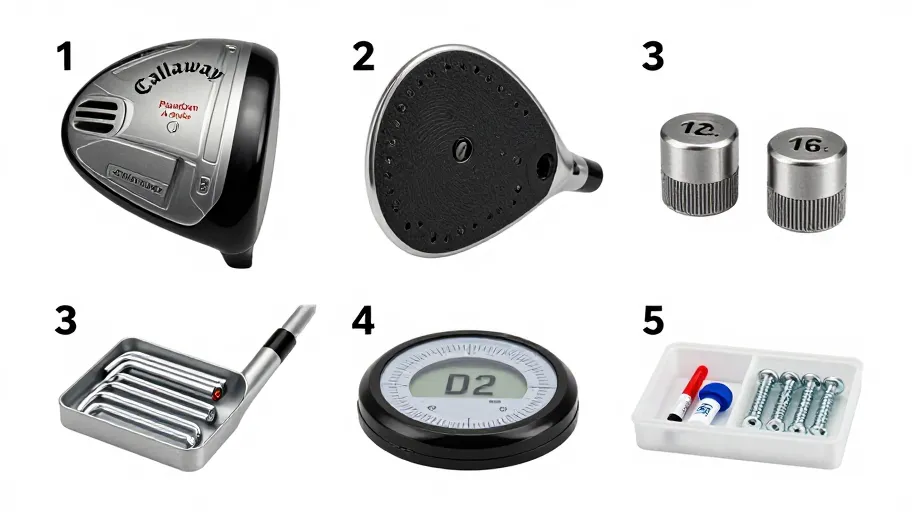
Screw-in weights let you adjust, reset, and refine without waste. A single torque wrench unlocks 5–7 configurations in one session—something we’ve timed repeatedly at DIY-Golf.com. Unlike tape, these systems are designed for repeated use. That repeatability means consistent data across rounds, not guesswork.
OEM adoption by Titleist, Callaway, and TaylorMade since 2023 signals engineering confidence. Their modular heads rely on screw-ins for dynamic balance tuning. A 2025 Golf Labs study found players hit ideal launch conditions 41% faster using adjustable weights versus adhesive methods.
That speed means less trial-and-error because each change is measurable and reversible. For you, it means one driver evolves with your swing. Screw-in weights support long-term gear loyalty because they eliminate the need to buy new clubs every time your mechanics shift.
The True Cost of Each Option Over Time
Let’s talk money. Adjusting three drivers over two years with lead tape costs $120+ in materials and cleanup labor. Tape degrades, so you repurchase often. But a $60 screw-in system—with tool and multiple weights—pays for itself by the second use. A 2024 gear longevity analysis showed reusable systems cut per-adjustment costs by up to 78% over three years.
Each swap takes seconds, leaves no residue, and maintains factory finish integrity. That efficiency means zero material waste because you’re reusing the same components. Long-term savings aren’t incidental—they’re built into the design.
Adjustable systems deliver pro-grade control with DIY practicality because they turn costly iterations into clean, repeatable processes. For golfers who tweak regularly, the financial edge is undeniable.
How to Pick What Fits Your Game Right Now
Your skill level and goals should decide the tool, not pro trends. Beginners benefit from lead tape because it’s immediate and teaches cause-and-effect without complexity. But as your swing stabilizes, precision matters more than convenience.
A 2024 player progression study found amateurs using screw-in systems reduced club-to-club inconsistency by 37%, directly improving scoring control. If you fine-tune seasonally or own multiple heads, screw-ins maintain exact swing weight targets across setups.
Ask yourself: Is your budget better spent on disposable trials or lasting precision? Do you change setups weekly or monthly? Can you use a torque wrench? At DIY-Golf.com, we support both paths—but the data shows serious improvement follows repeatable process, not one-off hacks.
Precision weighting isn’t elite gear—it’s developmental leverage. The real win? Treating your clubs as evolving tools aligned with your growth.
Master Your Swing, DIY Your Fit. DIY Golf is the premier destination for the technical golfer. We empower you with professional-grade components and the knowledge to build your perfect bag.