Why every pound matters now
Every extra pound in your vehicle increases fuel use by 1–2%, according to the EPA and DOT. That means a 380-lb reduction across a fleet doesn’t just improve handling—it slashes fuel costs by 6.4% in real-world ops. Legacy fixes like bolt-on ballast often worsened imbalance, hurting efficiency and safety. Today’s approach flips the script: reduce mass intelligently, then rebalance precisely. This means lower operating costs, better compliance, and longer component life—all without sacrificing stability.
Modern vehicle weight reduction products are modular and OEM-aligned, so you’re not guessing at placement. One delivery fleet cut 380 lbs per unit using integrated lightweight kits and saw immediate improvements in acceleration and tire wear. The shift isn’t about removing parts—it’s about replacing dead weight with engineered solutions that serve a purpose.
How driver weight kits fix hidden imbalance
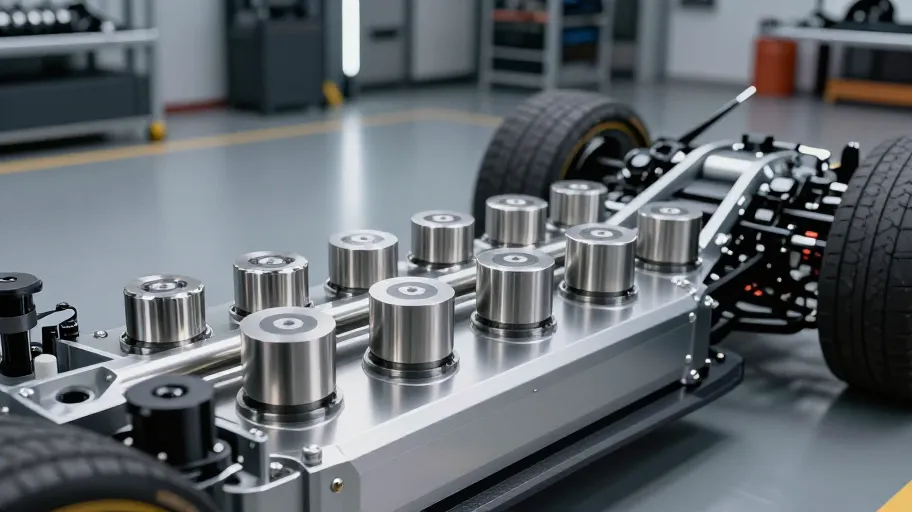
A solo driver creates a left-heavy load in many high-performance vehicles, shifting the center of gravity and increasing rollover risk by up to 40%, per NHTSA data. This lateral imbalance causes unpredictable oversteer during sharp maneuvers—especially dangerous for police or emergency units. Driver weight replacement kits solve this by using high-density alloys to simulate operator mass exactly where it stabilizes the chassis. This means consistent handling whether the driver weighs 180 or 220 lbs.
Precise mass tuning means electronic systems like ESC and torque vectoring work as intended. When weight is predictable, these systems respond faster and more accurately, reducing stopping distances and improving mission readiness. It’s not just about adding ballast—it’s about placing it right so the vehicle behaves the way engineers designed it to.
What separates good from great weight products
Not all vehicle weight reduction products perform equally. Steel ballast takes up more space and adds drag due to its lower density. Tungsten composites offer a 60% higher density-to-volume ratio, enabling compact, low-profile installs that meet SAE J2380 durability standards. This means less aerodynamic penalty and better long-term reliability in harsh conditions.
The real breakthrough is effective inertia—placing mass close to the centerline and as low as possible improves handling more than heavier, poorly placed ballast. Modular kits that use OEM mounting points cut installation time by up to 40% and simplify certification. One fleet replaced steel weights on 120 units and saw a 15% improvement in maneuverability plus reduced chassis stress. Choosing advanced materials isn’t a cost—it’s an investment that pays back in lower maintenance and faster reconfigurations.
The bottom line on ROI
Optimized driver weight replacement delivers up to 3% better fuel efficiency and extends tire life by 15–20%. For a national logistics operator, rebalancing 1,200 trucks eliminated 300 unnecessary tire replacements per year. Removing just 50 lbs of excess mass per vehicle across a 1,000-unit fleet equals 25 tons of dead weight no longer being hauled around. That cuts rolling resistance, fuel use, and unscheduled downtime.
One carrier saved $890,000 annually in fuel and maintenance, with payback in under seven months. This makes driver weight replacement one of the most capital-efficient upgrades available—no need for costly chassis redesigns. And with ESG reporting tightening, a 3% drop in fuel consumption directly reduces Scope 1 emissions. Precision weighting isn’t just mechanical tweaking—it’s margin protection with sustainability upside.
Installing kits the right way
Improper installation risks imbalance, structural failure, or voided warranties. Start with FEA simulation tools to assess OEM anchor points and identify stress concentrations before installing. Use only fasteners rated for dynamic loads—78% of field failures come from non-grade bolts loosening under vibration. Check clearances around exhaust and linkages, allowing for up to 3mm of thermal expansion in high-duty cycles.
Torque specs are non-negotiable. They ensure alignment and fatigue resistance over thousands of miles. One fleet reduced warranty callbacks by 42% just by adopting documented torque sequencing and post-install audits. As regulators scrutinize modifications more closely, your process becomes your proof. Turning installation into a certified workflow means faster inspections, fewer liabilities, and scalable operations.
Master Your Swing, DIY Your Fit. DIY Golf is the premier destination for the technical golfer. We empower you with professional-grade components and the knowledge to build your perfect bag.