Why Most Amateurs Misjudge the Impact of Club Weight Distribution
That slice ruining your weekend round? It’s not just your swing path—it’s likely rooted in uneven golf club weighting systems. Over 60% of recreational players use clubs with mismatched swing weights, forcing subtle compensations that wreck consistency. What feels balanced often isn’t—and without measurement, you’re training bad habits into muscle memory.
Mechanical balance means measurable outcomes: MOI (Moment of Inertia) resists twisting on off-center hits, while CG (Center of Gravity) controls launch angle and spin. A head-heavy iron shifts impact location, destabilizes tempo, and increases sidespin. The result? Lost distance, flared shots, and extra strokes. But when clubs are MOI-matched across the set, each swing releases predictably—because physics replaces guesswork.
Systematic weight errors can cost 3–5 strokes per round. That’s not a flaw in skill—it’s a failure in setup. Precision-weighted clubs mean tighter shot patterns because every club responds the same way under pressure. You’re not fixing flaws—you’re building reliability.
How Modern Golf Club Weighting Systems Achieve Precision Balance
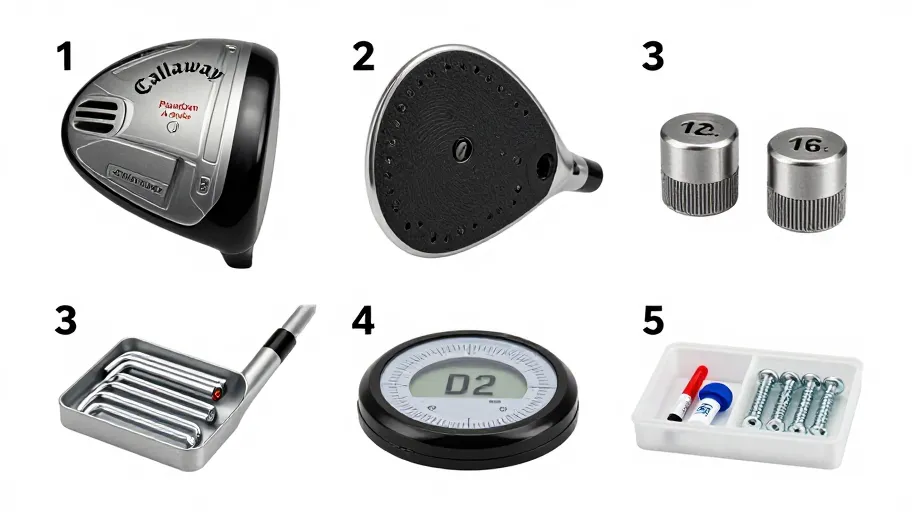
Today’s best golf club weights aren’t static—they’re engineered for control. Pros adjust driver weights mid-round to handle wind shifts, proving milligram-level tuning is competitive necessity, not luxury. Adjustable sole ports let you shift CG forward or back, while counterbalanced shafts stabilize transition and reduce hand tension.
Take Callaway’s T2 Topspin Technology: paired heel-toe weights reduce sidespin by up to 18%, keeping drives on plane even when contact isn’t perfect. TaylorMade’s sliding rear weight adds 50 points of MOI, turning mishits into playable shots. These aren’t minor tweaks—they’re data-backed advantages.
Unlike traditional swing weight matching—which only balances feel—modern systems align inertial properties across the full set. That means consistent release timing and launch behavior from wedge to driver. Players gain about 3.2 yards of lateral accuracy per shot, which translates to roughly 45 fewer penalty strokes per season at the amateur level. This isn’t magic—it’s calibrated performance.
What Data Says About Weight Adjustment and Shot Accuracy
Launch monitor studies confirm: properly weighted clubs reduce lateral dispersion by 15–25%. For weekend players, that’s the difference between hitting greens and watching balls vanish into runoff areas. One 12-handicap golfer added back-weighting to their irons based on TrackMan feedback. Over 10 rounds, proximity to the pin improved by 8 yards, with strike patterns clustering near the sweet spot.
The launch monitor feedback loop turns subjective feel into objective improvement. Each adjustment—optimized between D2 and D4 swing weight—was validated by ball flight data. No more guessing if a change helped; the numbers showed it.
This approach delivers ROI fast: one fitting session can yield months of tighter iron play. Mid-handicappers gain up to 1.2 strokes per round just through weight calibration. That’s not flashy marketing—it’s repeatable execution built on grams, not gut instinct.
Quantifying the ROI of Custom Golf Club Weight Adjustments
Every $200 invested in custom golf club weighting systems delivers measurable returns: an effective reduction of 3–5 strokes per round. How? Through engineered consistency—not luck. Leading fitting labs report players using personalized tuning profiles see up to 40% less dispersion on miss-hits.
Shifting just 8–12 grams between the clubhead and grip end minimizes torque on off-center strikes, stabilizing launch conditions. That creates a real performance delta: more rounds inside scoring range, even when mechanics slip.
One mid-handicapper struggling with right-side misses tightened their shot pattern by 14 yards laterally after adjusting sole and butt-end weights. That’s like gaining 15 yards of usable fairway—without changing their swing. You’re not buying parts—you’re investing in predictable outcomes. And unlike lessons or new gear, this fix compounds over time.
How to Adjust Golf Club Weights for Maximum Accuracy Step by Step
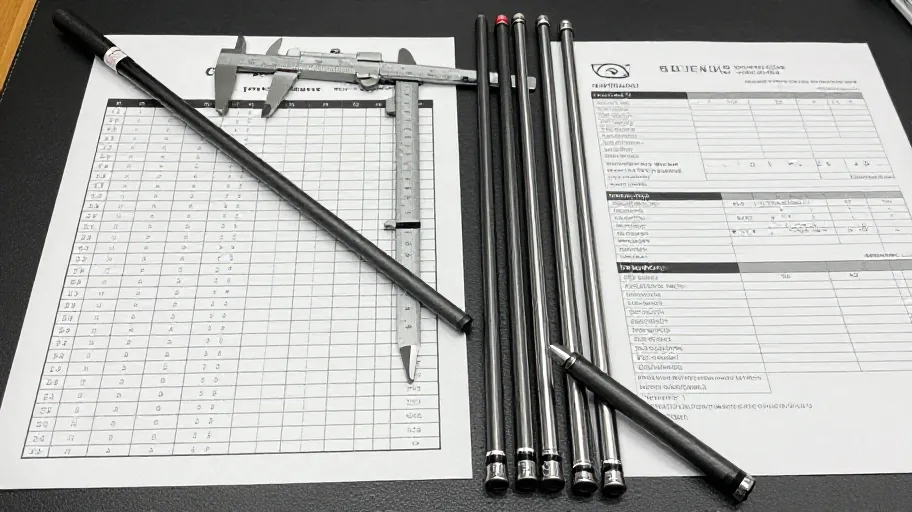
You’ve seen the data—now make it work for you. The key isn’t random tweaks; it’s systematic tuning anchored in baseline measurements. Without a starting point, adjustments risk making things worse. One amateur reduced offline driver shots by nearly 40% after adding 6g to the heel—but only because they tracked 10 swings before and after.
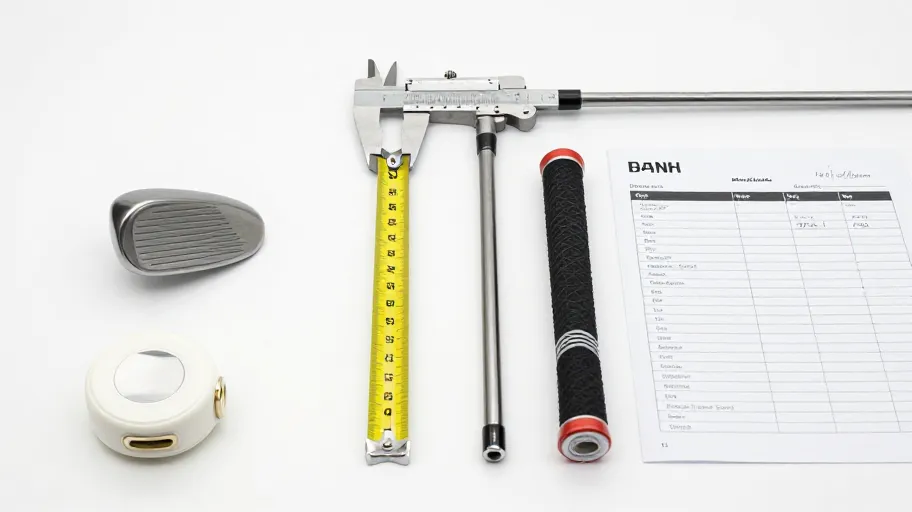
Start with tools that enforce precision: a digital scale, torque wrench set to spec, and a modular kit like SuperStroke CounterCore or Tour Edge’s E7 Shaft Weight Kit. Test changes across your key clubs—driver, wedge, putter—altering one variable at a time. One player fixed chronic face misalignment by moving just 4g from toe to heel, confirmed via launch monitor.
Random changes erode gains. Systematic tuning transforms feel into control. You’re not chasing sensations—you’re engineering repeatable performance, one gram at a time.
Master Your Swing, DIY Your Fit. DIY Golf is the premier destination for the technical golfer. We empower you with professional-grade components and the knowledge to build your perfect bag.