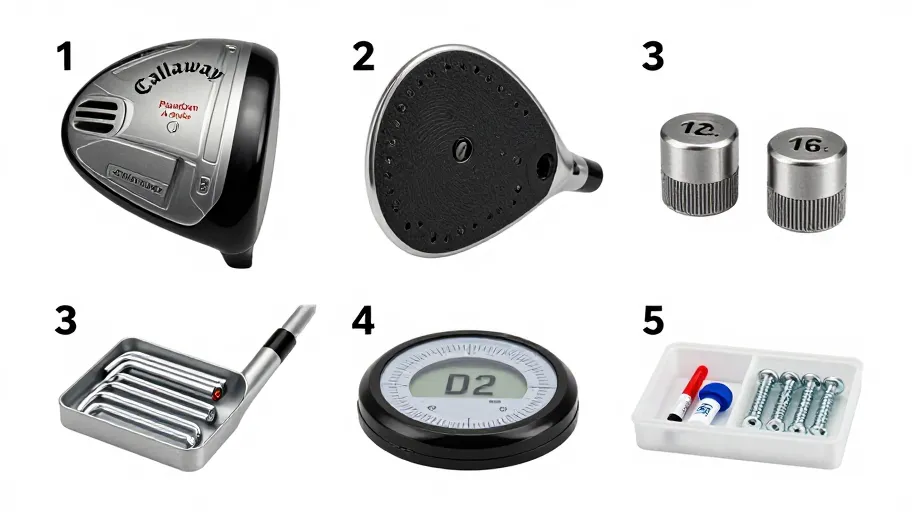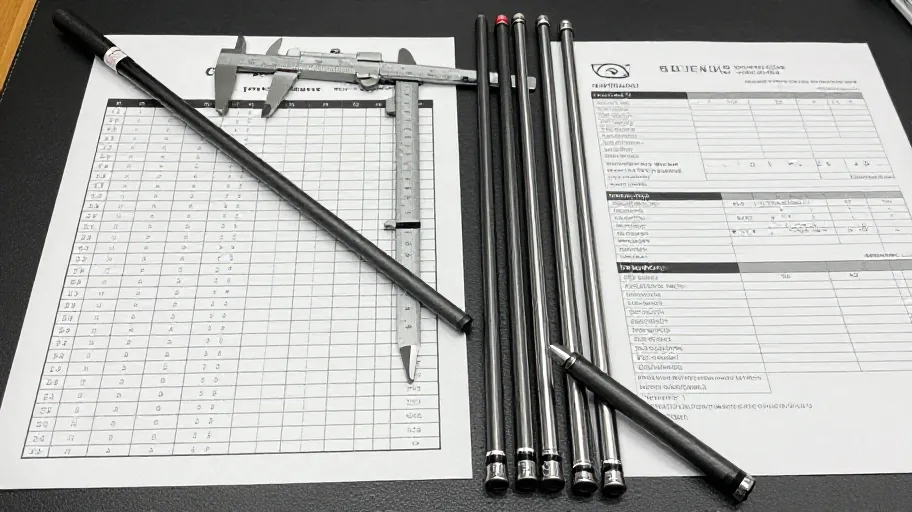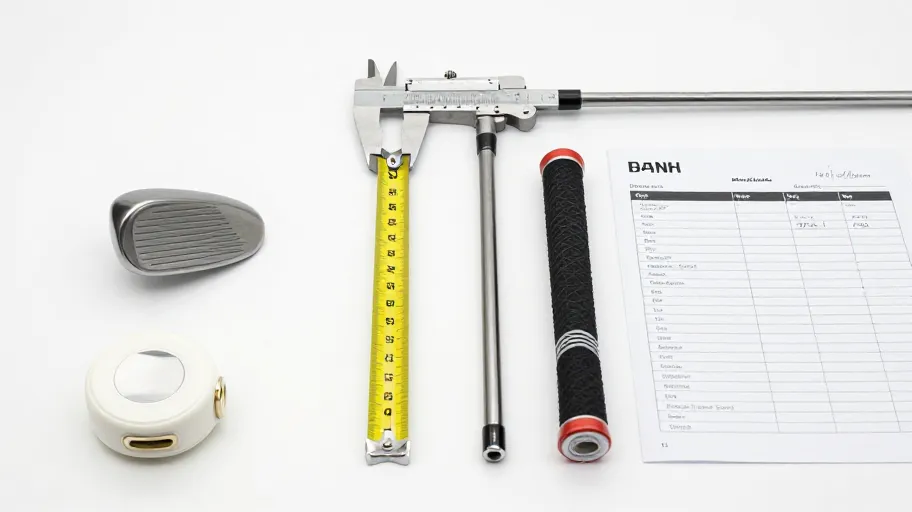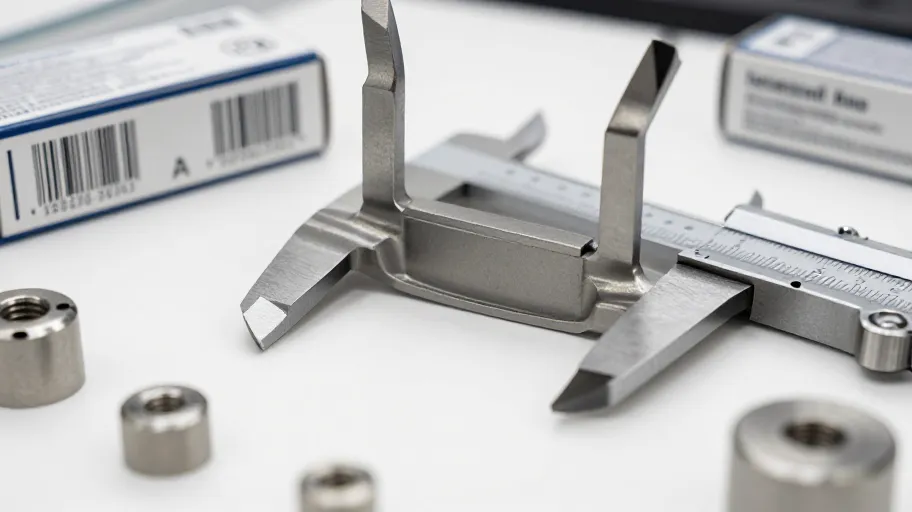
Buying replacement putter weights comes down to three verifiable things: an exact thread and port match for your putter's brand, family and model; a finish and tolerance the seller can document for that specific part; and packaging that protects and labels each weight so nothing is mixed up during a build. Anything you cannot verify before ordering belongs on a question list for the seller, not on your order form.
Start with fitment, not grams
The most expensive putter weight is the one that does not fit. Weight ports vary across — and sometimes within — putter families. Two putters from the same brand can use different thread diameters, pitches or sole-cavity shapes. A listing that says "compatible with" a brand name without naming the exact model family is a listing you have not finished reading yet.
Before comparing gram options, document:
- Brand, family and model of the putter (and model year or generation if there was a revision).
- Port type: threaded sole screws, interchangeable cartridges, or a discrete sole cavity.
- Thread details if threaded: the seller's stated diameter and pitch, matched against your putter's specification.
- Count and position: how many weights the putter accepts — heel, toe, centre — and whether they are identical or position-specific.
Only once fitment is established does the gram conversation become meaningful. A heavier or lighter weight in the wrong thread is worth nothing to your build.
The T.F.P. Check: Threads, Finish, Packaging
Use this three-part framework to evaluate every candidate weight before money changes hands.
T — Threads and geometry. Ask the seller to state the thread diameter and pitch in writing for the exact product listing. If they cannot, or if the listing matches only a brand and not a model, treat the part as unverified for your putter. Also confirm the driver type needed (hex, slot, Torx-style) and whether the tool is included or must be sourced separately.
F — Finish and tolerance. Finish affects two things: corrosion behaviour over time, and how the weight looks against the putter's sole. Ask what coating or plating the weight carries, how the seller describes surface consistency, and what tolerance they hold on weight and external dimensions. Do not accept vague terms like "precision" — ask for the actual stated tolerance band for that product, and ask how out-of-spec parts are handled if one arrives. These are project-specific questions; the answer belongs to the seller and the exact SKU, not to any assumed norm.
P — Packaging and labelling. For anyone building or servicing more than one putter, packaging is a real quality factor. Ask how individual weights are separated and labelled — by gram value, by position, or both — and what protects the finish in transit. Mixed, loose weights in a single bag invite both scratch damage and installation errors on the bench.
Decision table: comparing putter-weight options
| Purchase criterion | What to look for | What to ask the seller | Red flag |
|---|---|---|---|
| Thread / port match | Exact model-family compatibility stated, with thread diameter and pitch | "Can you confirm in writing that this fits [exact model] and state the thread spec?" | Brand-only compatibility claims; no model named |
| Weight options | Gram values that span your intended swing-weight adjustment | "Which gram values are available for this exact SKU?" | One gram value offered with no explanation of range |
| Stated tolerance | A documented weight and dimensional tolerance for the product | "What tolerance do you hold on this weight, and what happens if a part is outside it?" | "High precision" with no numbers behind it |
| Finish | Coating/plating type named; appearance consistent with putter sole | "What finish does this carry, and how is it protected in transit?" | Finish described only by colour |
| Tooling | Driver type stated; tool inclusion clarified | "Is the fitting tool included, and what torque approach do you recommend?" | No driver type mentioned anywhere |
| Packaging | Per-weight separation and labelling by gram and position | "How are weights packed and labelled?" | Bulk loose packing implied or confirmed |
| Model revisions | Awareness that putter families get revised | "Has this fitment changed across model generations?" | Seller cannot engage with the revision question |
Supplier approval questions
Put these to the seller before approving any order. None of the answers can be assumed; each is specific to the seller and product.
- Will you confirm in writing that this weight fits my exact putter brand, family, model and generation?
- What is the stated thread diameter and pitch (or port geometry, if not threaded)?
- What tolerance do you hold on the stated weight, and what is your process if a part arrives outside it?
- What finish or coating does this product carry, and how does it respond to normal bench handling?
- Is the fitting tool included, and if not, which driver type is required?
- How are the weights packaged and labelled — by gram, by position, or both?
- What is your current policy on samples, returns and exchanges for this product? (Confirm directly; do not rely on forum posts or old listings.)
- What are your current shipping options and timelines to my location? (Confirm at time of order.)
Document the answers. A seller who answers these cleanly is one you can build a repeat relationship with; one who deflects has told you something too.
Receiving and inspection checklist
- Weights match the gram values ordered, in the quantities ordered
- Thread (or port) matches the specification confirmed in writing before purchase
- Finish is intact — no transit scratches, plating defects or tool marks
- Each weight is labelled by gram value and position before you discard packaging
- Fitting tool present if it was confirmed as included
- Weights thread in by hand without cross-threading; stop and query before forcing
- Installed weights sit flush with the sole; photograph before and after for your records
- Any discrepancy documented with photos and raised with the seller promptly
Frequently asked questions
How do I know which gram weight my putter needs? Start from your target swing weight and the putter's current configuration, then calculate the change the weight swap will produce. Weight selection works backwards from the feel and balance you want, not forwards from whatever gram values a listing happens to show. Review the swing-weight guide to run the numbers before ordering.
Are putter weights interchangeable between models in the same brand? Do not assume so. Threads and port geometry can differ between families and even between generations of the same model. Verify the exact fitment for your putter with the seller in writing before purchasing.
Can I mix gram values heel and toe? On putters with separate heel and toe ports, mixed values are one way to influence face rotation and toe hang — but only if both weights are confirmed fits for their positions. Ask the seller whether the two positions use identical or different part specifications.
What if a weight arrives outside the stated tolerance or damaged? Photograph the part and packaging immediately and contact the seller. The remedy depends on the seller's current policy for that product, which you should confirm before ordering rather than assume after the fact.
Should I request a sample before ordering a set? If your build depends on a precise fit and finish, asking about the seller's current sample policy is a reasonable step. Whether samples are offered, and on what terms, is specific to each seller — confirm directly.
Next step
Review the swing-weight guide before you finalise any gram choice. Fitment tells you which weights can go in the putter; swing-weight math tells you which ones should.
Low-friction checklist CTA: Download or copy the receiving and inspection checklist above and keep it on your bench for the day the weights arrive.
Master Your Swing, DIY Your Fit. DIY Golf is the premier destination for the technical golfer. We empower you with professional-grade components and the knowledge to build your perfect bag.