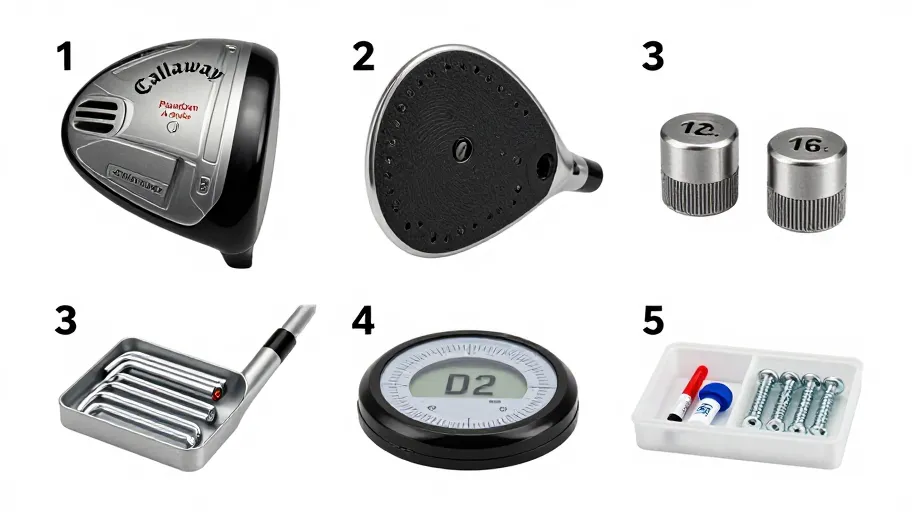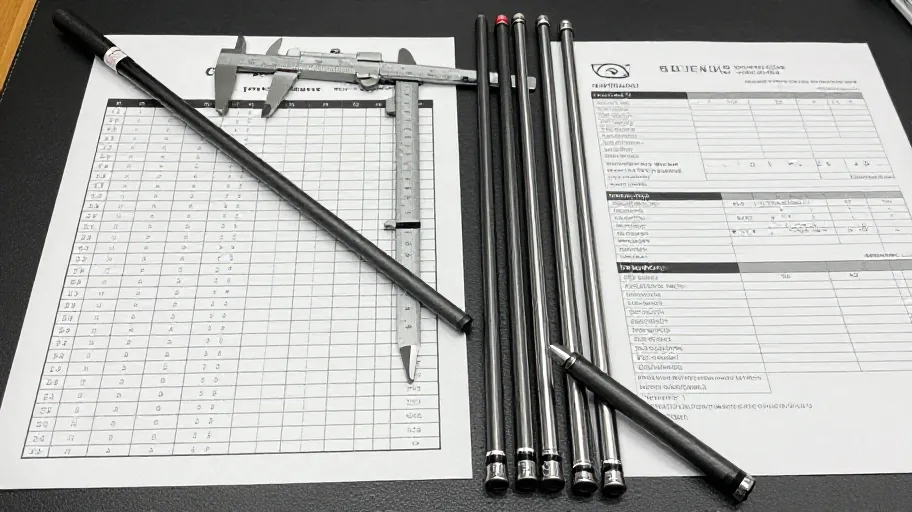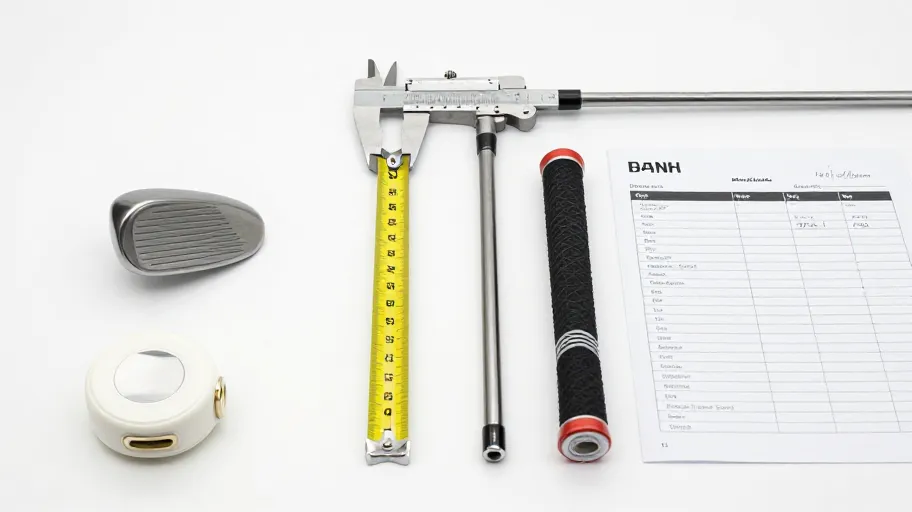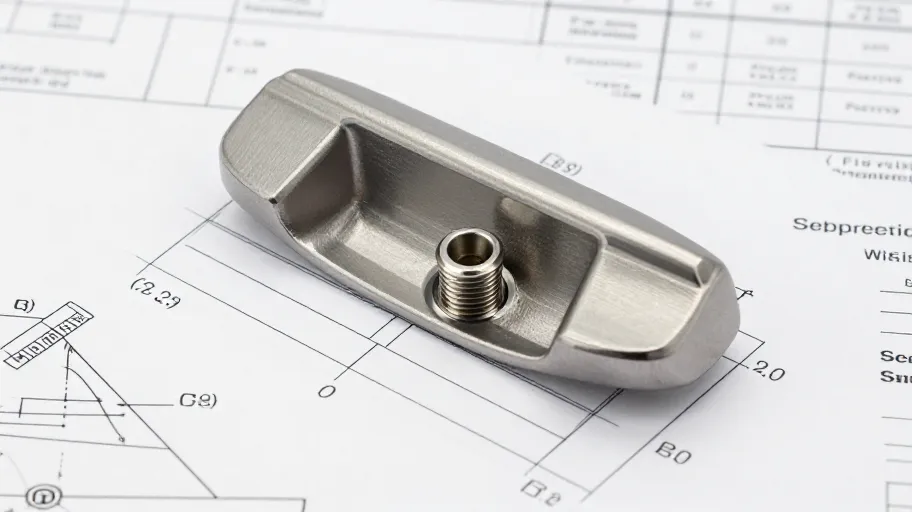
To source replacement putter weights accurately, build a quote-ready drawing and review pack before contacting any supplier. This pack must document the exact weight pocket dimensions, thread pitch, material density requirements, and target swing-weight delta for your specific putter model. Confirm all fitment specifications and procurement policies directly with the supplier to avoid non-compatible components.
The Quote-Ready Drawing Pack (QRDP) framework
The QRDP framework structures your component research into a verifiable document. It transitions a sourcing inquiry from a general question into a precise, reviewable specification pack. This framework forces the buyer to document every unknown variable before requesting a quote.
Step 1: Document the existing configuration
Extract the current putter weight from the club head. Record the connection type: threaded screw, slide-in cartridge, or externally wrench-adjustable cylinder. Do not assume compatibility across different putter families from the same brand. Document the fastener tool required for removal. If the putter employs a threaded screw, record the thread direction and measure the thread pitch using a thread gauge. If the putter employs a slide-in cartridge, measure the cartridge length, width, and depth. Record all measurements in a project-specific drawing.
Step 2: Define the swing-weight delta
Determine the target swing-weight adjustment. Establish whether the goal is to increase or decrease the head weight. Document the desired swing-weight change in points. A heavier weight shifts the balance point toward the club head, while a lighter weight shifts it toward the grip. Calculate the required mass differential based on the specific putter head mass. Do not assume a specific mass grammage will yield a specific swing-weight result without testing. Document the target mass in grams and the target swing-weight shift.
Step 3: Specify material and finish
Select a material based on density and durability requirements. Different materials provide different mass within the same volume. Document the required material and the desired surface finish. Confirm material composition with the supplier.
Putter weight material comparison decision table
| Material attribute | Stainless steel | Tungsten | Brass | Aluminum |
|---|---|---|---|---|
| Density | High | Very high | Medium high | Low |
| Mass per volume | Higher | Highest | Medium | Lower |
| Finish durability | High | High | Medium | Medium |
| Corrosion resistance | High | High | Medium | High |
| Sourcing complexity | Lower | Higher | Medium | Lower |
| Project suitability | General weighting | Maximum weight in small footprint | Sensory feedback | Light weighting |
This decision table requires validation against the specific putter model and the supplier's current inventory.
Specification documentation checklist
Use this checklist to verify the completeness of your drawing and review pack. Do not submit a sourcing request until every item is confirmed.
- Putter brand, family, and exact model name documented
- Connection mechanism identified (threaded, slide-in, external wrench)
- Fastener tool size documented
- Thread pitch measured and recorded (if applicable)
- Pocket dimensions measured and recorded (if applicable)
- Current weight mass recorded in grams
- Target weight mass recorded in grams
- Target swing-weight delta documented
- Material density requirement specified
- Surface finish requirement specified
- Drawing or schematic of the current weight compiled
Supplier approval questions
Formulate your sourcing inquiry using these approval questions. The supplier must confirm each point directly.
- Can you confirm that the proposed putter weights match the exact dimensions and connection mechanism documented in the attached drawing?
- What is the confirmed material composition and density of the proposed putter weights?
- Can you confirm the current policy regarding product samples?
- What is the confirmed policy regarding minimum order quantities?
- What is the confirmed production lead time?
- What is the confirmed transit time for shipment?
- Can you confirm the dimensional tolerances for the manufactured putter weights?
- What is the current policy regarding order revisions or cancellations?
- Can you confirm the current pricing structure for the specified material and finish?
- What are the accepted payment methods for international procurement?
FAQ
How do I confirm the correct thread pitch for putter weights? Use a thread gauge to measure the existing putter weight screw. Record the thread pitch and diameter. Submit this measurement in your drawing pack. The supplier must confirm compatibility with the submitted thread pitch before you approve a quote.
What should I include in the drawing pack for slide-in putter weights? Include the length, width, and depth of the weight pocket. Include the shape of the weight cartridge. Document the locking mechanism. Submit a schematic or technical drawing of the current weight. The supplier must confirm fitment based on these dimensions.
Can I assume that putter weights are compatible across different models from the same brand? Do not assume compatibility. Putter brands revise weight designs across different model generations. Document the exact putter model name. Confirm fitment directly with the supplier using your drawing pack. Never accept unverified fitment claims.
How do I document the swing-weight requirement? State the current swing-weight of the putter. State the target swing-weight. Document the desired mass change in grams. Request that the supplier confirm the mass of the proposed putter weights. Verify the resulting swing-weight on a swing-weight scale after installation.
What material is optimal for adding maximum mass? Tungsten provides high density, allowing for greater mass in a smaller volume. Document your mass requirement and pocket volume. Ask the supplier to confirm the density and volume of the proposed tungsten putter weights.
Review the swing-weight guide
Before finalizing your putter weights selection, review the swing-weight guide to verify how mass changes impact club balance and feel.
Low-friction checklist CTA
- Download the QRDP drawing template
- Compile all measurement data
- Verify all supplier approval questions are answered
- Confirm all procurement policies in writing
Master Your Swing, DIY Your Fit. DIY Golf is the premier destination for the technical golfer. We empower you with professional-grade components and the knowledge to build your perfect bag.