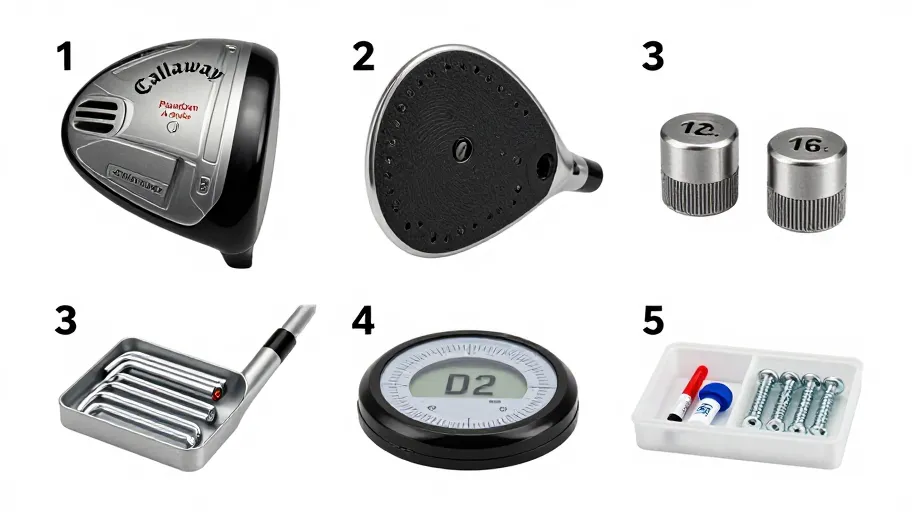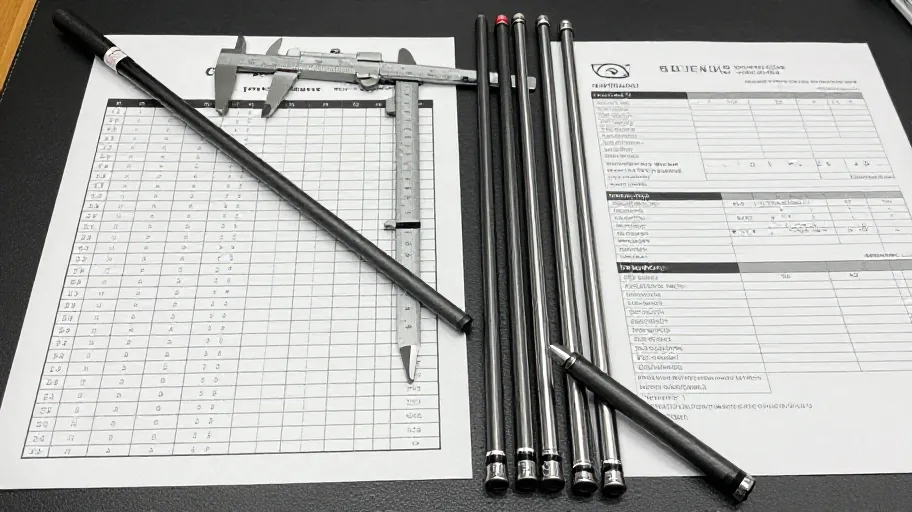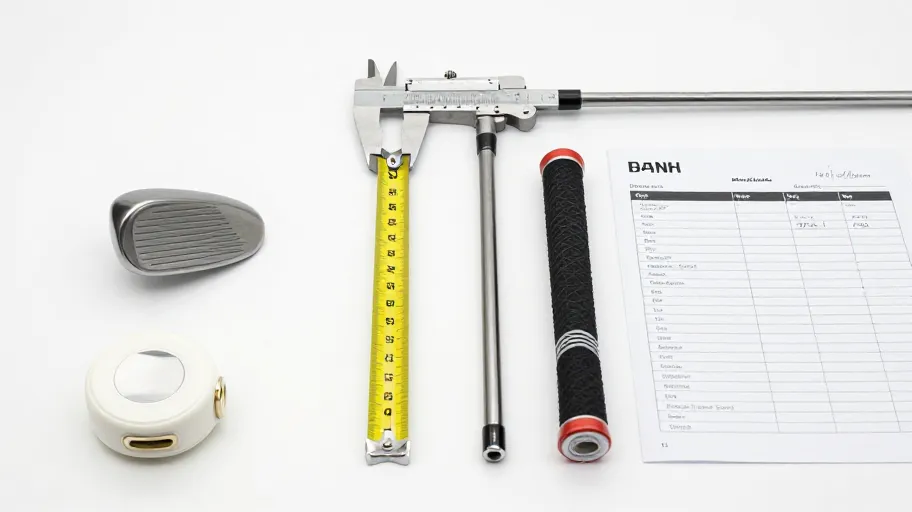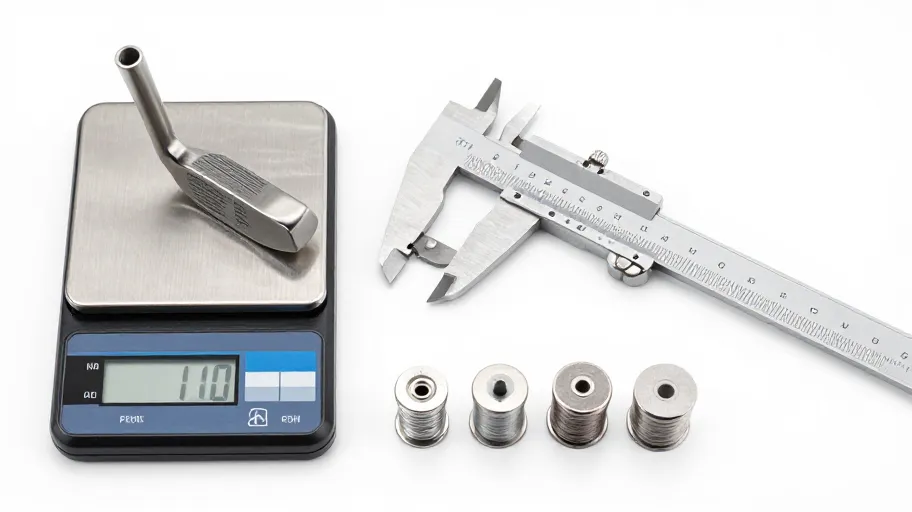
To compare putter weights accurately, stop relying on photographs. Implement the Mass-Balance Verification Protocol: document the exact mass, confirm the thread geometry, verify the material density and calculate the swing-weight shift. Photos cannot confirm precise fitment or performance outcomes. Require documented specifications for the specific putter model before approving any replacement-weight purchase.
Photographic limitations in putter-weight sourcing
When sourcing putter weights for a specific club brand, family and model, a photograph provides minimal actionable data. A picture of a sole weight does not verify the internal thread pitch, the measured mass or the material density. Two visually identical weights can have different thread geometries, rendering them incompatible with your putter. Furthermore, a polished stainless steel weight and a coated tungsten weight may appear identical in a listing but yield vastly different swing-weight results due to density variations.
Relying on images alone introduces project-specific risk. You cannot confirm compatibility, stock, price, shipping, returns, material, performance improvement or warranty outcomes without current first-party evidence. As a sourcing adviser, I recommend shifting your evaluation away from visual inspection and toward documented mechanical specifications.
The Mass-Balance Verification Protocol
The Mass-Balance Verification Protocol provides a structured method to evaluate putter weights before you commit to a purchase. This framework forces you to document the variables that affect fitment and performance.
Step 1: Document exact mass
Request the exact mass in grams from the supplier. Do not accept a range if you need a precise swing-weight adjustment. Ask the supplier to confirm how they measure mass and whether they document individual unit variance.
Step 2: Confirm thread geometry
Thread geometry dictates whether the weight will seat properly in the putter sole. Request the thread diameter and pitch. If the supplier cannot provide this data, ask them to provide a engineering drawing or a sample for physical verification. You must verify that the thread matches your specific putter model's factory specifications.
Step 3: Verify material density
Material density determines how much mass fits into a given volume. A denser material allows more weight in a smaller footprint. Ask the supplier to specify the material composition. If they state a material like tungsten, ask for documentation of the material grade. Do not assume performance outcomes without confirming the exact material.
Step 4: Calculate swing-weight shift
Use the documented mass to calculate the potential swing-weight shift. A change in sole weight affects the balance point of the club. Before you purchase, calculate how the proposed putter weights will alter the swing-weight of your specific build.
Putter-weight comparison table
Use this decision table to organise your evaluation of replacement putter weights.
| Evaluation criteria | What to request from the supplier | How to verify | Risk of relying on photos alone |
|---|---|---|---|
| Mass | Exact weight in grams for each unit | Request documented measurement data | Cannot confirm if the weight matches your target swing-weight |
| Thread geometry | Thread diameter and pitch | Compare against your putter's factory specifications | Cannot confirm fitment; risk of cross-threading or failure to seat |
| Material density | Material composition and grade | Request material specification sheets | Cannot confirm density; risk of unexpected swing-weight results |
| Compatibility | Confirmation of fitment for your specific putter model | Ask the supplier to confirm fitment in writing | Cannot confirm the weight fits your exact club family and model |
| Sample policy | Current sample availability and terms | Confirm the policy directly with the supplier | No recourse if the product fails to meet specifications |
Concrete approval questions
Before you approve any putter weights for your project, submit these questions to the supplier or component store. Document their responses.
- What is the exact mass of this putter weight in grams?
- What is the thread diameter and pitch for this specific weight?
- What material composition and grade do you use for this component?
- Can you confirm in writing that this weight fits the [Insert Brand, Family and Model] putter?
- What is your current policy regarding samples, shipping and returns? You must confirm these details directly.
Frequently asked questions
How do I verify putter weights fit my specific club model?
You must confirm compatibility directly. Request the thread diameter and pitch from the supplier. Compare this data against the factory specifications for your specific putter brand, family and model. Do not rely on visual similarities or listings that do not explicitly state fitment for your exact model. Ask the supplier to confirm fitment in writing.
Can I determine the material of a putter weight from a photo?
No. A photograph cannot verify material composition or density. Two weights can look identical but use different materials, such as steel versus tungsten. This density difference alters the mass within the same volume, which affects swing-weight. You must request material specification sheets and confirm the exact material grade used for the component.
What should I do if a supplier cannot provide thread specifications?
If a supplier cannot provide thread diameter or pitch data, you face an unverified fitment risk. Request an engineering drawing or ask if they provide a physical sample you can test. If they cannot provide mechanical documentation or a sample, you must determine if you can accept the unverified fitment risk before proceeding.
How do sole weights affect swing-weight?
Sole weights change the mass at the bottom of the clubhead, which shifts the balance point. Adding mass to the sole increases the swing-weight. To understand the exact shift, you must calculate the change using the documented mass of the new putter weights. Review the swing-weight guide to perform this calculation before you purchase.
Why is documentation necessary when comparing putter weights?
Documentation removes ambiguity. Photos do not confirm exact mass, thread geometry, material density or compatibility. By documenting the supplier's answers to your approval questions, you create a record of the stated specifications. If the component does not match the documented specifications upon arrival, you have a basis to address the discrepancy. Do not assume any production, shipping or return policy; confirm all details directly.
Sourcing checklist
Before you finalise any purchase of replacement putter weights, complete this low-friction checklist:
- Document the exact mass in grams from the supplier
- Request and verify the thread diameter and pitch
- Confirm the material composition and grade
- Obtain written confirmation of fitment for your specific putter brand, family and model
- Calculate the projected swing-weight shift
- Confirm all current sample, shipping and return policies directly with the supplier
Do not skip the step of calculating the swing-weight shift. Review the swing-weight guide to understand how changes in mass affect your club's balance and to ensure your replacement putter weights achieve your desired outcome.
Master Your Swing, DIY Your Fit. DIY Golf is the premier destination for the technical golfer. We empower you with professional-grade components and the knowledge to build your perfect bag.