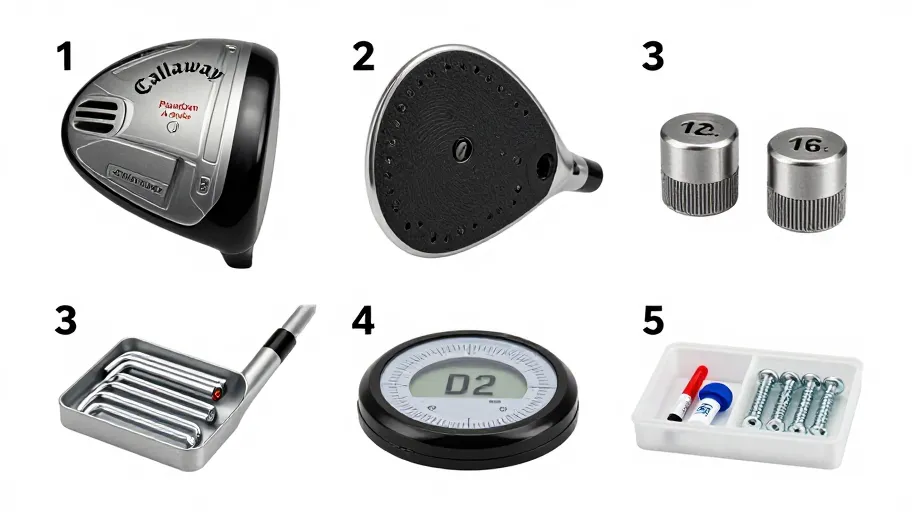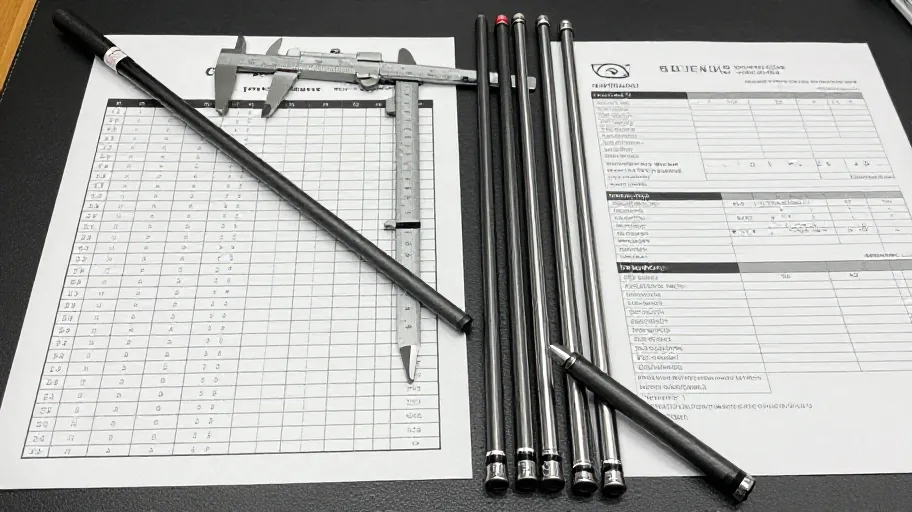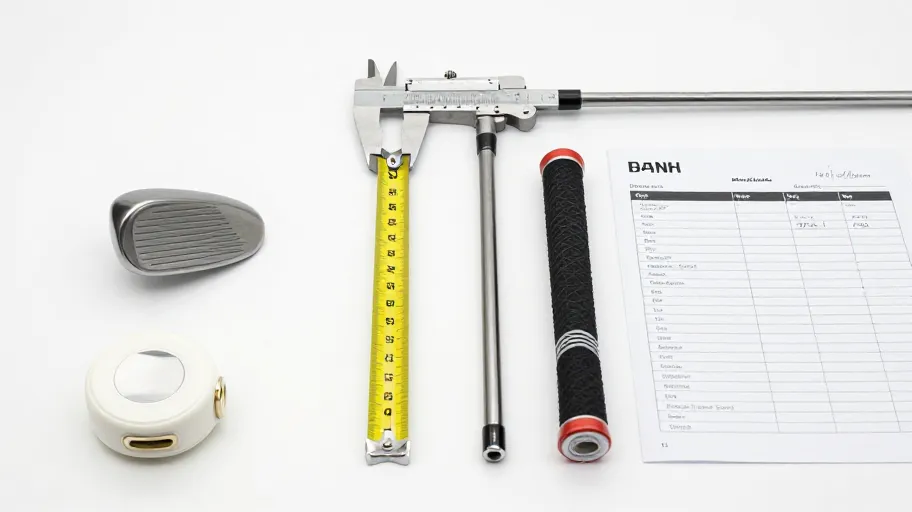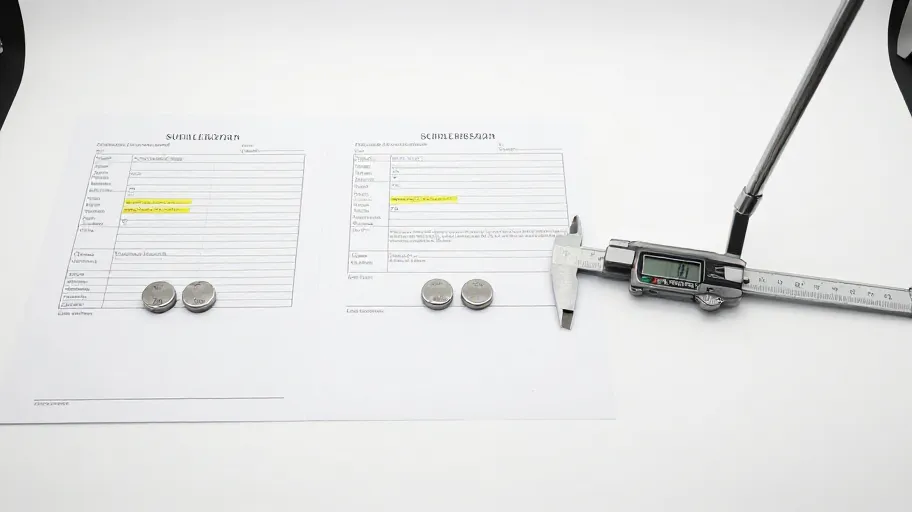
Comparing two quotes for putter weights line by line means normalizing scope before comparing any number. Use the QUOTE-LINE framework — Quantity, Options, Unit basis, Tolerances, Exclusions, Line items — to align both documents so each line maps to its counterpart. Verify fitment against your exact putter model, confirm every commercial term in writing, and approve only when both quotes answer identical questions.
Why two putter-weight quotes resist a simple comparison
A quote for replacement putter weights is not a standardized document. One supplier may quote the weight insert alone; another may include the fastener or an installation tool. One may quote on a per-piece basis; another on a per-set basis that silently assumes a different quantity. One may describe the mass in finished grams; another in a nominal range. None of these differences is visible in the headline line price, and all of them change the conclusion.
The result is a familiar failure mode: you approve the cheaper quote, discover mid-project that it excluded the fastener or assumed a different quantity, and end up paying more in follow-up orders or rework than the original gap. The fix is not more diligence at the end — it is normalization at the start. That is what QUOTE-LINE is for.
The QUOTE-LINE framework
Run six passes over each quote. Do not compare prices until pass six is complete.
Q — Quantity. Confirm the exact piece count each quote covers: weights per putter, spares, and whether fasteners are counted as separate line items or bundled. Two quotes with the same total can cover different quantities.
O — Options. Identify which options are inside the quoted scope and which are extras. For putter weights this means mass options (alternative gram values), finish options, and whether substitution mid-order changes the price basis. Ask each supplier to state in writing what is included versus excluded.
U — Unit basis. Confirm what "one unit" means in each line: a single weight, a matched pair, a set covering one putter, or a bulk pack. Rewrite every line to a single unit basis of your choosing before comparing.
T — Tolerances. Ask each supplier to state, in writing, the mass and dimensional tolerances they will hold for the exact weights quoted. Do not assume a tolerance from a catalog page or a previous order. If a supplier will not document tolerances, treat that as a decision input, not a footnote.
E — Exclusions. List what each quote excludes: shipping, packaging, samples, rework, and any tooling or setup that a later invoice might add. Where a supplier has a current policy on samples or shipping terms, ask for it directly — the policy itself, not a summary of it.
L — Line items. Only now align the two quotes line by line. Where one quote has a line the other lacks, add a placeholder row and request the missing price or an explicit "not quoted" statement. Compare only like-for-like rows.
Normalized comparison table
Use this decision table once both quotes have passed the six passes. Every cell marked confirm is a question, not an assumption.
| Comparison line | Quote A | Quote B | How to decide |
|---|---|---|---|
| Product scope (weight, fastener, tool) | List what is included | List what is included | Prefer the quote whose scope is documented in writing |
| Unit basis after normalization | Price per chosen unit | Price per chosen unit | Compare only after both rows use the same unit |
| Quantity covered | Confirm exact count | Confirm exact count | Reject any row with an unconfirmed count |
| Mass options quoted | Confirm which gram values are in scope | Confirm same | Decide by options that match your tuning plan |
| Stated tolerances | Request written mass/dimensional tolerances | Request same | Prefer documented tolerances; do not infer them |
| Shipping and handling | Confirm current policy directly | Confirm current policy directly | Record the written answer, not a verbal one |
| Sample terms | Confirm current policy directly | Confirm current policy directly | Never assume inclusion or cost treatment |
| Fitment declaration for your putter model | Request written confirmation of fitment for brand, family, model | Request same | Reject any quote without a written fitment answer |
| Exclusions and potential add-ons | List all stated exclusions | List all stated exclusions | Compare totals including realistic exclusions |
| Revision and rework terms | Confirm how changes are priced | Confirm same | Prefer clear change terms over silence |
Approval questions to send both suppliers
Send the identical question set to both suppliers. Identical questions produce comparable answers.
- Please confirm in writing that the quoted putter weights fit the [brand], [family], [model] — including thread and port interface.
- What exact mass values are included in this quote, and what is the price basis if I substitute a different mass option?
- What are the mass and dimensional tolerances you will hold for these specific weights, and will you state them on the order confirmation?
- What does this quote exclude — shipping, packaging, fasteners, tooling, or anything else that could appear on a later invoice?
- What is your current sample policy, and what are the current shipping arrangements and terms? Please send the policy itself.
- How are mid-order changes priced, and how is a nonconforming item handled?
- Is this quote valid for a stated period, and is the quoted unit basis fixed for that period?
A supplier's willingness to answer in writing is itself comparison data. Where one answers precisely and the other answers vaguely, weight that difference in your decision — vague answers now predict disputes later.
Documentation checklist for each quote
Keep one file per supplier. Do not approve until every box is checked for at least one quote.
- Written fitment confirmation for the exact putter brand, family and model
- Full scope listed line by line, including fasteners and any tool
- Unit basis stated and normalized against the competing quote
- Mass options and substitution price basis in writing
- Tolerances documented on paper, not discussed verbally
- All exclusions itemized
- Current sample policy received directly from the supplier
- Current shipping arrangements and terms received directly
- Change and rework terms stated
- Quote validity period stated
FAQ
Do I compare putter-weight quotes on price per piece? Only after normalization. Run QUOTE-LINE first; a per-piece comparison of two differently scoped quotes is the most common way to approve the wrong supplier.
What matters more, price or tolerance documentation? For tuning components, tolerance documentation. An undocumented mass tolerance can defeat the entire purpose of a weighting change, whatever the line price says.
Should I ask both suppliers the same questions? Yes, verbatim. Comparable answers are the only way a line-by-line table means anything.
Can I assume the sample or shipping terms from a previous order? No. Request the current policy directly for this order, in writing, and file it with the quote.
What if neither supplier will confirm fitment for my putter model? Treat the quote as unusable until fitment is confirmed in writing for the exact brand, family and model. No price advantage compensates for weights that do not interface with the port.
Before you compare weights, define the target
Line-by-line quote comparison tells you which supplier to approve — but not what you are trying to achieve. Your mass choice depends on the swing-weight outcome you want for the putter as built. Review the swing-weight guide before you finalize any weight order, so the quote you approve serves a defined target rather than a guess.
If you are not ready to order yet, start smaller: download or copy the documentation checklist above, send the seven approval questions to both suppliers, and file the written answers. That single step converts a vague comparison into a decision-ready record.
Master Your Swing, DIY Your Fit. DIY Golf is the premier destination for the technical golfer. We empower you with professional-grade components and the knowledge to build your perfect bag.