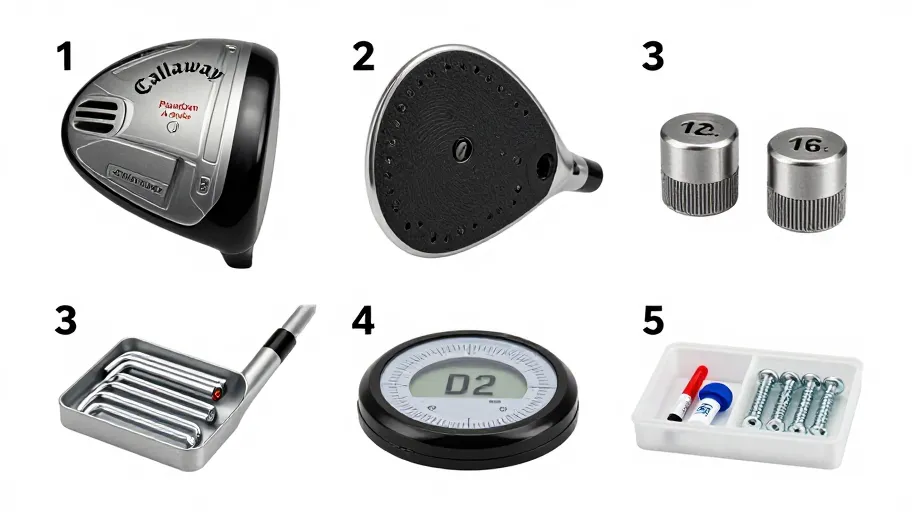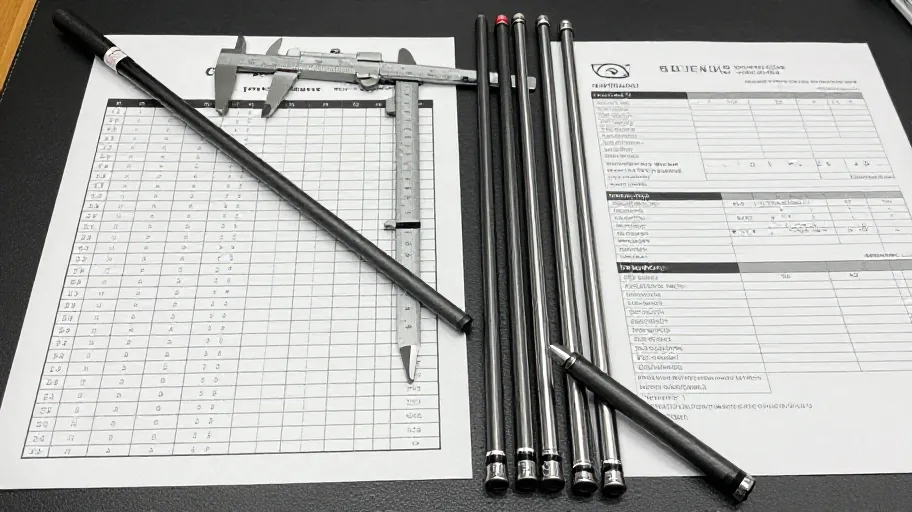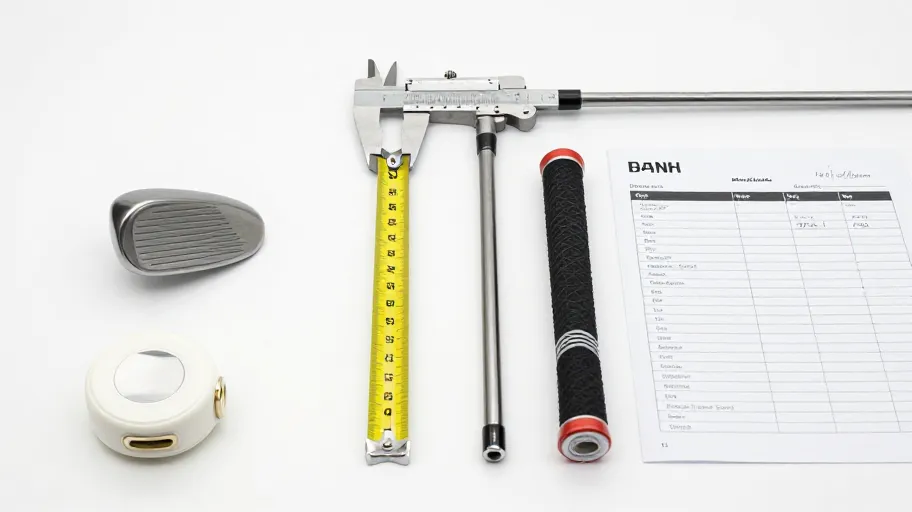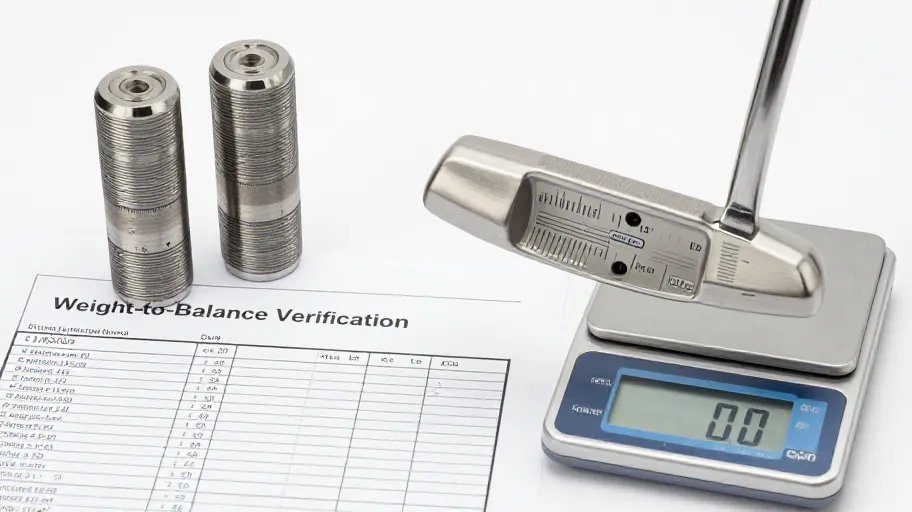
Selecting putter weights requires verifying thread pitch, flange depth, and material density before total mass. Buyers focus on the scale but miss how these variables alter the club's balance point. The Weight-to-Balance Verification Matrix ensures replacement components integrate securely without negatively shifting the putter's center of gravity or swing weight.
As a sourcing adviser, I see buyers approach putter weights with a singular focus on the gram scale. While the total mass is the most visible metric, it is the physical geometry and material composition of the weight that dictates whether the component will functionally integrate with the clubhead. A mismatch in thread pitch or an incorrect flange depth can ruin a putter's ground interaction. We use the Weight-to-Balance Verification Matrix to document these overlooked variables, ensuring you compare options accurately and avoid components that disrupt your desired balance point.
Overlooked measurements in putter weights
When comparing putter weights, the first brief fails when it lists only the target mass. A replacement weight must satisfy a sequence of dimensional and material checks before you consider its effect on swing weight. Three primary measurements are missed during the initial sourcing phase.
Thread pitch and engagement depth
The connection point between the weight and the putter body is the primary failure point for replacements. You must verify the exact thread pitch, thread diameter, and the depth of the threaded bore. If the threaded engagement depth differs from the original component, the weight might bottom out before seating flush against the sole, or it might leave exposed threads that compromise the internal cavity. Furthermore, the seating washer or o-ring dimension must match the counterbore on the putter sole to prevent rotation during impact. Do not assume that visually similar ports share the same threading specifications.
Flange and sole protrusion
The external geometry of the putter weight directly affects the putter's address position and ground interaction. If a replacement weight features a deeper flange or a wider profile than the stock component, it will protrude past the sole. This alters the shaft lean and the effective loft at impact. You must document the length of the weight from the seating surface to the sole's lowest point, and the diameter of the external flange. Comparing these dimensions against the original component prevents the installation of a weight that drags on the turf or changes the putter's built-in lie angle.
Material density and volume
Two putter weights of identical external volume can yield vastly different total masses if their material compositions differ. Tungsten, stainless steel, aluminum, and brass all possess different densities. When sourcing a replacement, you must verify the exact material specified for the component. If a supplier lists a weight by mass but does not specify the material, you cannot accurately predict the volume the component will displace inside the putter head. A high-density material in a large volume might bottom out in the port, while a low-density material might leave an empty void that requires additional damping material.
Decision table: Evaluating putter weights
Use this decision table to evaluate replacement options before finalizing any component purchase.
| Variable | Sourcing question | Verification action |
|---|---|---|
| Thread pitch | What is the exact thread pitch and diameter? | Compare against the putter manufacturer's documented specifications. |
| Seat depth | What is the required engagement depth? | Measure the bore depth in the putter head to ensure the weight seats flush. |
| Sole clearance | Does the weight protrude past the original sole? | Document the external length of the weight against the stock component. |
| Material | What material is used for the weight? | Confirm the density to verify the volume-to-mass ratio for the port. |
| Set screw compatibility | Does the weight use a set screw or a threaded cap? | Verify the head design requires a set screw versus a direct-thread weight. |
| Swing weight delta | How does this mass shift the balance point? | Calculate the new swing weight before installing the component. |
Concrete approval questions for suppliers
Before approving a purchase order for putter weights, submit these specific questions to the supplier. The responses will determine if the component is viable for your specific putter model.
- What is the exact thread pitch and thread diameter for this specific putter weight?
- Can you provide the dimensional drawing showing the length from the seating surface to the sole?
- What material composition is used for this weight, and does it match the listed density?
- Does the weight require a specific o-ring or washer to seat properly in the putter body?
- What is the total mass tolerance for this component?
- Do you have a documented policy regarding compatibility with this specific putter family? Confirm the current policy directly.
Fitment and tuning checklist
Use this checklist to verify all measurements before installation.
- Verify the original putter model and family.
- Document the original weight's total mass.
- Measure the original weight's thread pitch.
- Measure the original weight's flange depth.
- Record the original weight's material composition.
- Confirm the replacement weight's thread pitch matches.
- Confirm the replacement weight's flange depth matches.
- Verify the replacement weight's material density aligns with the volume requirements.
- Calculate the expected swing weight delta.
- Inspect the putter bore for debris or damage before threading the new weight.
Frequently asked questions
How do I identify the thread pitch on my current putter weights? You identify the thread pitch by using a thread pitch gauge to measure the distance between threads. You must document the pitch and compare it to the supplier's specification for the replacement putter weights. Confirm the current policy directly regarding thread specifications.
Can I use a heavier weight to adjust the swing weight without changing the shaft? Adding mass to the putter head will alter the swing weight, but you must calculate the exact delta. You must verify that the physical dimensions of the heavier weight do not alter the sole interaction. Confirm the current policy directly regarding swing weight adjustments.
What happens if the replacement weight protrudes past the putter sole? If the weight protrudes, it will contact the ground before the putter's leading edge. This alters the effective loft and the shaft lean at address. You must measure the external length of the weight to prevent this fitment issue.
Do all putter brands use the same threading for their weights? Different putter families use distinct threading and port designs. You must document the exact thread pitch, diameter, and bore depth for your specific model. You cannot assume cross-brand compatibility.
How does material density affect the volume of the putter weight? A denser material requires less volume to reach a specific mass. If you source a weight made of a denser material than the original, it might be shorter and fail to seat flush. If it is less dense, it might be larger and protrude. You must verify the material to ensure proper fitment.
Next steps
To finalize your component selection and calculate the exact balance point adjustments, review the swing-weight guide. Use the Weight-to-Balance Verification Matrix to document every variable before you attempt to install the new components.
Review the swing-weight guide.
Pre-installation verification checklist
- Confirm the putter family and model.
- Document all original component dimensions.
- Verify replacement component dimensions against originals.
- Calculate the swing weight delta.
- Proceed with installation.
Master Your Swing, DIY Your Fit. DIY Golf is the premier destination for the technical golfer. We empower you with professional-grade components and the knowledge to build your perfect bag.