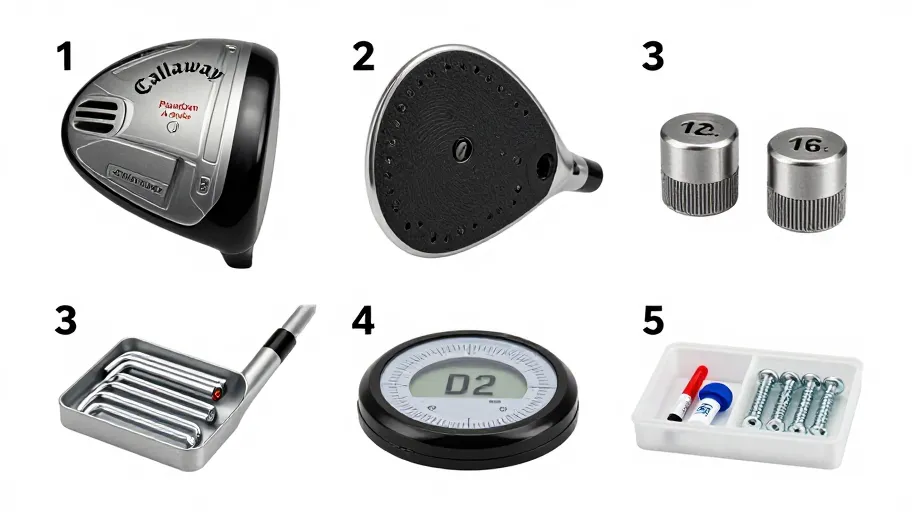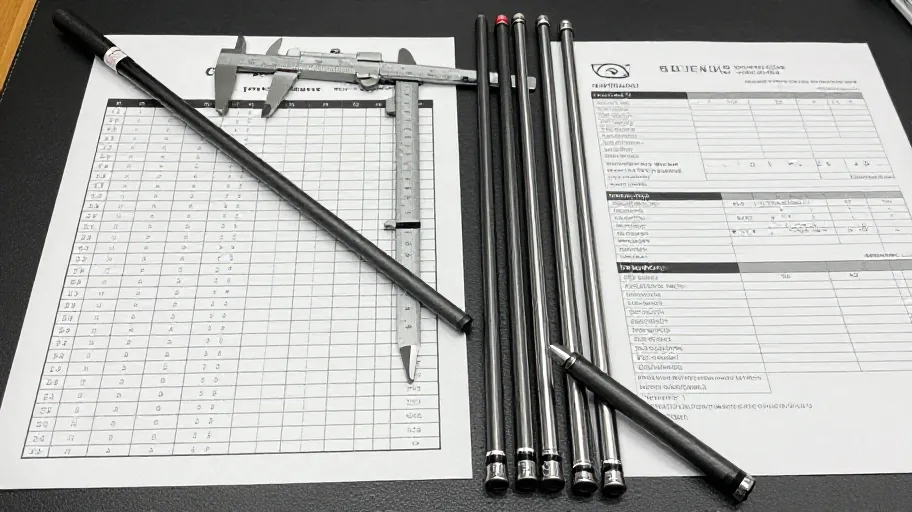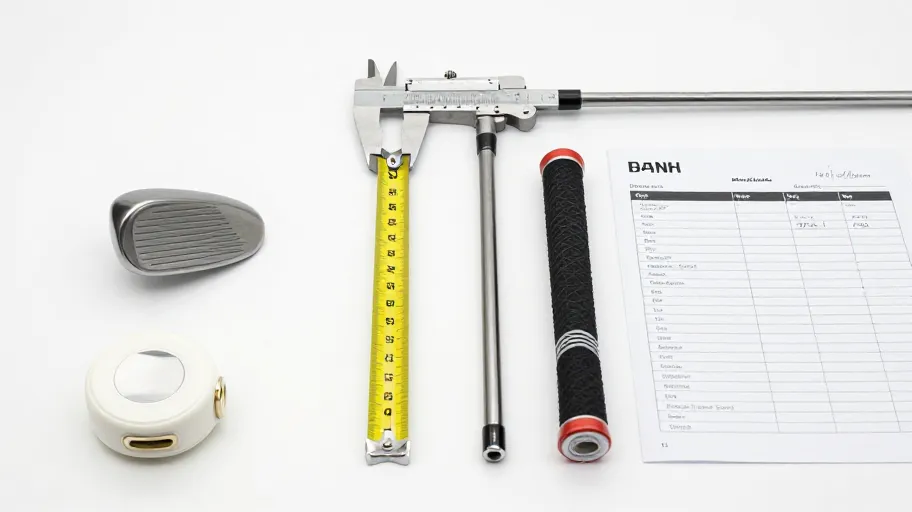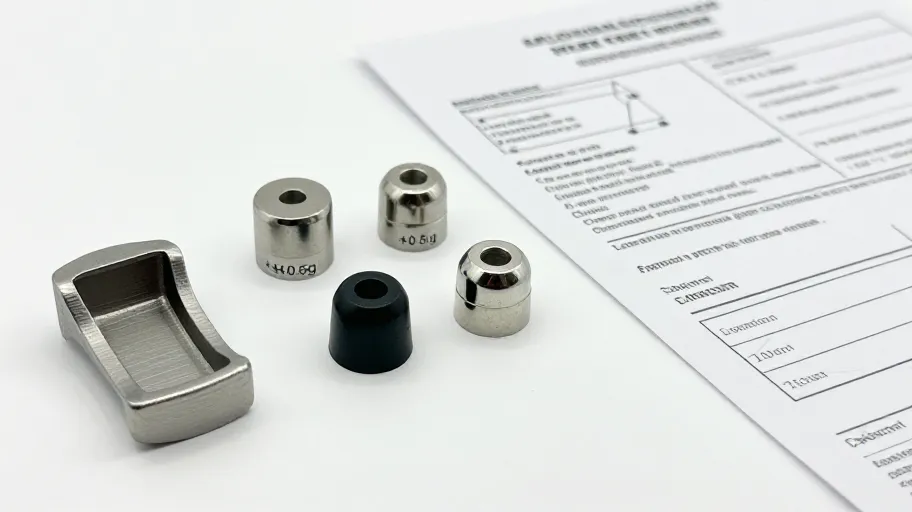
Before you approve bulk production of putter weights, resolve four things in writing: confirmed fitment geometry for your exact putter model, an agreed mass specification with stated acceptable deviation, finish durability evidence you have seen yourself, and supplier documentation covering inspection and after-sale terms. Without all four, approval is a guess. Use the Fit–Mass–Finish–Documentation framework below to turn that guess into a documented decision.
The Fit–Mass–Finish–Documentation (FMFD) approval framework
Bulk approval fails when the buyer and supplier are working from different assumptions. FMFD forces each assumption into a written, answerable question before any production commitment.
Gate 1 — Fit. Every putter family handles weighting differently: threaded ports, sole pockets, interchangeable cartridges or slide systems. Do not assume a weight described as compatible with a brand actually matches your head's family, generation and model year. Ask the supplier to confirm the interface type, measured against your own measurement of the installed weight or pocket, and to state that confirmation in the order documents. If the supplier cannot confirm fitment for your exact model, treat that as an unresolved gate.
Gate 2 — Mass. Replacement weights exist to shift head mass in controlled increments. Your job is not to trust the number stamped on the weight but to agree on a written mass specification: nominal value, how deviation is measured, what deviation is acceptable, and how each batch is verified. Do not import assumed tolerance figures from other products or forum discussions — ask the supplier to state theirs for this production run and record the answer.
Gate 3 — Finish. Finish affects both corrosion behaviour over time and how the weight sits visually in the head. No finish performance claim should be accepted without evidence you can inspect: sample parts, finish specification sheets, or documented testing the supplier can share. Ask what finish is applied, how it is specified, and what evidence supports its durability in the conditions your clubs will face.
Gate 4 — Documentation. This is where most approvals go quiet and most disputes start. Before sign-off, confirm in writing: how batches are inspected, what happens if delivered parts do not match the agreed specification, what the current sample policy is, and what the current shipping and returns terms are. These are project-specific commercial questions. DIY-Golf supplies no product-specific sample, cost, shipping or production policy in this article, and readers must confirm every one of these terms directly with the supplier before approving anything.
Decision table: which approval path matches your evidence?
| Evidence you currently hold | Recommended path | Risk if you skip it | Next action |
|---|---|---|---|
| None — only product listing | Do not approve | Wrong thread/pocket fit; unusable batch | Request fitment confirmation and mass specification in writing |
| Listing plus supplier fitment claim, no sample | Conditional approval of a first batch only | Undetected fitment or mass mismatch across full run | Inspect first batch against agreed spec before releasing remainder |
| Physical sample verified in your own putter | Approve pilot batch with documentation | Batch-to-batch drift if no inspection agreement | Fix inspection method and deviation limits in the order |
| Verified sample plus written spec plus inspection terms | Approve bulk with batch-level verification | Low, provided each batch is checked on arrival | Document everything; reconfirm terms at reorder |
Approval questions to put to the supplier
Fitment
- Can you confirm, in writing, that this weight fits the exact brand, family, model and generation I have specified — and what measurement backs that confirmation?
- What interface does the weight use (thread, pocket, cartridge, slide), and what should I measure on my head to verify it independently?
- If a delivered weight does not fit the confirmed model, what is your process for resolving it?
Mass specification
- What is the nominal mass, and what deviation from nominal do you consider acceptable for this run?
- How is each batch checked against that specification, and can I receive the verification record with delivery?
- Are mass values marked on the parts, and how do I confirm the marking matches the actual mass?
Finish and material
- What material and finish are specified, and what documentation describes them?
- What evidence can you share about how the finish performs over time in normal use conditions?
Commercial and production terms
- What is your current sample policy, including any fees and who arranges shipping — and is any fee credited toward a production order?
- What are your current production, shipping, returns and after-sale terms for this order, and where are they written down?
None of these answers can be assumed. Confirm each one directly, for the exact product and model, at the time of ordering.
Pre-approval checklist
Before you sign off on bulk production of putter weights, confirm every line:
- Supplier has confirmed fitment in writing for my exact brand, family, model and generation
- I have independently measured my head's weight interface or verified against the original installed weight
- Nominal mass and acceptable deviation are stated in the order documents
- Batch inspection method and verification records are agreed
- Finish and material specification is documented, not verbal
- Current sample policy confirmed directly with the supplier
- Current shipping, returns and after-sale terms confirmed directly and in writing
- First-article or pilot batch inspection is planned before full release
- All confirmations are saved where you can retrieve them if a dispute arises
How weight changes interact with swing weight
Changing putter weight is not an isolated spec change — it moves total head mass, which interacts with swing weight and, through it, how the stroke feels. Heavier sole weights push the head toward a heavier swing-weight reading; lighter ones do the reverse. The exact change depends on your head, shaft length and grip, so calculate rather than estimate. Review the swing-weight guide to work through the arithmetic before you fix the mass values in your production spec, because approving the wrong nominal mass is far more expensive to correct after a bulk run than before it.
What to do if batches differ
If a delivered batch does not match the agreed specification, your position depends entirely on what you documented at approval. This is why the inspection and after-sale questions above belong in the order, not in a post-delivery email. When the batch arrives: verify fitment on a sample of parts, weigh several against the agreed nominal, and compare finish against the specification. Record every result. If anything deviates, raise it against the written terms you confirmed at Gate 4 — not against an assumption about what a supplier ought to do.
Frequently asked questions
How do I know a replacement putter weight fits my putter before ordering a full batch?
Ask the supplier to confirm the interface type and model compatibility in writing, then verify independently: measure the thread or pocket on your own head, or compare against the original installed weight. If neither the supplier's written confirmation nor your own measurement exists, the fitment gate is unresolved and bulk approval is premature.
Will heavier putter weights automatically improve my putting?
No performance outcome can be claimed here. What is verifiable is the arithmetic: added head mass shifts swing weight, and that changes how the stroke feels and how the face delivers at impact. Whether that helps you is a fitting question. Work through the swing-weight guide and, if possible, test mass changes with temporary weighting before locking values into a production spec.
Can I order mixed mass values in one bulk run?
That depends entirely on the supplier's current production policy for split batches, which DIY-Golf has not supplied and cannot state here. Ask directly whether mixed nominal values within one run are offered, whether each value is batch-verified separately, and how the run is documented. Confirm before approval, not after.
What finish should I specify for putter weights?
No finish recommendation can be made without evidence for the exact product. What you can do is demand documentation: the finish name or specification, the material underneath it, and any durability evidence the supplier can share. Compare documented options side by side rather than accepting descriptive language in a listing.
What happens if the weights arrive out of specification?
That is governed by the inspection, returns and after-sale terms you confirmed at Gate 4 — which is why they must be written into the order. If you did not document a resolution process before approving, your options narrow considerably. Confirm the current policy directly with the supplier as part of approval; do not rely on assumptions about how any supplier handles defects.
Where to go next
Two actions close this decision cleanly. First, work through the mass arithmetic so the specification you approve is the specification you actually want: review the swing-weight guide before finalising nominal weight values. Second, take the pre-approval checklist above, fill in each confirmation as you receive it, and do not approve bulk production until every box is checked and evidenced in writing.
Master Your Swing, DIY Your Fit. DIY Golf is the premier destination for the technical golfer. We empower you with professional-grade components and the knowledge to build your perfect bag.