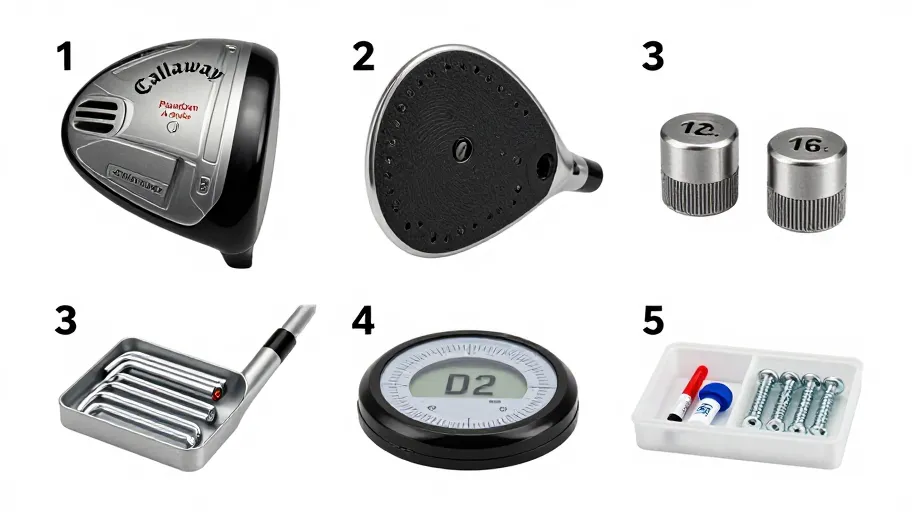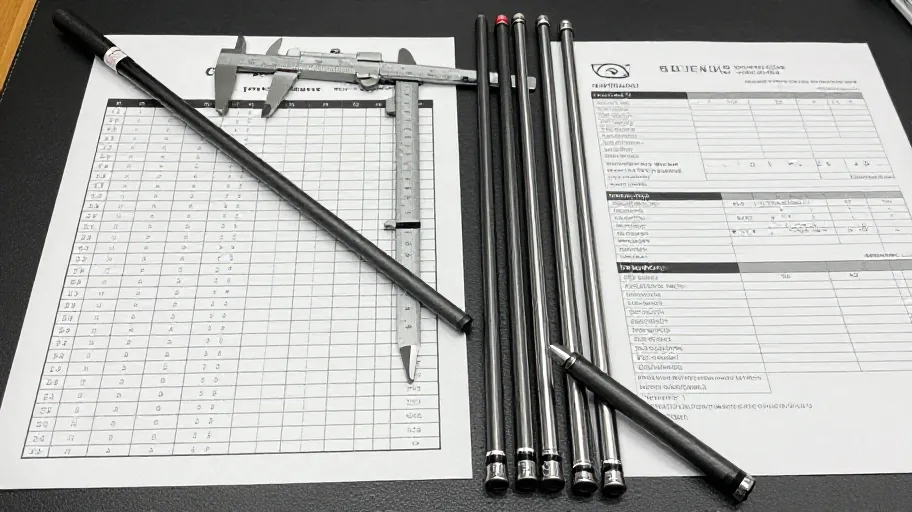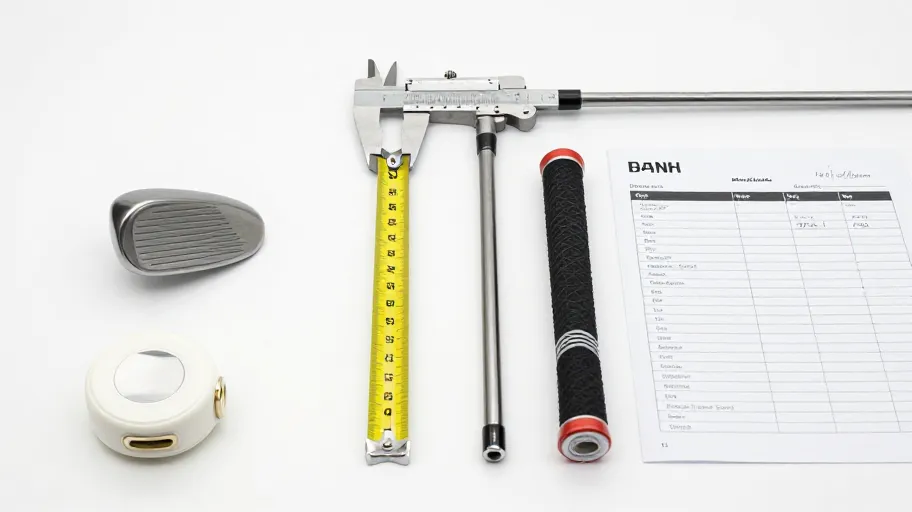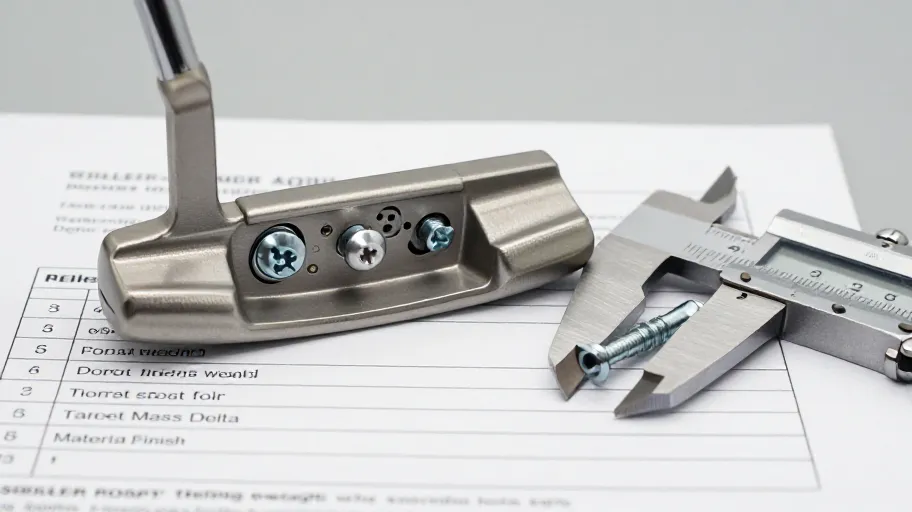
Replacing or tuning putter weights is a fitment decision, not a preference poll. Before sign-off, keep evidence of the exact port thread, the measured current swing weight, the target mass delta, the finish and material as documented by the seller, and the seller's confirmed current policy on samples, returns and availability for your specific putter model. Approve only what is verified.
Why evidence decides weight swaps
A putter weight looks like the simplest component in the bag: a threaded mass that screws into the sole or into the back cavity. The difficulty is not the part itself but the specificity. Weight ports differ by brand, by family within a brand, and in some cases by model year within the same family. A listing that says "fits most putters" answers nothing you can act on, because you are not building a putter in the abstract — you are servicing one identifiable club.
That is why this article treats putter-weight selection as a sourcing decision with an evidence trail. The question is never "is this a good weight?" It is: "can I document, for my exact putter, that this weight fits, that it moves the build toward my measured target, and that I can reverse or service the change if needed?"
Nothing here asserts that any particular weight fits any particular model. Fitment, stock, finish, material and policy claims all sit inside your verification step.
The FIT–VERIFY–SIGN framework
Use this seven-step routine before approving any replacement or tuning weight:
F — Fitment check. Identify your putter's exact brand, family, model and, where relevant, model year. Ask the seller to confirm in writing which weights match that identifier — not a compatible-sounding family name.
I — Internal-thread verification. Request the thread specification (pitch and form) for both the weight and your putter's port, and confirm the two are stated to match by the seller for your model. If neither party can state the thread, stop and treat the part as unverified.
T — Target-weight math. Measure the current swing weight of your putter on a reliable scale, decide your target, and translate the mass delta into the weight option that gets you there. Do not buy a weight because it is labelled "heavy" or "light"; buy it because your arithmetic points at it.
E — Evidence file. Collect screenshots or saved listings, written fitment confirmations, the stated material and finish, and any supplier correspondence. This is the file you keep before sign-off.
V — VERIFY policies. Ask the seller directly about current sample, cost, shipping, return and availability policies. These are project-specific facts that no article can state for you; only the seller's current, written answer counts.
E — Evaluate the rebuild scenario. Before installation, record how you would restore the original configuration: keep the original weights, note the torque used, and photograph the sole before any change.
R — Record the sign-off. Make an explicit yes/no decision against the checklist below. A "probably fine" is not a sign-off.
Decision table: choosing your weight-change approach
| Approach | What you must verify first | Evidence to keep | Risk profile | Best suited when |
|---|---|---|---|---|
| Direct OEM-replacement weight for the same model | Seller's written confirmation that the part matches your exact model identifier | Confirmation message, listing snapshot, part identifier | Lowest among the options, but only if fitment is confirmed in writing | Restoring stock build or replacing a lost weight |
| Heavier/lighter option within the same confirmed weight system | That the option shares the same thread and port geometry, confirmed for your model | Thread spec, model confirmation, measured before/after swing weight | Moderate — feel changes need re-testing on the green | Tuning tempo or stability against a measured target |
| Third-party weight advertised as compatible | Thread form and pitch, finish durability claims, and the seller's current return policy | All of the above plus policy confirmation in writing | Highest — fitment and finish claims are unverified until tested | Confirmed stock gaps elsewhere, with a clear return path |
| Counterweight added to the grip end | That the counterweight system's install method suits your shaft and grip setup, confirmed by the seller | Install instructions, mass value, before/after measurements | Moderate — affects total mass and balance differently than sole weights | Seeking a head-end-independent balance change |
No row above implies that any seller offers any of these for your putter. Each row defines what you must confirm before approving it.
Approval questions to put to the seller
Ask these before sign-off and keep the answers:
- Which of your putter weights are confirmed to fit the exact model identifier I have provided — brand, family, model, and year?
- What is the thread specification of the weight, and does it match my putter's port as stated by you?
- What material and finish is the weight made from, and how is that documented on the listing?
- What are the available mass options, and can you confirm current stock for the one I need?
- What is your current policy on samples, cost, shipping, returns and exchanges for this part?
- If the weight does not fit or the finish differs from the listing, what is the documented remedy path?
- Are matching weights from the same finish batch available if I want spares later?
If an answer contains a hedge without a follow-up commitment, treat the item as unverified and keep asking.
The evidence file: what to document
- Putter identifier: brand, family, model, model year, and any sole markings.
- Measured current swing weight and the scale used.
- Target swing weight and the mass arithmetic behind it.
- Seller's written fitment confirmation naming your model.
- Thread specification as stated by the seller.
- Listing snapshot showing material, finish and mass at the time of order.
- Policy confirmations: sample, cost, shipping, returns — as answered today, because policies change.
- Pre-installation photographs of the sole and original weights.
- Post-installation measurement and on-green notes.
This file is what "before final sign-off" means in practice. If a dispute or a fitment surprise arises, the file is your position.
Rebuild and reversal
Any weight change is easier to approve when reversal is planned. Keep the original weights labelled and stored. Note the tool and torque used for removal so reinstallation mirrors it. If you are testing multiple masses, change one variable at a time and log the measured result after each change, so the evidence file shows a clean progression rather than a memory contest.
The inventory call
Whether to buy spare weights is a question only the seller can answer in current terms: availability of the same finish and mass later is not something a listing can promise you indefinitely. If matching spares matter to your build plan, ask about availability now and record the answer. Do not assume repeatability without confirmation.
Frequently asked questions
How do I know a replacement putter weight will fit my model? You don't, until the seller confirms it in writing against your exact model identifier and thread specification. Treat every "compatible with" claim as a prompt for verification, not as evidence.
How much heavier should my putter weight be? There is no universal answer. Measure your current swing weight, set a target based on how the change should serve your stroke, and choose the mass option your arithmetic supports. A swing-weight guide is the right companion for this step.
What should I do if the weight arrives and the finish or thread looks different from the listing? Stop before installation. Compare against your listing snapshot, contact the seller with photographs, and follow the remedy path you asked about pre-purchase. Installing an unverified part can complicate both the return and your putter.
Should I document everything even for a small weight swap? Yes. Small components create the hardest disputes because the stakes feel too low to document — until a thread strips or a finish mismatches. The evidence file costs minutes; it protects the build.
Can I mix weights from different systems in one putter? Only with verified matching threads and confirmed fitment for your model, and only if you measure the build after each change. Mixing without verification leaves you with no baseline and no clean reversal path.
Before you approve: the sign-off checklist
- Exact putter model identifier recorded
- Seller's written fitment confirmation for that identifier obtained
- Thread specification stated and matched
- Current swing weight measured and target set with arithmetic
- Material, finish and mass documented from the listing snapshot
- Sample, cost, shipping and return policies confirmed directly with the seller, today
- Reversal plan in place: originals stored, pre-install photos taken
- Spares decision made and availability answer recorded
- Explicit yes/no sign-off entered in the evidence file
Review the swing-weight guide to turn your measured baseline into a defensible target before you commit to any replacement putter weights. Or start smaller: run the sign-off checklist above on your next single weight enquiry and keep the file — the habit is what protects every build after it.
Master Your Swing, DIY Your Fit. DIY Golf is the premier destination for the technical golfer. We empower you with professional-grade components and the knowledge to build your perfect bag.