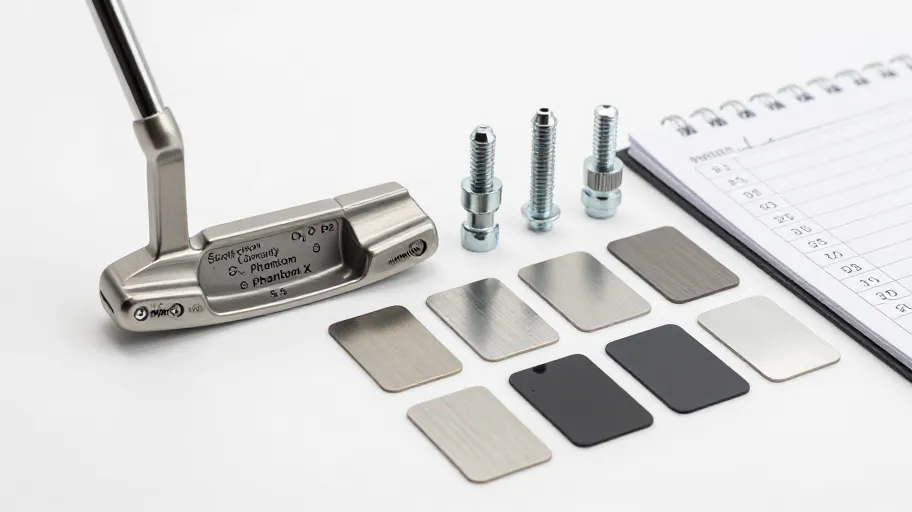
Before any supplier can quote putter weights accurately, they need four things from you: the exact putter brand, family and model; the current weight configuration and target swing weight; the thread, bore or attachment geometry of the existing weights; and your constraints on material, finish and quantity. Supply these in writing and every quote you receive becomes comparable. Omit any one, and you are comparing assumptions rather than parts.
Why vague requests produce mismatched quotes
A supplier who receives "I need heavier weights for my mallet putter" has to guess. They guess the thread. They guess the head mass. They guess whether you are chasing feel, stroke tempo, or a swing-weight number on a scale. Each guess is a place where the delivered part can diverge from what you intended.
The fix is not to ask more questions of the supplier. It is to arrive with documentation, so the supplier's quote reflects your build rather than their assumptions. That is the core of the SPEC-Quote Framework below.
The SPEC-Quote Framework
S — Spec. The physical identity of the part: putter brand, model family, model year or generation, head style, and the number of weight ports. If your putter's weights are marked with any code or engraving, record it verbatim and photograph it.
P — Purpose. What you want the change to achieve: a specific target swing weight, a head-weight change to tune stroke feel, or a match to green speeds you play. Purpose determines whether the supplier should quote a single weight, a set, or a graduated kit — confirm which options they offer.
E — Environment. How the putter is used and maintained: exposure to moisture, cleaning routine, and whether weights will be removed and reinstalled as part of routine tuning. This informs which finish and material options you should ask about, and which you should ask the supplier to advise on.
C — Constraints. Quantity, budget frame, timeline expectations, and any acceptable-substitute rules. Do not assume these; ask the supplier to state current pricing, availability, shipping terms and return policy in the written quote so you can approve with full information.
Decision table: what to gather before requesting a quote
| Input | Why it matters for the quote | How to capture it |
|---|---|---|
| Putter brand, family, model, generation | Weight geometry and attachment differ between families and model years | Note from the club head; photograph sole and weight cavities |
| Existing weight values (if readable) | Establishes the baseline for calculating the change you need | Record markings; weigh on a gram scale if available |
| Thread / attachment type | Determines whether a replacement part can install at all | Photograph the removed weight and cavity; describe fastener head type |
| Target swing weight or head-weight change | Defines the quantitative goal the supplier quotes against | Measure current swing weight or estimate; document method used |
| Grip, shaft and length of current build | Total build mass affects how a head-weight change lands | Record component list and assembled length |
| Quantity and finish preferences | Affects which product lines the supplier can offer | State in the request; ask supplier to confirm options in writing |
| Sample, pricing, shipping, returns policy | Determines true comparison basis between suppliers | Ask each supplier to state current policy in the quote; do not rely on prior assumptions |
Concrete approval questions for any supplier
Before you approve a quote for putter weights, send these questions in writing and require written answers as part of the quote:
- Which putter models and generations does this weight line fit, confirmed for my exact model?
- What are the stated thread or attachment specifications, and how do they match my existing weights?
- What weight increments are available, and how do they map to swing-weight change in my build?
- What material and finish options apply, and how should they be maintained?
- What is your current pricing, minimum order quantity if any, and availability for the quantity I need?
- What are your current shipping terms, timelines, and return or exchange policy for incorrect fitment?
- What information do you need from me if any of the above is uncertain for my model?
The last question matters most. A supplier who tells you what they still need is a supplier who is quoting against facts rather than guesses.
Documentation checklist before you request a quote
Use this checklist so every supplier receives an identical request, and every quote you receive is comparable:
- Putter brand, family, model and generation recorded
- Photographs of sole, weight ports, and removed weights
- Existing weight markings or measured values recorded
- Thread/attachment type described
- Current build documented: grip, shaft, length, current swing weight if known
- Target swing weight or head-weight change stated
- Quantity and finish preferences stated
- Written confirmation of pricing, availability, shipping and returns requested in the quote
- Fitment confirmation for your exact model requested in writing
Frequently asked questions
Do putter weights interchange between models in the same family? Not something to assume. Even within one family, generations can use different threads or cavity geometry. Ask the supplier to confirm fitment in writing for your exact model and year before approving.
How much weight change moves swing weight by one point? It depends on head mass, build length, and where the weight sits in the head — which is why documenting your full build matters. Review the swing-weight guide for how to calculate this for your configuration rather than applying a rule of thumb.
Should I buy a single weight or a graduated set? Decide by purpose. If you are chasing one known target on a scale, a single value may serve. If you tune across green speeds or conditions, ask the supplier which graduated options they offer and confirm availability.
Can I confirm fitment before committing to a full order? Ask the supplier directly what their current sample or trial policy is, who bears any costs, and on what terms. Policy details were not supplied here and must be confirmed with the supplier before you rely on them.
What if my weights have no readable markings? Photograph them, measure what you can, and describe the fastener. Then ask the supplier what additional measurements they need. A precise photograph set answers most identification questions without markings.
Next step
Review the swing-weight guide to calculate the exact head-weight change your build needs — then send the SPEC-Quote documentation above to your supplier and compare quotes that finally answer the same question.
Or start smaller: copy the documentation checklist above into your next supplier email. One page of recorded facts will do more for quote accuracy than any amount of back-and-forth.
Master Your Swing, DIY Your Fit. DIY Golf is the premier destination for the technical golfer. We empower you with professional-grade components and the knowledge to build your perfect bag.


