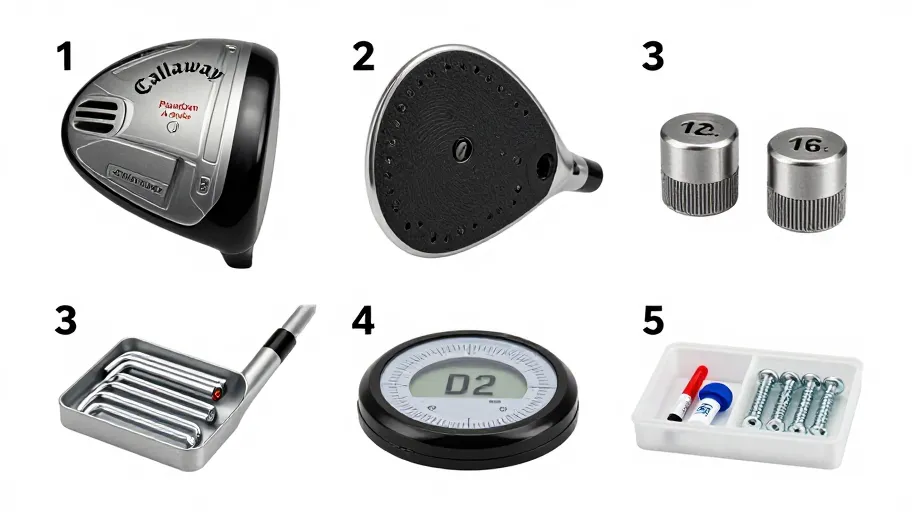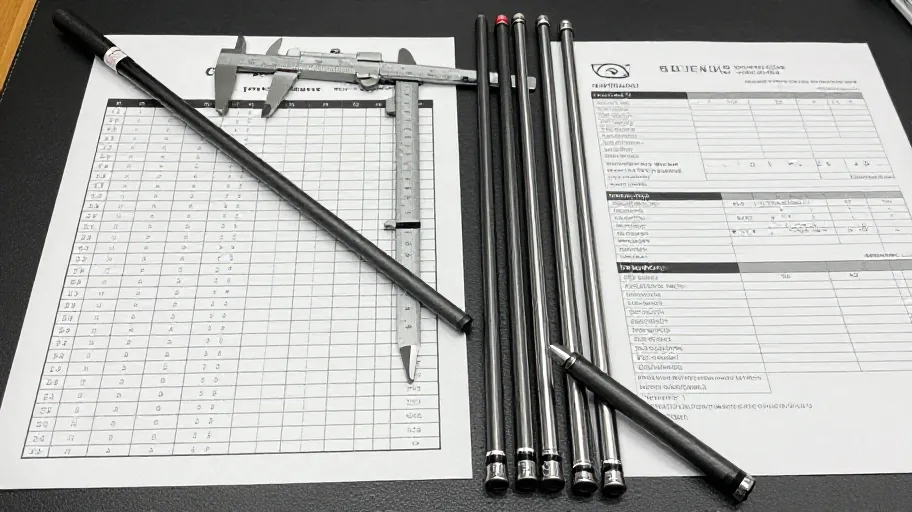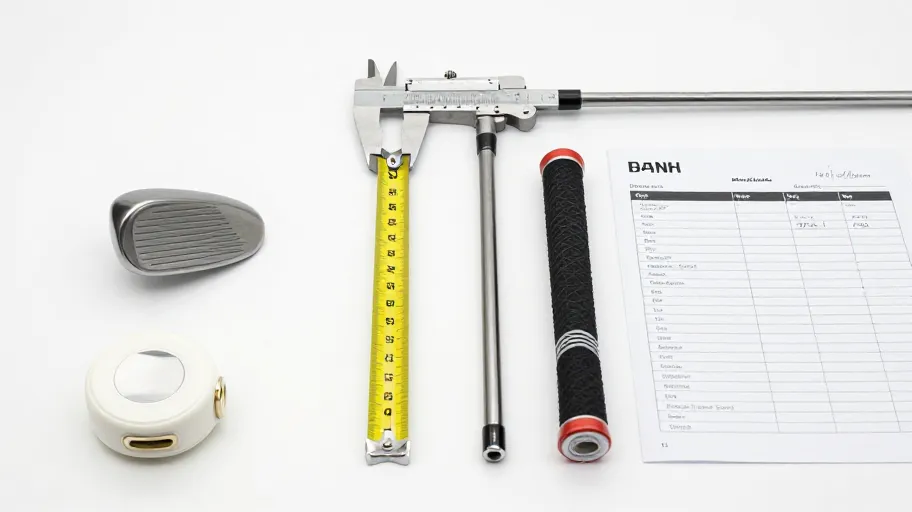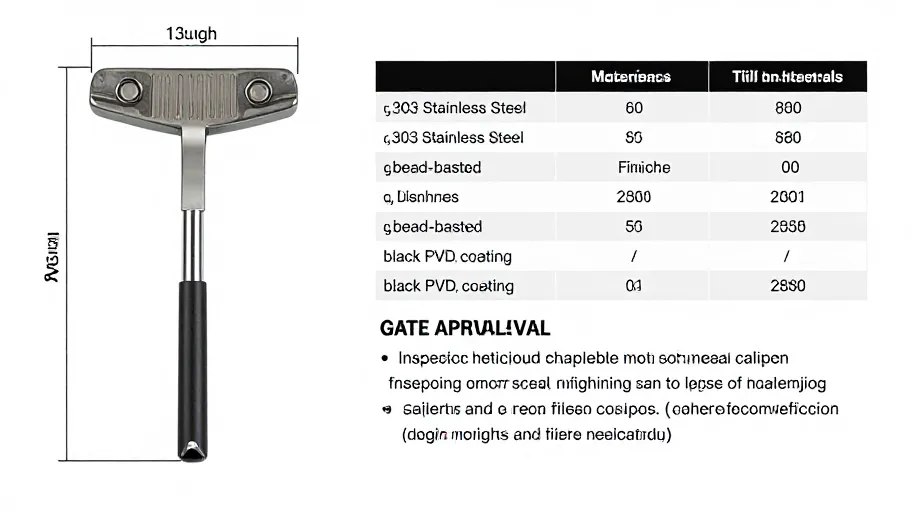
A putter weight order should be governed by three documents: a drawing that fixes geometry and mass, a bill of materials that fixes material and finish, and approval notes that fix how you verify each point with the supplier. If a detail is not in one of those three layers, treat it as unconfirmed — regardless of how the listing reads.
That is the DRAW–BOM–GATE framework. DRAW captures everything the part must be. BOM captures what it is made of and how it is presented. GATE captures the questions you ask and the answers you approve in writing before the order ships. Below is how to fill each layer for putter weights specifically, without assuming any supplier's policies.
Why putter weight sourcing fails without a drawing
Putter weights are small, cheap-looking parts that sit inside precision-machined cavities. That combination is exactly why they fail quietly: a fraction of a millimetre at the thread or flank means the weight either bottoms out, cross-threads, or sits proud of the sole. Because the reader is working with a specific brand, family and model, the only reliable reference is the model's own weight-system geometry — not a generic "fits most" claim.
The discipline is simple: transfer every geometric requirement from the club's documented weight system onto your own drawing or spec sheet, and mark any value you cannot verify as an open question for the supplier. Never carry a number forward from a forum post or a similar model in a different family.
DRAW: what belongs on the drawing
| Drawing element | Why it matters | Open question to close |
|---|---|---|
| Interface type (threaded, press-fit, magnetic, torque-screw) | Determines the tool and the failure mode if mismatched. | "Confirm the interface type for model ___ , family ___ , and state your reference source." |
| Thread or feature callout | The single most frequent cause of non-fitment. | "Provide the thread or feature callout you manufacture to, and how you verify it." |
| Socket engagement depth | Controls whether the weight seats flush with the sole. | "What engagement depth does this part assume, and how was it established for this model?" |
| Head diameter and flank profile | Affects seating, sealing and appearance at the sole. | "Confirm head diameter and flank profile against the drawing I've attached." |
| Nominal mass per weight option | Mass, not volume, drives swing-weight change. | "State nominal mass for each option and how mass is verified per batch." |
| Mass tolerance | Two weights at opposite ends of tolerance behave differently. | "What mass tolerance do you hold, and can you supply measured values for my parts?" |
| Marking (mass engraving, logo position) | Distinguishes weights in a tuning kit. | "How are options marked so I can identify them after installation?" |
Note the deliberate absence of numbers here. Tolerances and callouts are project-specific: you confirm them against your club's documented weight system and the supplier's manufacturing data, then write the agreed values into the drawing. Copying generic figures from an unrelated listing is how misfit orders happen.
BOM: what belongs on the bill of materials
The BOM answers "what is it made of, and how will I receive it?" For putter weights, include:
- Material. Stainless, brass, tungsten-rich alloys and aluminium all land at different masses in the same envelope. Ask the supplier to state material and grade, and how it is declared.
- Finish. Specify the finish by description and reference sample, not by marketing name. Ask whether an appearance sample can be provided and on what terms — current policy must be confirmed directly.
- Mass options and set composition. If you are buying a tuning set rather than single weights, list the mass ladder you need and the quantity per option.
- Fastener interface compatibility. If the weight system uses a dedicated tool, list the tool as a separate BOM line so it is not forgotten.
- Packaging and identification. How each mass option is labelled on arrival, so a tuning session doesn't turn into a scale-weighing exercise.
- Country of origin and regulatory declarations, if your programme requires them — ask the supplier what they can document rather than assuming.
GATE: approval questions to ask before you order
These are the questions to send, in writing, and to approve against:
- "Can you confirm fitment for the exact model, family and year I've listed — and what evidence do you base that confirmation on?"
- "What is your current lead time for this quantity, and what events would change it?"
- "How do you verify mass and interface geometry per production lot, and can verification records accompany the shipment?"
- "What is your process if a part arrives out of drawing — and where is that process documented?"
- "What finish options are available for this part, and can finish samples be matched before production?"
Any answer that arrives as "it fits most models" rather than "it fits model X, per reference Y" is a signal to keep digging. Fitment for a specific putter is either evidenced for that exact model or it is unverified.
Decision table: comparing candidate putter weights
| Criterion | Option A: single OEM-style replacement weight | Option B: aftermarket tuning set | Option C: mass-adjustable kit |
|---|---|---|---|
| Best suited to | Restoring a lost or damaged weight to factory spec | Tuning swing weight across a range | Frequent experimentation |
| Drawing effort | Low — copy the model's documented spec | Medium — verify each mass option's geometry | Medium — verify mechanism and each insert |
| Key fitment risk | Wrong family/year variant | Interface assumed, not confirmed | Mechanism seating and mass calibration |
| Approval focus | Exact model match; single mass | Mass ladder accuracy; consistent finish | Insert retention; per-insert mass verification |
| Documentation you keep | Drawing + model reference | Drawing + BOM with mass ladder | Drawing + BOM + mechanism notes |
Pre-order checklist
- Club brand, family, model and year documented
- Weight-system interface type identified from the model's own documentation
- Drawing or spec sheet attached to the enquiry, with open items flagged
- Nominal mass and mass tolerance requested in writing
- Material and finish stated on the BOM
- Sample or first-article question asked, current terms confirmed directly
- Lead time and order-quantity terms requested (no assumed numbers)
- Out-of-drawing remedy process asked about and documented
- All supplier confirmations saved in one approval note
FAQs
Do all putters in the same family use the same weights? Not reliably. Families change weight systems between generations and between head types within a generation. Confirm against your exact model and year rather than the family name.
How much mass change shifts swing weight noticeably? That depends on head weight, shaft, grip and where the mass sits — which is why the next step in your research should be the swing-weight guide linked below. Do not tune by assumed conversion figures.
Should I buy a tuning set or a single replacement weight? Match the purchase to the job: restoration calls for a single spec-matched weight; tuning calls for a documented mass ladder. Use the decision table above to frame the choice.
Can I verify mass myself on arrival? A calibrated scale with adequate resolution is one of the cheapest verification tools in club building. Weigh each weight on receipt and compare against the supplier's stated values; record any deviation.
Who confirms sample terms, transit and fees? The supplier, for your specific enquiry, in writing. Policies change; nothing in this article assumes them. Ask, document, approve.
Next step
Before ordering any weight, review the swing-weight guide — it tells you how much mass you actually need to move, which turns this documentation exercise into a precise order instead of a guess.
Low-friction option: download or copy the pre-order checklist above and attach it to your next supplier enquiry. It takes minutes to fill in and prevents the misfit orders that drawings exist to stop.
Master Your Swing, DIY Your Fit. DIY Golf is the premier destination for the technical golfer. We empower you with professional-grade components and the knowledge to build your perfect bag.