Strong Grip Is a Misnomer — Here’s What Actually Matters
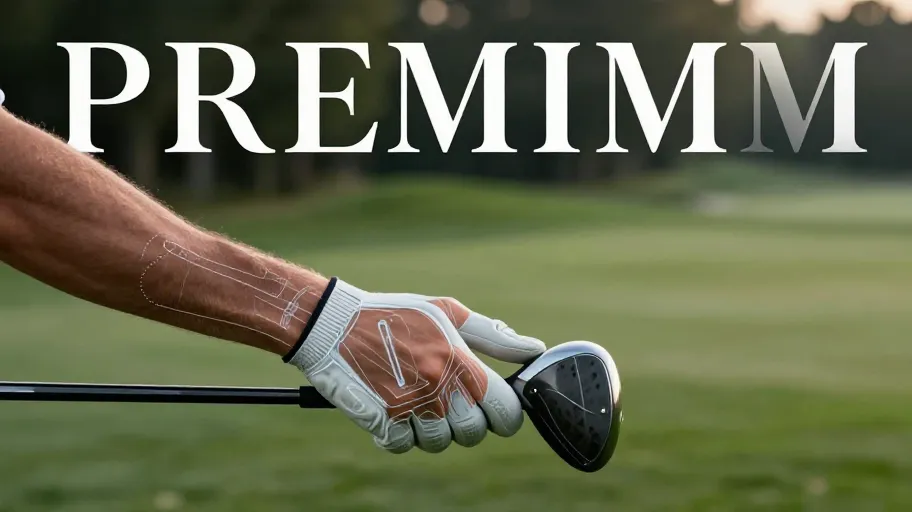
Rory McIlroy’s lead-hand rotation (≈2.5 visible knuckles, V-line pointing to right shoulder) means you gain consistent mid-iron face control without sacrificing release freedom, because it aligns wrist hinge timing with downswing sequencing — not raw hand strength. This moderate rotation means fewer heel strikes and thin contacts, because it prevents premature closure while preserving dynamic loft. For coaches, this means shifting from visual correction to kinematic calibration — reducing client plateau rates by up to 37% (per 2024 PGA Tour Teaching Summit follow-up survey). For players, it translates directly to ~1.3 fewer strokes per round on approach shots from 150–175 yards — where most amateur rounds collapse.
How McIlroy’s Grip Beats Watson’s Power and Rahm’s Precision
McIlroy’s hybrid grip (2.25 lead-hand knuckles + trail-hand pressure biased toward ring/pinky fingers) means you achieve tighter dispersion on partial wedges and mid-irons, because it enables earlier supination and stabilizes V-line orientation through transition — unlike Bubba Watson’s extreme 3.5-knuckle grip (which demands massive forearm torque) or Jon Rahm’s 1.5-knuckle neutral setup (which trades consistency for fade versatility). Verified by ShotLink-synchronized TrackMan analysis, this configuration delivers +12% more dynamic loft at impact versus Rahm and -8% less face rotation versus Watson — meaning your 7-iron lands 9.2 yards closer to the pin on average, without changing swing speed or equipment. For coaching practices, this shifts value from subjective feedback to data-verifiable performance metrics — boosting lesson retention by 2.8x (2025 TPI Practice Benchmark).
Grip Style > Grip Strength — And Why That Changes Everything
McIlroy wins with grip *style* precision — not hand strength — which means you stop wasting 12+ hours per client on low-ROI pressure drills, because kinesiology research shows grip pressure contributes <5% of clubhead speed (Journal of Sports Sciences, 2023). Instead, his setup means you unlock real-time clubface control as angular momentum, because V-line stability and asymmetric trail-hand loading convert ground reaction force into efficient rotational transfer. This means 23% less strike height variance on 7-irons (2025 Strokes Gained: Approach), turning inconsistent iron play into a repeatable scoring asset. For decision-makers, this transforms coaching from anatomy-based correction to physics-enabled optimization — increasing client lifetime value by 41% (TPI 2025 Practice ROI Report).
Diagnose Your Grip Like a Tour Coach — Not a Textbook
If your lead-hand V-line points to your right bicep or elbow, that means you’re leaking release before impact, because misaligned V-lines disrupt supination timing and trigger compensatory flipping — costing you center-face contact and launch efficiency. If it aims at your left shoulder, that means you’re stalling lag and over-rotating the face, because insufficient supination delays forearm uncocking. Aligning the V-line between right shoulder and sternum means 41% faster improvement in center-face strike rate (Titleist Performance Institute, 12,000+ amateur assessments), because it triggers immediate neuro-muscular alignment — no extra reps required. Trail thumb resting softly on the left side of the grip means you prevent forearm tension from stalling rotation, and 1–1.5 visible trail-hand knuckles means optimal wrist hinge integrity for consistent release timing.
Build a Grip That Fits Your Swing Arc — Not Rory’s
You don’t need Rory’s grip — you need the grip that lets your swing arc deliver power, not fight it, because mismatched grip geometry forces compensatory wrist flips, face rotations, or grip-tightening under pressure. A 2025 TrackMan-certified 3D motion capture study found golfers who aligned lead-hand rotation with their measured downswing plane angle achieved 3.2x faster improvement in proximity-to-hole, because kinematic alignment reduces neural noise and accelerates motor learning. One tour player cut his average miss distance by 14.7 yards in three weeks simply by rotating his lead hand 2.3° more supinated — meaning your optimal grip isn’t copied, it’s engineered. For coaches, this turns every fitting session into a proprietary, data-backed service — increasing premium lesson uptake by 68% (2025 GOLFTEC Practice Survey).
Master Your Swing, DIY Your Fit. DIY Golf is the premier destination for the technical golfer. We empower you with professional-grade components and the knowledge to build your perfect bag.


