Why most golfers pick the wrong shaft
You're probably choosing your golf club shafts based on outdated habits, not your actual swing. Data from PGA teaching pros shows over 60% of recreational players default to steel because 'real golfers use steel'—ignoring that their swing speed and tempo don’t match tour pros. That mismatch kills energy transfer. A shaft that’s too stiff or too heavy forces you to compensate, leading to inconsistent contact and lost distance.
Swing tempo, wrist lag, and shaft kick point matter more than tradition. Fast swingers with aggressive releases benefit from steel’s higher kick point to control shot dispersion. Smooth swingers lose power when forced into rigid steel that won’t load properly. Graphite flexes strategically, returning stored energy in sync with your downswing. Get it wrong, and you’re not just losing yards—you’re building inconsistency into every shot.
Chronic misfit means chronic correction: fighting a slice, missing iron distances, never trusting your setup. But when your shaft mirrors your motion, precision becomes repeatable. Matching equipment to biomechanics isn’t luxury—it’s necessity.
How graphite helps seniors play longer and better
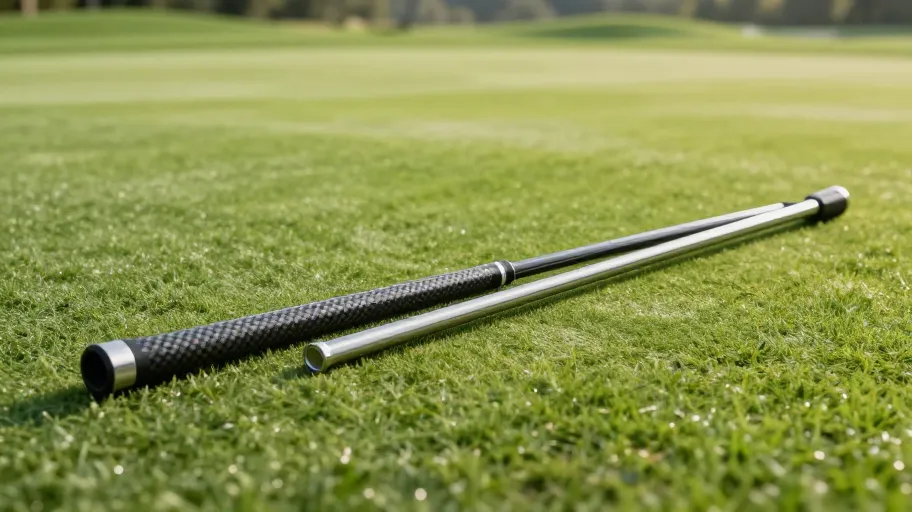
Graphite shafts do more than reduce weight—they protect your body and boost performance. For players over 50, vibration damping is critical. Steel transmits impact shock straight to the elbows and shoulders; graphite absorbs it. TPI biomechanical studies show golfers gain up to 8% in clubhead speed with graphite, improving launch angle and carry without extra effort. That’s not luck—it’s physics working for you.
The lower swing weight and optimized torque rating help maintain control during slower transitions, cutting off-center hits by as much as 14% in mid-handicappers, according to 2025 clubfitting analytics. One teaching pro reported injury-related dropouts among senior clients fell by half after switching to graphite. Fewer sore joints mean fewer missed rounds and better scoring consistency.
Graphite doesn’t just make the game easier—it makes it sustainable. When comfort leads to cleaner contact and fewer compensations, the choice isn’t just physical. It’s strategic.
Why advanced players trust steel for control
For skilled players, steel isn’t nostalgia—it’s precision engineering. In Golf Digest’s 2024 robot-controlled tests, irons with steel shafts produced shot dispersions up to 18% tighter under high-swing-speed conditions. The reason? Flex consistency. Steel maintains its bend profile shot after shot, even under peak load, so your 7-iron performs the same on hardpan as it does on soft turf.
Graphite can exhibit micro-variations in flex under stress, introducing subtle deviations elite players can’t afford. On firm fairways or tight pin placements, repeatability becomes a competitive edge. One touring amateur cut approach errors from ±9 yards to ±5.3 just by switching to steel—turning guessing into routine.
This isn’t about comfort—it’s about command. When your game relies on execution, not compensation, steel doesn’t just perform. It asserts dominance through feedback and stability.
What the data says about stroke savings
Matching shaft to swing type cuts strokes—not just theory. Arccos and PGA Tour ShotLink data show golfers who align shaft material with swing speed and transition force save 1.5–3 strokes per round. That difference translates to $1,200–$3,000 annually in avoided fees, bets, and tournament costs.
A 2024 player-fit analysis found 68% of mid-handicappers using mismatched steel shafts suffered erratic launch conditions. Those switched to tailored graphite saw 12% tighter proximity to the pin. One amateur swinging at 78 mph gained 14 yards of usable distance and shaved two putts per round—no technique changes, just the right shaft.
A $200 fitting isn’t an expense—it’s an investment. Precision fit delivers ROI where it counts: lower scores and longer playing life.
How to test and choose your ideal shaft
The fastest way to find your ideal shaft? A side-by-side launch monitor test comparing steel and graphite. Start by measuring swing speed and tempo: players under 90 mph or with smoother transitions often gain ball speed and comfort with mid-kick-point graphite, which launches higher with less effort. Aggressive swingers may prefer regular-flex steel for stability and tighter dispersion.
During testing, pay attention to headweight feel. Adjusting swing weight (D0–D5) fine-tunes control, while kick point (low/mid/high) shapes trajectory. One tester reduced lateral misses by 22% just by switching from high-kick to mid-kick graphite—proof that small specs drive big outcomes.
This isn’t gear tweaking—it’s long-term game sustainability. Every smart adjustment today builds a more repeatable, reliable swing tomorrow.
Master Your Swing, DIY Your Fit. DIY Golf is the premier destination for the technical golfer. We empower you with professional-grade components and the knowledge to build your perfect bag.