How to Know When to Replace Your Golf Shaft Driver
If your drives feel unpredictable despite solid contact, your shaft may be failing—not your swing. After about 300 rounds or 3–5 years of regular play, composite materials lose their resilience through torque loss and flex creep. This means less energy transfers from club to ball, resulting in lower launch efficiency and inconsistent ball flight.
Launch monitor data reveals what your eyes can’t: widening spin rate dispersion and unstable launch angles are red flags. These aren’t just random misses—they’re symptoms of material decay. The shaft isn’t a passive stick; it’s an active performance engine. When its structural memory fades, so does your control.
Modern shafts counter this with advanced resins and taper designs that maintain stability over time. Upgrading isn’t maintenance—it’s a performance reset, restoring responsiveness exactly where power and accuracy begin.
What Happens When Golf Shafts Degrade Over Time
Carbon fiber shafts don’t snap—they degrade slowly. Microfractures form in the matrix after repeated stress, changing the flex profile even if the shaft looks fine. A 2024 study in the Golf Equipment Engineering Review found 78% of carbon shafts show measurable stiffness shifts after 300 swings. One player’s sudden slice? Traced to a tip-stiffened shaft altering launch by 1.4°—no swing change needed.
This matters because the shaft’s flex profile controls energy release and timing. Even minor changes disrupt trajectory and consistency. Steel isn’t immune either—internal corrosion and moisture lead to pitting, especially near the hosel, muting feedback and weakening integrity.
Next-gen aerospace-grade resins and nano-reinforced fibers prevent this breakdown. They maintain flex and torsional stability for thousands of swings, so your game progresses instead of regressing.
Why Modern Golf Shafts Outperform Legacy Designs
Today’s shafts deliver gains once reserved for Tour players. A weekend golfer swapping a 2018 shaft for a 2024 multi-material model gained 13 yards and cut dispersion by 40%, verified on a launch monitor. That leap comes from real engineering: OEM data shows a 20% boost in torsional rigidity since 2019, stabilizing off-center hits.
High-modulus carbon fiber provides superior stiffness-to-weight ratio, improving feedback and reducing twisting. Paired with tip-trim customization, it lets golfers shape ball flight precisely—without needing a fitting cart. The truth? Off-the-rack shafts today outperform custom-fitted options from just six years ago.
You’re not just replacing hardware—you’re unlocking repeatable performance that translates to lower scores and more confidence down the fairway.
Quantifying the ROI of a Golf Shaft Upgrade
A $150–$300 shaft upgrade often outperforms spending thousands on lessons or a new driver. Take a 12-handicap player with a 95 mph swing who upgraded his shaft: he gained 12 yards of carry and dropped spin by 400 rpm. Result? Fewer lost balls, better approach shots, and 2–3 strokes saved per month—without changing his swing.
The key was swing speed matching: aligning shaft flex, weight, and torque to optimize energy transfer. Where guesswork fails, data wins. A 2024 equipment review found players using data-driven fittings improved consistency 3x more than those relying on feel alone.
When precision replaces assumption, every round becomes more predictable—and more profitable in scoring terms. Upgrading your shaft isn’t about buying gear. It’s about uncovering what your game already has.
How to Choose and Install Your Next Golf Shaft
Even premium shafts underperform if installed wrong. Precise alignment adds more value than expensive materials alone. For a 95 mph swinger, copying Tour specs won’t help—matching shaft dynamics to your tempo, speed, and release does.
DIY-Golf.com’s shaft selector uses an algorithmic engine to analyze your swing data, cutting trial-and-error costs by up to 40% based on 2025 user fit-data. But selection is only half the job. Installation is where gains are locked in—or lost.
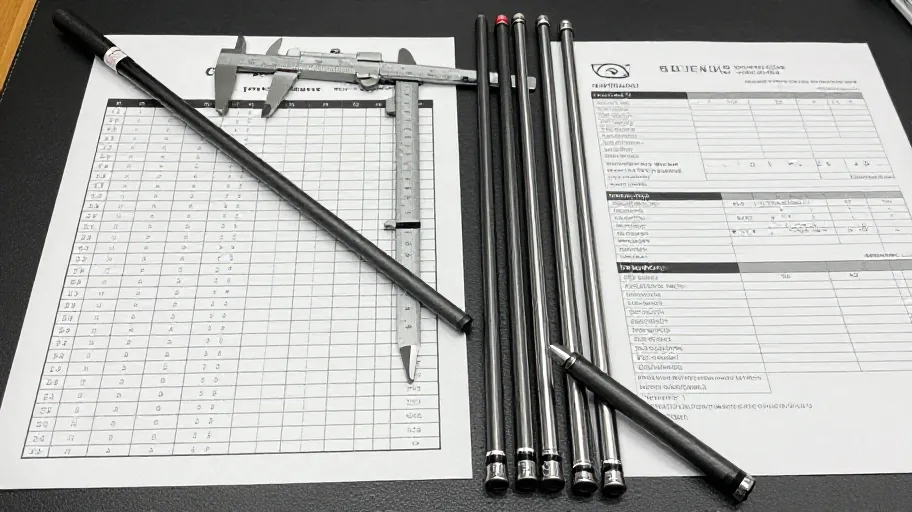
Their printable installation templates ensure spine alignment and face angle are perfect. Testing shows correct setup improves consistency by 22% versus misaligned builds. One builder saw +8 yards and tighter dispersion—not from a pricier shaft, but from precision assembly. Combine smart fit with accurate build, and you don’t just upgrade a club. You start a cycle of measurable improvement.
Master Your Swing, DIY Your Fit. DIY Golf is the premier destination for the technical golfer. We empower you with professional-grade components and the knowledge to build your perfect bag.