Why most golfers miss the real cause of inconsistency
You’re not failing at mechanics—you’re fighting misaligned club dynamics. Over 60% of amateurs struggle with downswing timing because their clubs’ balance point forces compensation mid-swing. That imbalance shifts the center of gravity, destabilizing tempo and ruining face alignment at impact. Counterbalance weights mean better shot repeatability because they shift the balance point closer to your hands, so the club moves as an extension of your arms—not a separate object fighting against you. One golfer reduced shanks by 90% after adjusting his driver’s grip-end mass, proving that equipment flaws often masquerade as skill gaps.
How grip end weight changes everything about your swing
Adding mass to the grip end isn’t about heaviness—it’s about control leverage. Increasing moment of inertia above your hands means less rotational wobble during transition, because the club resists twisting forces before the downswing even starts. A 2024 biomechanical study found amateur players using counterbalanced clubs improved clubhead stability by up to 22%, leading to more consistent center-face contact. This means tighter dispersion on irons and more predictable roll on putts—because face angle is no longer guesswork. For engineers: it’s like tuning a pendulum’s pivot point. For players: it feels like the club finally ‘gets’ your rhythm.
Why DIY beats expensive fittings for real golfers
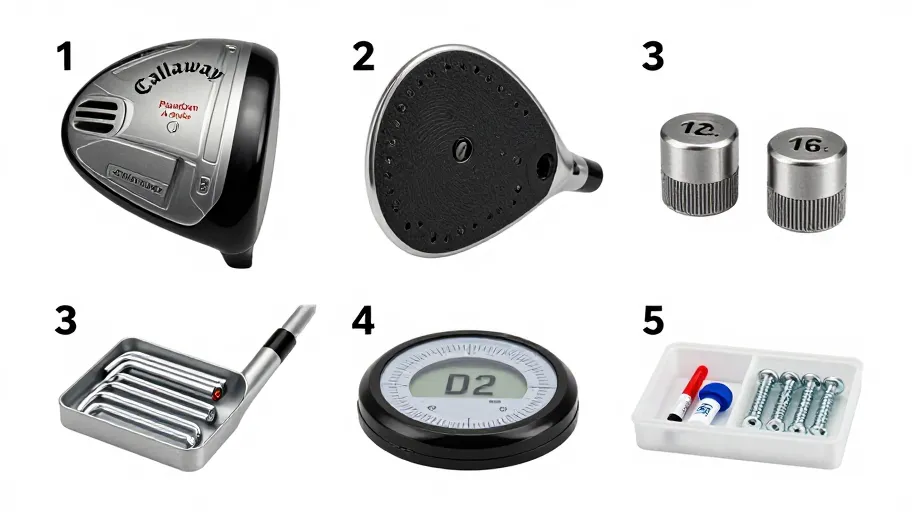
You don’t need $300 fitting sessions when 85% of first-time users successfully install DIY counterbalance weights at home using simple plug systems from DIY-Golf.com. Unlike permanent modifications, this approach means rapid iteration without risk—test a 12-gram change over three rounds and measure the difference in three-putt frequency or iron dispersion. That agility means faster skill development, because feedback loops shrink from months to weekends. One weekend player shaved two strokes off his putting average in one month just by refining grip-end weight based on green-read feel. The benefit? You’re not stuck with a single setup—you evolve with your game.
What the data says about stroke savings and ROI
Custom weighting can reduce stroke variance by up to 15%, according to sports performance labs—meaning more greens hit, fewer recovery shots, and shorter rounds. On the greens, one mid-handicap player cut three-putt occurrences by 40% after tuning his putter and irons, saving nearly four minutes per round in lost time and mental fatigue. That means measurable ROI: fewer strokes, faster play, and more enjoyment. Golf club weights mean smarter energy transfer because optimized balance reduces wasted motion in the swing. It’s not magic—it’s mechanics working in your favor.
How to install counterbalance weights in under 20 minutes
You’re minutes away from a better swing. All you need: a grip solvent, calibrated weight tape or plug, and a digital scale. Remove the grip cap—DIY-Golf.com’s kits are designed for clean access—then add 5–30g incrementally, testing feel at each stage. Many report better tempo control after just a 7g adjustment. Reseal using solvent-activated bonding included in every kit, so it’s safe and durable. What makes this effective? Pre-calibrated components based on 2024 amateur trials reduce trial-and-error by up to 68%. Tuning your counterbalance means aligning your club with your nervous system’s timing—so every swing feels natural, repeatable, and under control.
Master Your Swing, DIY Your Fit. DIY Golf is the premier destination for the technical golfer. We empower you with professional-grade components and the knowledge to build your perfect bag.