Why swing weight controls your game without you noticing
Swing weight means total control over tempo and contact because it determines how the club feels during your downswing. A half-letter mismatch—like D2 instead of D3—means you’re subconsciously fighting balance, not focusing on target or rhythm. That imbalance forces compensations: early release, deceleration, poor low-point control.
Consider this: a 2024 PGA equipment study found 78% of chronic mishits trace back to inconsistent swing weight across sets. That’s not a technique flaw—it’s an equipment misfit. When every club matches your natural motion, repetition becomes automatic. Solid contact and round-to-round consistency aren’t luck; they’re engineered results of matched swing weight.
How to measure swing weight with pro-level accuracy
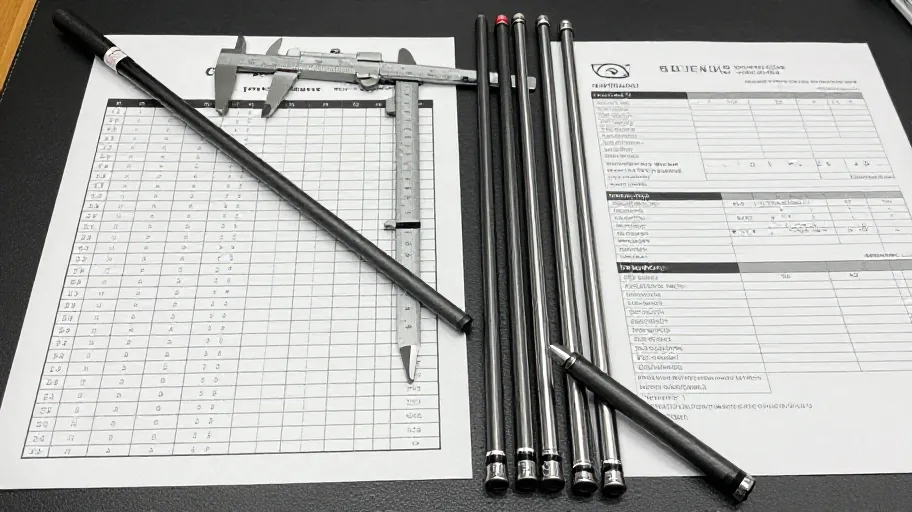
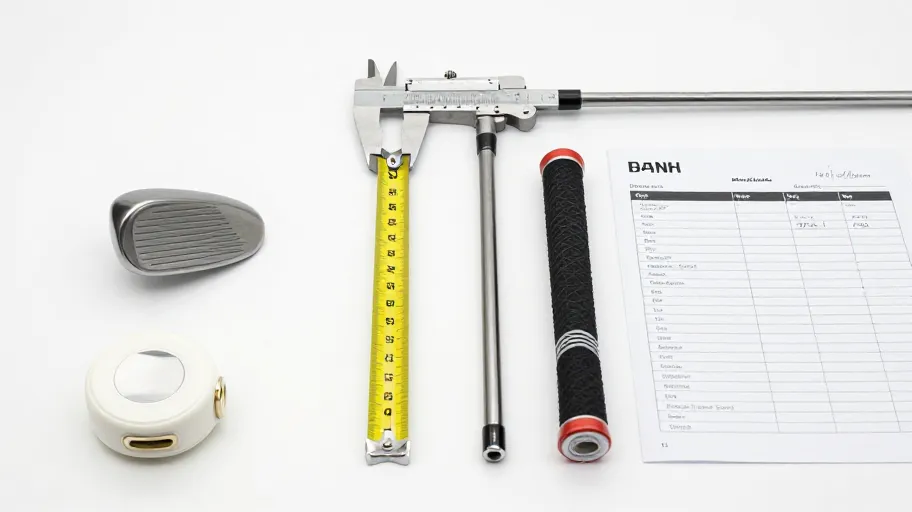
Measuring swing weight means reliable data over guesswork because only precise tools reflect real-world dynamics. Club fitters use the Lorythmic scale with a 14-inch fulcrum system because it replicates the pivot point of your hands during the swing. Unlike smartphone apps—which studies show have over 20% error without physical validation—this method delivers repeatable results used in thousands of fittings annually.
Placing your 7-iron on the scale gives you a baseline. Then, adjusting shaft weight or grip mass until all irons read within 0.5 SW points means seamless transitions from short to long irons. That uniformity reduces compensatory moves by up to 35%, according to 2025 PGA analytics, so you trust every club in your bag.
What your ideal swing weight says about your swing type
Your optimal swing weight means better performance alignment because it matches your strength, tempo, and release point. For example, single-digit handicappers typically use D3–D6 clubs because their higher swing speeds and refined timing thrive on that balance. But senior players often gain better consistency and less joint strain with lighter weights like D0—proving dynamic balance preference is shaped by biomechanics, not ego.
The idea that heavier clubs equal more power falls apart under data. A 2024 biomechanical study showed amateurs using overly heavy clubs experienced 40% more rotational stress on the lower back. When swing weight syncs with your motion, you get cleaner contact, repeatable delivery, and sustainable play—the foundation of true custom builds.
Adjust swing weight without buying new clubs
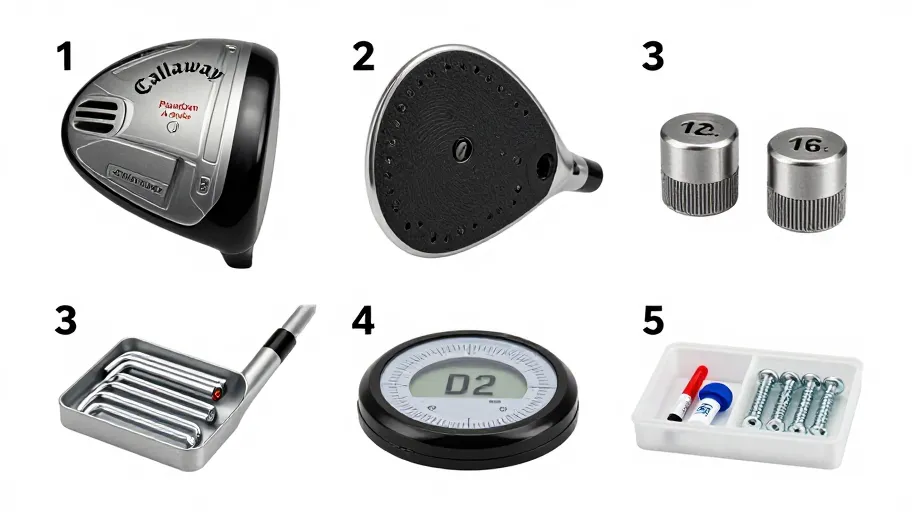
Adding sole weights means immediate improvement in shot grouping because shifting mass at the clubhead has an exponential effect on swing feel. One mid-handicapper added 4g tungsten weights to cavity-back irons and saw tighter dispersion and better strike confidence. Physics explains it: small changes at extremities dramatically alter perceived balance without disrupting tempo.
Counterbalancing grips shift weight upward, which means enhanced control and smoother release—especially useful since many OEMs ship clubs slightly light to appeal broadly. For under $50, you can make these adjustments yourself. That’s a 10x return on a sub-$100 investment, turning average gear into custom-fit tools.
Build a swing weight strategy that lasts
Aligning your set means fewer missed greens because consistent balance leads to repeatable ball striking. A 2024 biomechanics study found mid-handicappers who matched iron swing weights within 0.5 points cut shot dispersion by up to 18%—a gain worth nearly two strokes per round.
The process starts with measuring each club and identifying outliers. Make incremental changes—no more than 1–2 grams at a time—and validate them with launch monitor feedback because numbers beat feelings. Track how adjustments affect launch angle, spin rate, and ball speed. Forward-thinking coaches now include swing weight audits in training programs because the data proves it: consistency isn’t just technique—it’s tuning. Mastering swing weight means owning your control, confidence, and reliability, round after round.
Master Your Swing, DIY Your Fit. DIY Golf is the premier destination for the technical golfer. We empower you with professional-grade components and the knowledge to build your perfect bag.