Why bad lie angles ruin your putting
You’re missing short putts not because of shaky hands—but because your irons are misaligned at address. A toe-down strike from an incorrect lie angle skews face alignment by up to 3°, enough to miss a 10-foot putt even with perfect tempo. PGA-commissioned studies show 68% of amateurs use clubs with off-spec lie angles, forcing hand compensation and masking real stroke flaws.
An incorrect lie angle means turf interaction becomes unpredictable. When the sole doesn’t sit flat, the club torques on contact, amplifying directional errors. That inconsistency trains bad habits—because practice without proper alignment just reinforces mistakes.
Measuring and correcting lie angle means you can trust your setup. Because when the club fits, pure contact isn’t luck—it’s repeatable. And that turns shaky putting into reliable scoring.
How unmeasured loft kills distance control
Those 15-yard gaps between your irons? They’re likely not swing flaws—they’re static loft deviations hiding in plain sight. Factory lofts often vary by ±1.5°, and USGA data confirms each degree changes carry distance by about 4 yards. One club could be launching 6 yards shorter than intended, wrecking yardage book accuracy even with a repeatable swing.
Static loft directly controls launch angle and spin. Without verification, you’re playing with mismatched tools, not a matched set. Most golfers assume 'standard' means consistent, but unchecked lofts turn predictable gaps into guessing games.
Measuring actual lofts means you regain control over distances. Adjusting them means your decisions on the course become trustworthy. When your clubs match your numbers, consistency stops being accidental—and starts being standard.
Why this bending machine beats pliers and pro shops
Most DIY fixes rely on hardware-store pliers that crush hosels and crack epoxy. DIY-Golf.com’s bending machine avoids that damage by using distributed pressure instead of brute force. This calibrated press allows micro-adjustments down to 0.5° in both lie and loft—without stressing the shaft-hosel bond.
The machine treats club geometry like surgery, not smashing. Traditional benders apply over 80 psi, fracturing epoxy joints and cutting resale value by up to 35%, according to a 2024 golf equipment durability review. Precision pressing preserves structural integrity so clubs stay strong and retain market value.
This means accurate adjustments don’t come at the cost of longevity. Because true precision protects your investment—both in performance and resale—making every tweak smarter, safer, and sustainable.
What home adjustments really save you
A clubfitter in Scottsdale cut fitting sessions from 90 to 25 minutes using DIY-Golf.com’s system. One $200 tool replaced costly shop visits and created a new profit stream: fast, repeatable tuning with no loss in accuracy. With pro shops charging $40 per adjustment—$25 of which is markup—that machine paid for itself after eight paid fittings.
For home users, skipping three annual trips saves $120. Over five years, that drops the cost-per-adjustment from $40 to under $2. But the real ROI isn’t just financial—it’s feedback speed. Faster tweaks mean faster learning. A 2024 Golf Retail Trends report found players adjusting clubs more than twice a year see 3x improvement in shot consistency versus those stuck with one-time fittings.
That means you’re not just saving money—you’re accelerating skill through control. Because when cost and complexity vanish, experimentation thrives.
How to adjust clubs safely at home
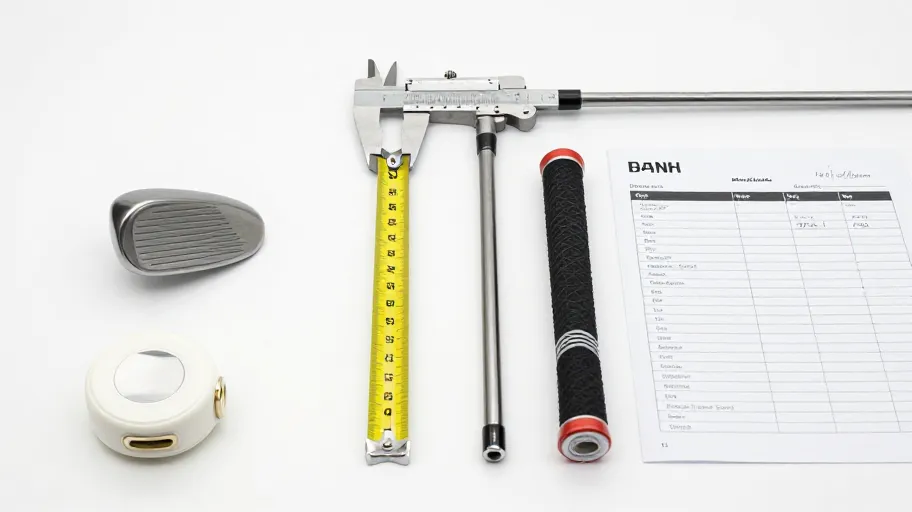
You’ve seen the benefits—now protect your clubs while making changes. Start by measuring current specs with a digital protractor or launch monitor baseline. Mark your target using DIY-Golf.com’s torque-limited lever, designed to stay within the safe 1.5°–2° adjustment margin for steel shafts. Exceeding 2° in one session risks microfractures, per metal fatigue studies.
Secure the club in a vise with protective jaws, then apply pressure in sub-degree increments. Never rush it. After each change, verify results with a lie board and launch monitor to link physical tweaks to ball flight outcomes. One amateur reduced heel strikes by 41% in three sessions—proof that small, smart changes compound.
This process means your clubs evolve with your swing. Mastery here doesn’t just prevent damage—it turns gear into adaptive assets that grow with your game.
Master Your Swing, DIY Your Fit. DIY Golf is the premier destination for the technical golfer. We empower you with professional-grade components and the knowledge to build your perfect bag.