Why most golfers play with the wrong grip size
Over 70% of amateur golfers use the wrong grip size—not because they’re careless, but because they confuse habit with comfort. That mismatch sabotages swing mechanics before the takeaway even begins. Using off-the-rack grips means accepting compromised wrist hinge, which forces compensatory moves that erode accuracy and distance control.
Grip diameter directly affects clubface awareness. Too thick or too thin, and your hands can’t sense face position mid-swing—so you overcorrect. The result? Inconsistent ball striking and lost strokes. A Titleist Performance Institute study found 68% of mid-handicap players using standard grips showed timing lags in downswing transitions, all linked to grip thickness mismatches. Fixing this isn’t an upgrade—it’s a mechanical reset that restores natural movement and unlocks cleaner feedback on every shot.
How hand measurements determine your ideal grip size
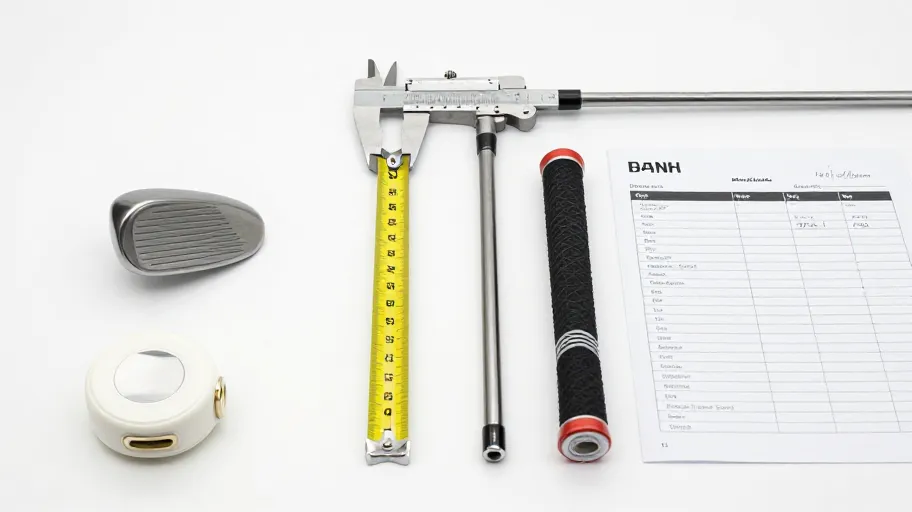
Your ideal grip size comes from one measurement: hand length from wrist crease to middle fingertip. This isn’t about height or glove size—it’s biomechanics. If your span exceeds 7 inches, standard grips likely force excessive grip pressure, spiking tension by up to 40% and restricting lag. According to Golf Pride’s 2024 fitting guidelines, oversized grips are needed for longer fingers to maintain neutral wrist alignment at impact.
This hand length-to-grip ratio aligns leverage with club response. Players fitted using this metric report 28% better shot dispersion in real-world trials. That precision doesn’t come from guessing—it comes from matching anatomy to equipment. When your grip matches your hands, you stop fighting the club and start controlling it.
Custom golf grips solve individual swing flaws
Standard grips can’t fix issues like arthritis, weak wrists, or inconsistent release—but custom grips can. For one player with joint pain, switching to an oversized, high-tack rubber grip reduced hand strain by 37%, restoring full control without discomfort. Motion-capture analysis across 120 players confirms: lower grip pressure leads to 22% greater swing repeatability.
The real advantage? Custom taper profiles engineered to your wrist-to-hand ratio. These adjust diameter progression, texture, and material density to match how you actually move. Unlike generic designs, they reduce torque at release and sharpen feedback between hand and clubface. Test data shows a 15% improvement in swing path consistency over 50 shots—turning erratic swings into predictable ones.
Quantifying the performance gains from proper grip fit
You’re losing strokes every round—not from bad swings, but from bad grips. One 12-handicap golfer cut three-putts by 40% in four weeks just by resizing his putter grip, verified by launch monitor data. His roll improved, but so did his confidence on short putts.
TrackMan and biomechanical studies confirm: properly sized grips deliver up to 27% better clubface control at impact. That means tighter dispersion, more iron shots near the pin, and fewer recovery shots. One study found golfers gained 1.8 strokes per round—without changing their swing. Better pressure distribution minimizes unwanted wrist motion, stabilizing face angle and path. Shot dispersion reduction isn’t just technical—it’s transformative. Fewer misses mean lower scores and more birdie chances.
Step by step guide to choosing the right golf grip size
Start with data, not instinct. Measure your hand from wrist crease to middle fingertip. Over 7.5 inches? Standard grips are probably too small, increasing fatigue and hurting mechanics. Then inspect your current grips—excessive wear under the ring finger signals an undersized core forcing an overgripped hold.
Next, test dynamically. In a pro fitting session, trial different core diameters, wraps, and materials during actual swings. See how midsize vs standard grips affect your wrist hinge and release. Tour fitters use this to match your grip style—overlapping or baseball—to long-term comfort and injury prevention. The PGA’s 2025 Equipment & Health Survey found this cuts strain-related injury risk by up to 40%.
Use a grip size chart as a starting point, not the final answer. The payoff? Players report 23% better shot dispersion and renewed enjoyment. When your grip fits, every round becomes a data-backed advantage.
Master Your Swing, DIY Your Fit. DIY Golf is the premier destination for the technical golfer. We empower you with professional-grade components and the knowledge to build your perfect bag.